


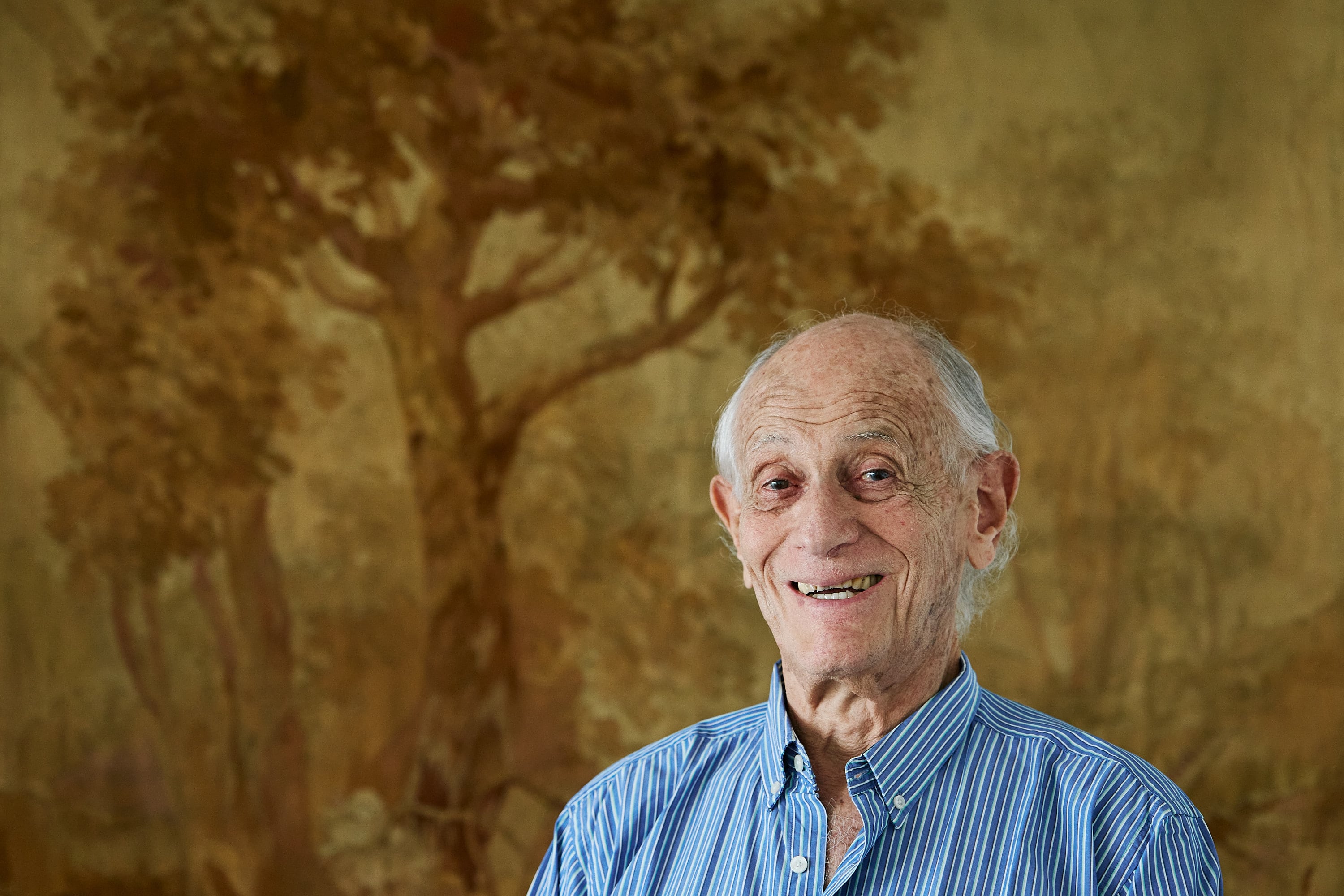
Psychoanalyst Eduardo Mandelbaum: 'Behaviors can be modified if stimuli are intense over time'
Translated from Spanish, summarized and contextualized by DistantNews.
At a glance
Interview
Sources not specified
Context piece
- Psychoanalyst Eduardo Mandelbaum integrates his experiences from physics, sailing, and psychoanalysis to treat families.
- He works with multifamilial groups, transforming apparent chaos into therapeutic order by understanding systemic family dynamics.
- Mandelbaum emphasizes that individual behavior can change if the environmental stimuli are consistent and intense over time.
Eduardo Mandelbaum, a psychoanalyst whose life journey spans from physics to competitive sailing, applies a unique, holistic approach to therapy. Having survived a "perfect storm" at sea, Mandelbaum brings a perspective shaped by intense experiences, believing that individuals and families can navigate their own storms with the right guidance.
His therapeutic work focuses on multifamilial groups, particularly with families from a settlement in Martínez. Mandelbaum views apparent chaos within these groups as an opportunity to uncover deeper, therapeutic order. He emphasizes that problems are not solely individual but are embedded within the family system. By working with the entire family, he gains insight into how familial dynamics, often unconsciously, contribute to an individual's suffering.
Behaviors can be modified if the stimuli occur with intensity over time.
Mandelbaum's approach is rooted in his background. Initially studying physics and chemistry, he was drawn to psychology by an insatiable curiosity. His experiences as a sailor, including competing in a severe storm in the Irish Sea, taught him resilience and the principle that "after the storm, the sun always rises." This philosophy informs his belief that "behaviors can be modified if the stimuli occur with intensity over time."
He collaborates with families, offering them crucial elements often missing from the system: time, attentive listening, and the conviction that change is possible. By facilitating these multifamilial groups since 2004, Mandelbaum helps participants make sense of complex issues, transforming confusion into a structured understanding of their shared challenges.
When one works with the patient on the couch, one has an idea of the mental functioning of that person and their family relationships only through the patient's account. One then works with so-called representations. When the real family appears, we can understand how the mind of this subject was 'formed' and, if they are suffering from a mental disorder, how the family contributes without realizing it to their suffering, and how to help them and themselves live better.
DistantNews Editorial
Originally published by La Nación in Spanish. Translated, summarized, and contextualized by our editorial team with added local perspective. Read our editorial standards.
More Stories



From Our Blog

What Gets Lost (and Found) When News Is Translated

The Critical Role of Diaspora Media in Global News

What Travellers Should Know About Countries with Restricted Press

A Digital Nomad's Guide to Following Local News

How the Same Story Looks Different in Different Countries
