

PTI lawmaker slams Pakistan budget as 'broken promises,' lacking growth and welfare
Translated from English, summarized and contextualized by DistantNews.
At a glance
News
Sources not specified
New plan
- PTI's Barrister Ali Zafar criticized Pakistan's 2026-27 budget, deeming it a failure in achieving public welfare and economic growth.
- Zafar highlighted 11 neglected areas, including industrialization, agriculture, exports, and education, attributing the failures to government incompetence and a lack of political stability.
- He accused the government of relying on IMF programs and increased taxes instead of addressing fundamental issues, noting a decline in key economic indicators.
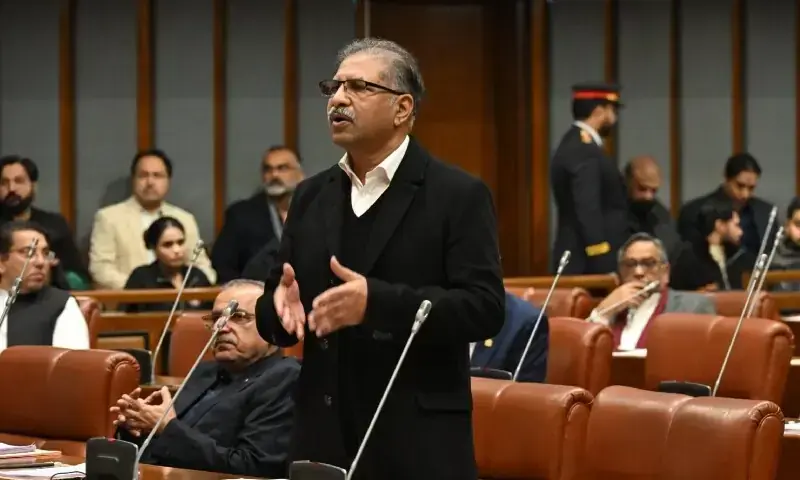
PTI's parliamentary leader in the Senate, Barrister Syed Ali Zafar, has strongly rejected Pakistan's budget for the 2026-27 fiscal year, labeling it a "budget of broken promises." He argued that the budget fails to deliver on its core objectives of public welfare and long-term economic growth.
Unfortunately, this budget fails to achieve either objective. It neither provides meaningful relief to the common citizen nor sets out a credible long-term plan for economic development and job creation.
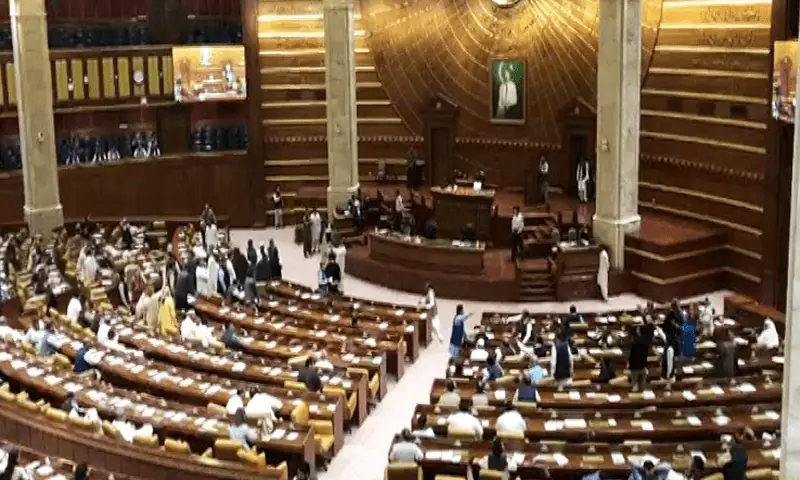
During a Senate debate, Zafar asserted that any effective budget must provide benefits for the poor and a clear strategy for economic development and job creation. He contended that the current budget falls short on both counts, offering neither meaningful relief to citizens nor a credible plan for the future. Zafar detailed 11 critical areas he believes the government has overlooked, including strategies for industrialization, agriculture, export promotion, youth employment, and the IT sector.
Education is the foundation of progress and prosperity, yet the government appears to have neglected it entirely. It is as though the government does not wish to spread the light of knowledge among the people but is instead content to leave them in the darkness of ignorance.
Zafar criticized the government's reliance on International Monetary Fund (IMF) programs and tax increases as a substitute for addressing the nation's fundamental economic problems. He attributed these failures not to malice but to incompetence and a broader governance deficit. Pointing to the current government's fifth budget, he noted a pattern of excuses rather than results, with previous budgets blaming the PTI, the IMF, or external factors.
For the last several years, it has looked for solutions only where it finds it easiest, through International Monetary Fund (IMF) programmes and by imposing additional taxes on the public.
The senator also highlighted a decline in seven key indicators: exports, standard of living, economic growth, investment, the rupee's value, business confidence, and government credibility. He mocked the projected 4% growth target, comparing it unfavorably to a slow-moving tortoise, and suggested that the government's lack of public support hinders its ability to provide a compelling national vision.
One conclusion is unavoidable: the government’s inability to solve the country’s fundamental problems stems from incompetence.
DistantNews Editorial
Originally published by Dawn in English. Translated, summarized, and contextualized by our editorial team with added local perspective. Read our editorial standards.
More Stories
From Our Blog

What Gets Lost (and Found) When News Is Translated

The Critical Role of Diaspora Media in Global News

What Travellers Should Know About Countries with Restricted Press

A Digital Nomad's Guide to Following Local News

How the Same Story Looks Different in Different Countries
