


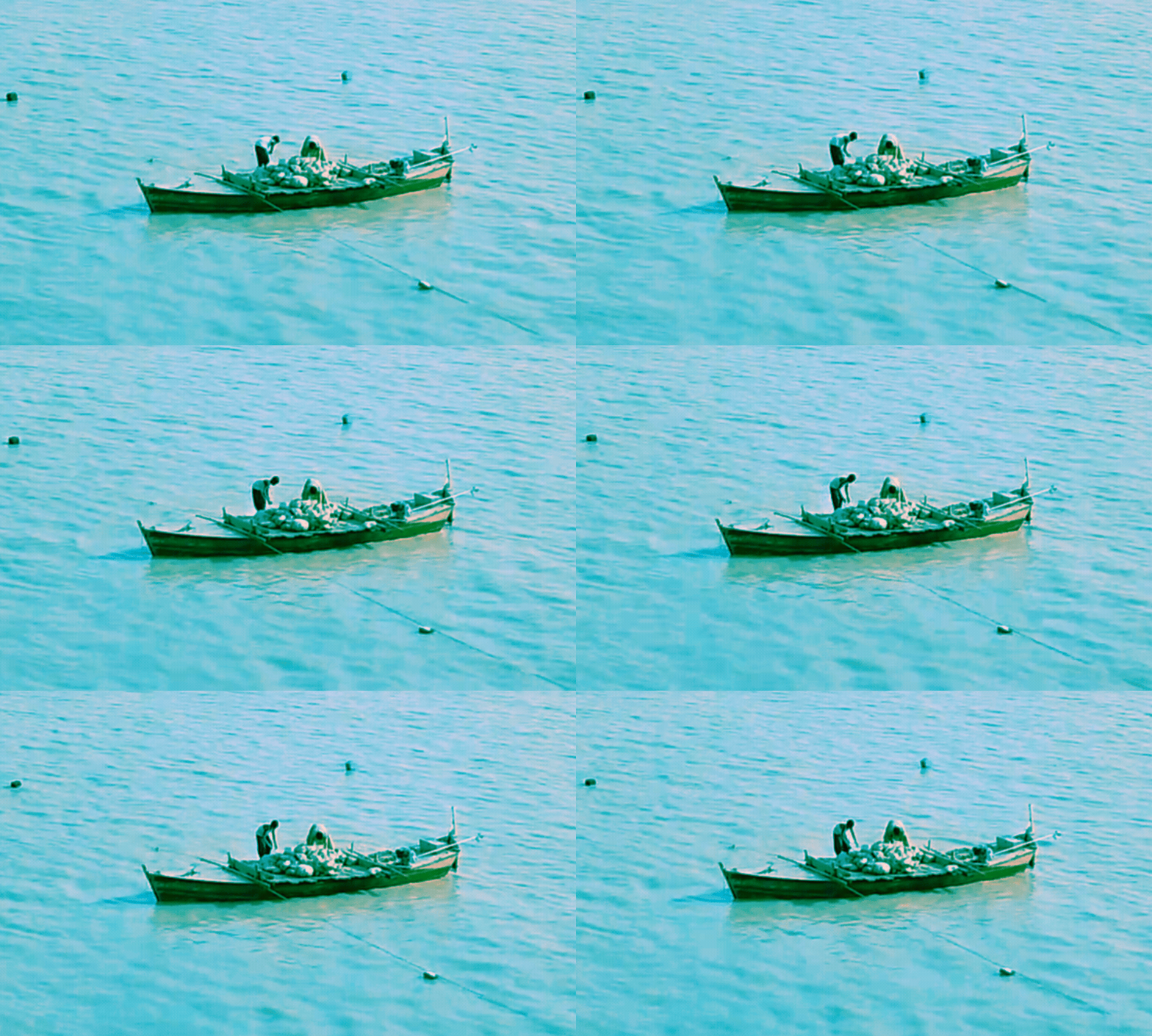
Punjab's Pera force demolishes Mohana boatpeople settlement at Taunsa Barrage
Translated from English, summarized and contextualized by DistantNews.
TLDR
- Punjab's Pera force demolished a settlement of the Mohana boatpeople, known as Basti Shaikhan, on government land near Taunsa Barrage.
- Residents and activists challenge the 'squatter' label, citing historical ties to the land and government provision of electricity and schools as recognition of the settlement.
- The demolition for a proposed Circuit House and Flood Monitoring system ignores the area's vulnerability to flooding and the community's vital role in the local economy and the Indus River's ecosystem.
The recent demolition of Basti Shaikhan, a settlement of the Mohana boatpeople near the Taunsa Barrage, by the Punjab Enforcement and Regulatory Authority (Pera) has ignited controversy and reopened old wounds. This operation, carried out with bulldozers and a heavy police presence, targeted land officially earmarked for a Circuit House, displacing generations of families who identify as the famous boatpeople of the River Indus.
Activists like Fazl-e-Rab of the Seraiki Lok Sanjh are vehemently challenging the government's narrative of these residents being mere encroachers. They point to the fact that the government itself had provided electricity, schools, and drainage to the basti, which they argue is undeniable proof of official recognition of the settlement. The question then becomes, how can it be considered encroachment?
Then how is it encroachment?
Furthermore, the government's plan to construct an IRSA Flood Monitoring system in an area known for its vulnerability to flooding raises serious questions about planning and foresight. Khadim Khar Hussain of the Sindhu Bachao Tehreek highlights the bitter irony that the very boatpeople displaced by this construction are the ones now transporting materials for government projects. This situation underscores a broader disregard for the historical and ecological significance of the Indus River, which has sustained millions, including these fishing communities, for centuries.
From a local perspective in Pakistan, this event is not just about land allocation; it's about the erasure of a unique cultural identity and the disruption of an age-old relationship with the river. While international coverage might focus on the displacement or the bureaucratic conflict, the local viewpoint emphasizes the deep historical roots of the Mohana community and their integral role in the Indus ecosystem, a role that commercial interests and potentially flawed government planning seem to be overlooking.
What is even more ironic, says Khadim Khar Hussain of the Sindhu Bachao Tehreek, whose home was also destroyed, is that the boatpeople are the ones transporting the government construction materials for spaces where they have been thrown out of.
DistantNews Editorial
Originally published by Dawn in English. Translated, summarized, and contextualized by our editorial team with added local perspective. Read our editorial standards.
More Stories

From Our Blog

What Gets Lost (and Found) When News Is Translated

The Critical Role of Diaspora Media in Global News

What Travellers Should Know About Countries with Restricted Press

A Digital Nomad's Guide to Following Local News

How the Same Story Looks Different in Different Countries
