


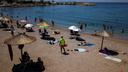
Purple Jellyfish Swarm Greek Coast, Prompting Swimmer Warnings
Translated from Croatian, summarized and contextualized by DistantNews.
At a glance
News
Sources not specified
Context piece
- Purple jellyfish, known as Pelagia noctiluca, have reappeared in Greek waters, causing problems for swimmers as the summer season begins.
- Increased concentrations are particularly noted in areas of the island of Euboea, with experts observing a rise in their population in recent years.
- Marine biologists warn that jellyfish movement depends on sea currents and winds, meaning beach conditions can change rapidly.
The summer season has brought an unwelcome sight to Greek waters: a resurgence of purple jellyfish, identified as Pelagia noctiluca, commonly known as mauve stingers. These marine creatures are already causing distress to swimmers, with the highest concentrations reported along the coast of Euboea, specifically in the areas of Chalkida, Nea Artaki, and Politika.
While this species is not uncommon in Greek waters, marine experts have noted a significant increase in their population over the past few years. The jellyfish's presence and movement are heavily influenced by prevailing sea currents and wind patterns. This dynamic means that the situation on beaches can shift unexpectedly, with swarms appearing or dissipating rapidly.
Although this type of jellyfish is not uncommon in Greek waters, experts have recorded an increase in their population in recent years, and their movement depends on sea currents and winds, which is why the situation on the beaches can change quickly.
Marine biologist Christos Taklis highlighted the current surge in jellyfish numbers in the mentioned areas of Euboea. However, he cautioned that the situation remains fluid. The jellyfish populations are migratory, their distribution dictated by changing weather conditions. This variability poses a challenge for coastal communities and swimmers alike, as predictable safe zones are difficult to maintain.
The reappearance of these jellyfish serves as a reminder of the natural fluctuations within marine ecosystems and their direct impact on human activities like tourism and recreation. Authorities are monitoring the situation, but the unpredictable nature of the jellyfish's movement requires constant vigilance from both officials and beachgoers.
An increased number of jellyfish is currently being observed precisely in the mentioned areas on Euboea, but he warned that the picture is not stable because the population moves with changes in weather conditions.
DistantNews Editorial
Originally published by Večernji List in Croatian. Translated, summarized, and contextualized by our editorial team with added local perspective. Read our editorial standards.
More Stories


From Our Blog

What Gets Lost (and Found) When News Is Translated

The Critical Role of Diaspora Media in Global News

What Travellers Should Know About Countries with Restricted Press

A Digital Nomad's Guide to Following Local News

How the Same Story Looks Different in Different Countries
