

Putin's Envoy Compares Migrant Surge to Fall of Rome: 'Barbarians at the Gates'
Translated from Croatian, summarized and contextualized by DistantNews.
At a glance
News
Sources not specified
Context piece
- Russian official Kirill Dmitriev compared a new wave of migrants entering Spain's Ceuta to the fall of the Roman Empire, calling them "barbarians."
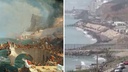
- The comment, accompanied by an image of migrants entering Ceuta and a historical painting, drew significant attention on social media.
- The influx of migrants occurred as thousands attempted to cross into the EU from Morocco, with some scaling fences and others swimming to shore.
A prominent Russian official has drawn parallels between the current migrant influx into Europe and the historical fall of the Roman Empire, sparking controversy. Kirill Dmitriev, the Russian president's special representative for investment and economic cooperation with foreign countries, posted a provocative message on social media platform X.
Dmitriev's post featured an image of migrants entering the Spanish enclave of Ceuta alongside Thomas Cole's painting "The Course of Empire – Destruction." He captioned it: "Barbarians at the Gate: 410 AD vs Now," directly comparing the current situation to the Visigoths' sack of Rome in 410 AD.
This commentary followed a large-scale attempt by migrants, primarily from Morocco, to enter Ceuta, an EU territory on the North African coast. Spanish authorities reported that between 2,000 and 3,000 migrants, mostly young men, crossed the border in a single day. Reports indicated that hundreds managed to scale the border fence while police presence was temporarily reduced.
Ceuta and Melilla, the only land borders between the EU and Africa, have long been focal points for migrants seeking to reach Europe. These enclaves frequently experience mass border crossing attempts, highlighting ongoing migration pressures.
Barbarians at the Gate: 410 AD vs Now
DistantNews Editorial
Originally published by Večernji List in Croatian. Translated, summarized, and contextualized by our editorial team with added local perspective. Read our editorial standards.
More Stories


From Our Blog

What Gets Lost (and Found) When News Is Translated

The Critical Role of Diaspora Media in Global News

What Travellers Should Know About Countries with Restricted Press

A Digital Nomad's Guide to Following Local News

How the Same Story Looks Different in Different Countries
