

/nginx/o/2026/07/09/17772936t1hbdeb.jpg)
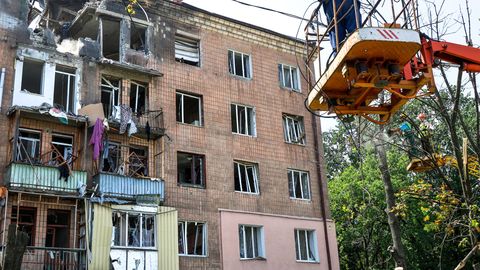
Putin's War in Stalemate, Exposing Regime's Fragility
Translated from Estonian, summarized and contextualized by DistantNews.
At a glance
News
Named sources
Ongoing story
- Russian President Vladimir Putin's war in Ukraine is in a stalemate, revealing the fragility of his regime.
- The conflict, driven by neo-imperialist ambition and a desire for power, has led to organized looting and cultural destruction.
- The war was never about protecting Russians or strengthening Russia's global position, according to a senior fellow at the MacDonald-Laurier Institute.
Russian President Vladimir Putin's war in Ukraine has reached a stalemate, exposing the underlying fragility of his regime. The conflict, according to Marcus Kolga, a senior fellow at the MacDonald-Laurier Institute, was never intended to protect Russians or bolster Russia's standing on the world stage. Instead, Kolga argues, the war is fueled by neo-imperialist arrogance and a desire to consolidate power.
Kolga's analysis, as reported by the Ukrainian news channel Unian, highlights that the war is characterized by organized looting and a deliberate effort towards cultural destruction. This framing suggests a systematic approach to undermining Ukrainian identity and resources rather than a defensive or strategic military operation.
The ongoing stalemate in Ukraine, coupled with these revealed motivations, paints a picture of a regime whose actions are driven by internal ambitions rather than external threats or genuine national interests. The consequences, as described, point towards a destructive campaign with far-reaching implications for both Ukraine and Russia's international standing.
Like the ocean connects us, the sky connects us, and we are connected to each other. And these are unusual, difficult times for many of us, we need each other more than we probably understand. We are all related, we come from the same place, and we actually come from the stars.
DistantNews Editorial
Originally published by Postimees in Estonian. Translated, summarized, and contextualized by our editorial team with added local perspective. Read our editorial standards.
More Stories
/nginx/o/2025/11/03/17254664t1ha369.jpg)
/nginx/o/2026/07/08/17771288t1h7d84.jpg)
From Our Blog

What Gets Lost (and Found) When News Is Translated

The Critical Role of Diaspora Media in Global News

What Travellers Should Know About Countries with Restricted Press

A Digital Nomad's Guide to Following Local News

How the Same Story Looks Different in Different Countries
