


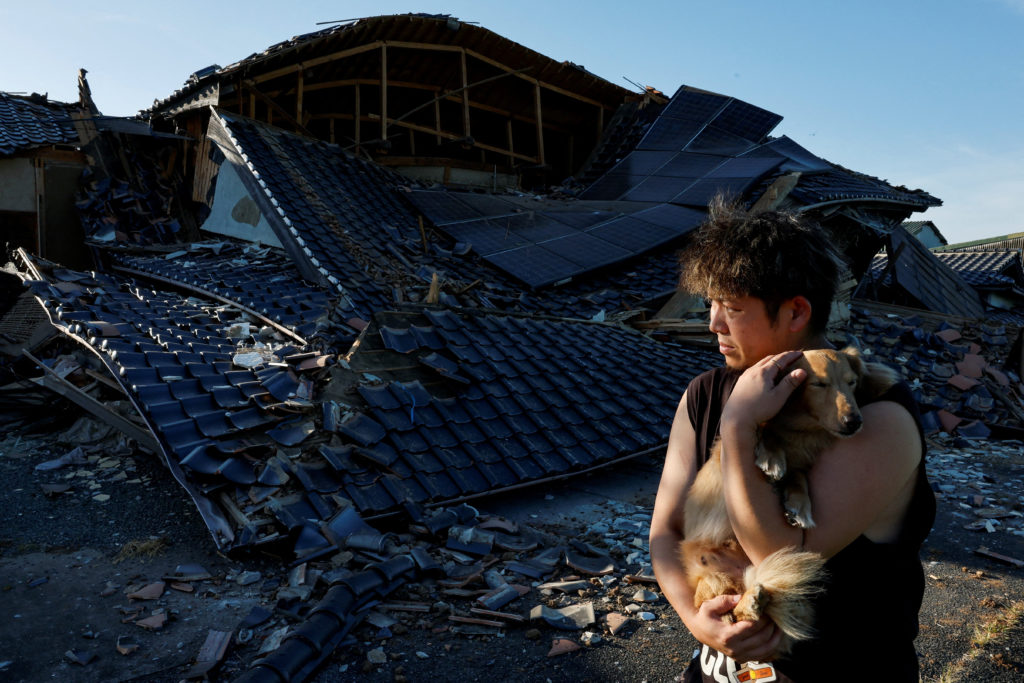
Quake survivors in southwestern Japan sleep in cars in sweltering heat as death toll rises to 34
Summarized and contextualized by DistantNews.
At a glance
News
From a news agency
Ongoing story
- Thousands of earthquake survivors in southwestern Japan are sheltering in cars or crowded facilities amid punishing heat.
- The death toll from the magnitude 7.1 earthquake has risen to 34, with rescuers searching for the missing.
- Survivors face shortages of water and fuel, while electricity has been restored to most homes.
Thousands of survivors of a powerful earthquake in southwestern Japan spent Friday enduring sweltering summer temperatures, seeking refuge in crowded shelters or sleeping in their cars. The region faces shortages of essential supplies like water and fuel, heightening fears of heat-related illnesses.
The damage is tremendous and it would require significant repairs, and I can't even think if or how I can do that.
The death toll climbed to 34, according to the Kumamoto prefectural government, as rescue efforts continued for those still unaccounted for following the magnitude 7.1 earthquake that struck Japan's southern main island of Kyushu on Tuesday. The quake triggered a mall explosion, toppled a factory chimney, and flattened numerous homes.
While electricity was fully restored by Friday evening, thousands of homes had been left without power immediately after the earthquake. Officials reported that over 1,500 buildings sustained damage, with 179 completely destroyed based on preliminary assessments. The connection of one additional death to the quake is currently under investigation.
But it's a valuable family inn that has been handed down for generations since my great-great grandfather built it, so I do hope to preserve it.
In Yatsushiro City, a historic 116-year-old Japanese inn named Kinparo suffered severe damage, with its main entrance collapsed and walls cracked. The owner, Keisuke Matsumoto, expressed uncertainty about the extensive repairs needed but voiced a desire to preserve the family-run establishment. His mother, Misao Matsumoto, shared her emotional distress over the damage but expressed hope for reconstruction efforts.
I'm mentally discouraged. It's very painful to see parts of what I've lived with and enjoyed for decades crumble to that state.
Nearby, a fish cake shop owner, unable to resume business due to a water cutoff, distributed his remaining tube-shaped fish cakes to the community. "I just wanted to cheer up this neighborhood," he said, as signs for his "chikuwa" fish cakes hung from the ceiling.
But she said experts of historic buildings will come in to discuss the reconstruction, so "I have to hang in there."
DistantNews Editorial
Originally published by PBS NewsHour. Summarized and contextualized by our editorial team with added local perspective. Read our editorial standards.
More Stories
From Our Blog

How the Same Story Looks Different in Different Countries

What Gets Lost (and Found) When News Is Translated

The Critical Role of Diaspora Media in Global News

What Travellers Should Know About Countries with Restricted Press

A Digital Nomad's Guide to Following Local News
