


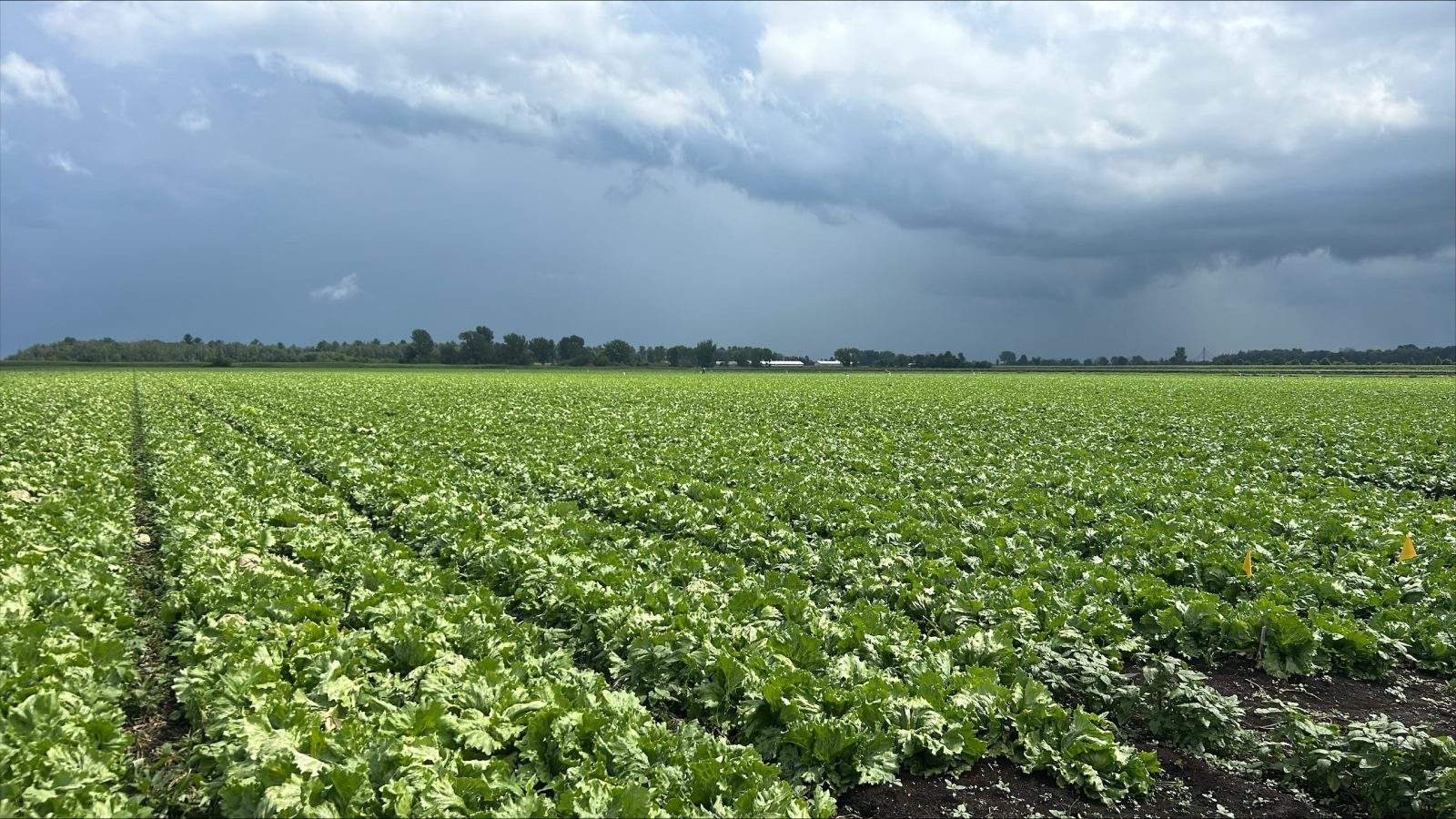
Quebec lettuce growers suffer losses amid U.S. cyclosporiasis outbreak
Translated from English, summarized and contextualized by DistantNews.
At a glance
News
Named sources
Context piece
- Quebec lettuce growers are operating at a loss due to a cyclosporiasis outbreak in the United States.
- Demand for lettuce has dropped significantly, leaving farmers with unsold product.
- Canadian produce is considered safe, with strict food safety measures in place.
Quebec lettuce farmers are facing significant financial losses as a widespread cyclosporiasis outbreak in the United States has drastically reduced demand for their product. Approximately half of Quebec's lettuce production is exported to the U.S., but American consumers, fearing contamination, have largely stopped buying. "Currently the lettuce that is being sold to our grocery stores and to our retailers is under the price of production, which means that when the grower is selling their lettuce, they’ve lost money," Catherine Lessard, deputy manager of the Quebec Produce Growers’ Association, told Global News.
Currently the lettuce that is being sold to our grocery stores and to our retailers is under the price of production, which means that when the grower is selling their lettuce, they’ve lost money.
Retailers in the U.S. have even removed lettuce from their shelves, exacerbating the surplus issue for Quebec growers. "So all this lettuce, half of the production is staying here, has no market," Lessard added. Some farmers are selling their produce below cost, and there are concerns that entire fields may go unharvested due to the high cost of manual harvesting. The U.S. outbreak has been linked to iceberg lettuce from Taylor Farms Mexico, affecting over 11,000 people in 15 states and causing two deaths. Investigations are ongoing, with contaminated irrigation water being a potential cause in past outbreaks.
So all this lettuce, half of the production is staying here, has no market.
However, experts emphasize that Canadian-grown produce is safe. "If it’s grown in Canada, it’s safe and I hope you will eat it," Lessard urged. Nathalie Grandvaux, a professor at the University of Montreal, noted that Canada has stringent food safety protocols, including testing for cyclospora contamination in imported fresh products, making a similar outbreak in Canada highly unlikely. While Quebec has seen an increase in cyclosporiasis cases this year, they are primarily linked to travelers, suggesting broader contamination rather than a local food supply issue. The full financial impact on Quebec growers remains uncertain as the season concludes.
If it’s grown in Canada, it’s safe and I hope you will eat it.
DistantNews Editorial
Originally published by Global News in English. Translated, summarized, and contextualized by our editorial team with added local perspective. Read our editorial standards.
More Stories



From Our Blog

What Gets Lost (and Found) When News Is Translated

The Critical Role of Diaspora Media in Global News

What Travellers Should Know About Countries with Restricted Press

A Digital Nomad's Guide to Following Local News

How the Same Story Looks Different in Different Countries
