


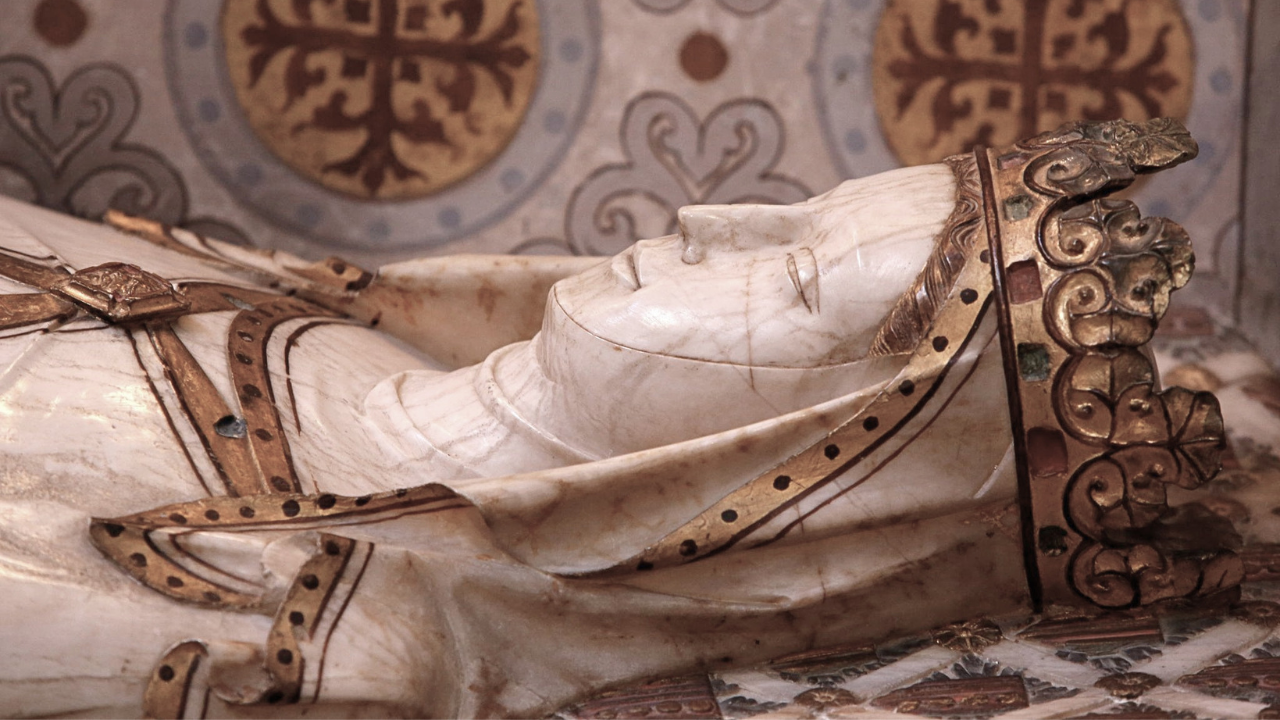
Queen Elisenda's 700-year-old tomb opened in Barcelona, revealing skeletal remains and medieval insights
Translated from English, summarized and contextualized by DistantNews.
At a glance
News
Sources not specified
Outcome reported
- Archaeologists in Barcelona opened the tomb of Queen Elisenda of Montcada, who died in 1364, for the first time in nearly 700 years.
- The investigation, part of the monastery's 700th anniversary, revealed her skeletal remains, textile fragments, and details about her life and burial.
- The discovery offers insights into female power, religious devotion, and aristocratic life in 14th-century Catalonia, highlighting Elisenda's independent influence.
Archaeologists have opened the tomb of Queen Elisenda of Montcada in Barcelona, examining her remains for the first time in nearly 700 years. The investigation, conducted at the Royal Monastery of Santa Maria de Pedralbes as part of its 700th anniversary, uncovered skeletal remains, fragments of luxurious textiles, and new details about the queen's life and burial.
Queen Elisenda, born around 1292 into the influential House of Montcada, married King James II of Aragon, connecting her to a major political power. However, her influence extended beyond her husband's death in 1327. She established her own palace and continued to exert social, political, and economic authority for 37 years, securing lands and resources for the monastery she founded.
Historical records show Elisenda acted as a patron and protector of the Royal Monastery of Santa Maria de Pedralbes, transforming it into a prestigious institution. She is regarded as one of the most prominent female patrons in medieval Catalonia, wielding significant independent power. Her contributions shaped religious, political, and charitable life for nearly four decades, leaving a lasting example of female authority in medieval Europe.
The tomb's contents revealed that the queen was around 70 years old at her death and likely suffered from osteoarthritis. The presence of gold-embroidered silk textiles, despite her burial in a simple religious habit, suggests that elements of her royal status were still incorporated into her final resting place.
DistantNews Editorial
Originally published by Times of India in English. Translated, summarized, and contextualized by our editorial team with added local perspective. Read our editorial standards.
More Stories



From Our Blog

What Press Freedom Means for the News You Read

What Gets Lost (and Found) When News Is Translated

The Critical Role of Diaspora Media in Global News

What Travellers Should Know About Countries with Restricted Press

A Digital Nomad's Guide to Following Local News
