


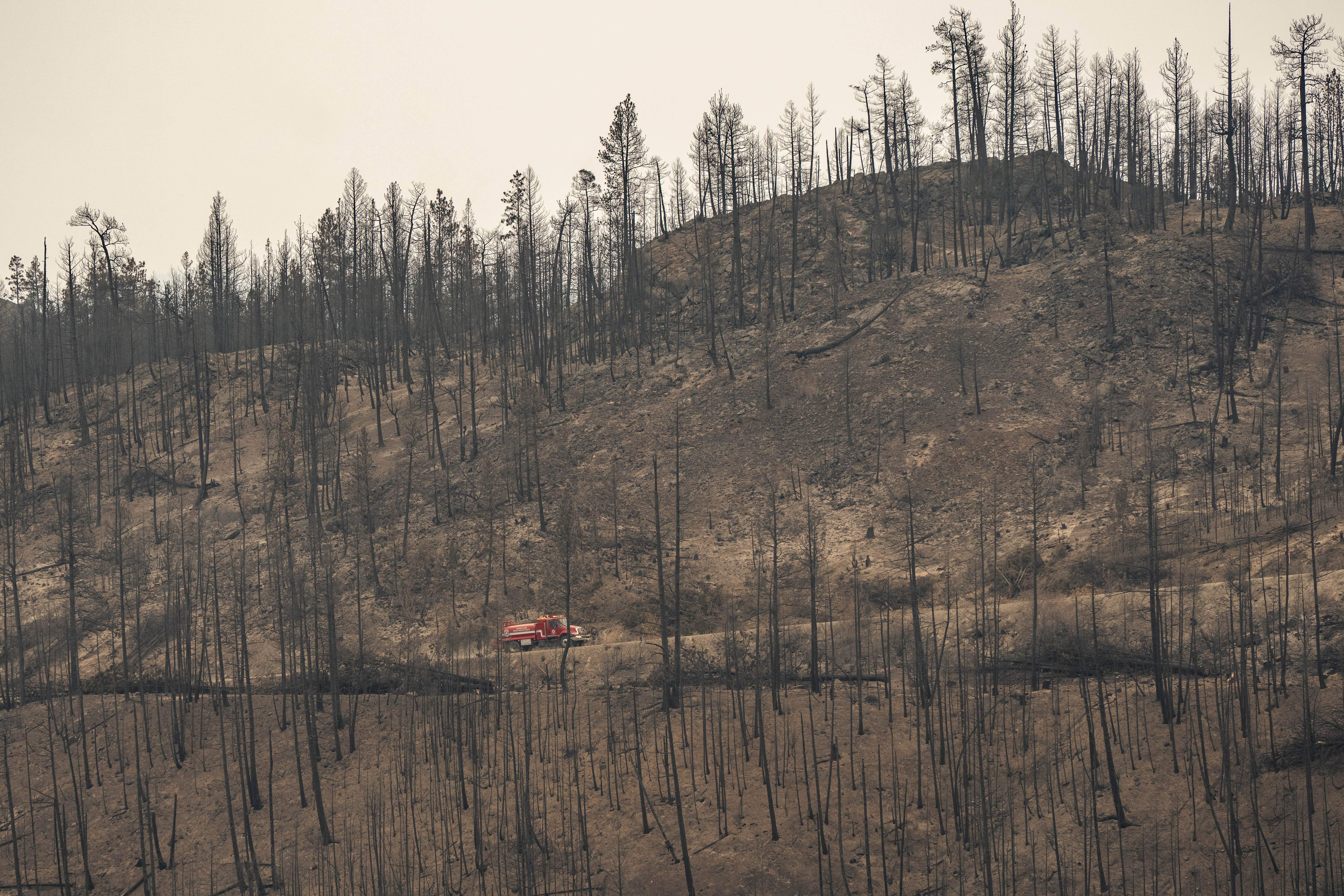
Questions raised about B.C.'s approach to prescribed burns ahead of wildfire season
Translated from English and summarized by DistantNews. Read the original for the full story.
At a glance
News
Named sources
Context piece
- Concerns are mounting over British Columbia's strategy for using prescribed burns to reduce wildfire risk, particularly after a planned burn area was severely affected by the Bald Range wildfire.
- Experts argue that the scale of prescribed burns needs to be significantly increased, with approvals and capacity being major bottlenecks in the process.
- While prescribed burns alone may not prevent large wildfires, proponents believe they can provide crucial opportunities for firefighters to safely manage and contain fires.
British Columbia's strategy for utilizing prescribed burns to combat wildfire danger is facing increased scrutiny, particularly following the devastating Bald Range wildfire. An area west of Summerland, which was slated for an 87-hectare prescribed burn earlier this spring, was among the hardest-hit regions by the subsequent wildfire.
Until we start getting burns done and fuel reduction at a meaningful scale, meaning a thousand-plus hectares, we're not going to change the outcome.
The effectiveness and scale of the province's prescribed burn program are now in question. Jesse Zeman, executive director of the BC Wildlife Federation, emphasized the need for burns to be conducted at a "meaningful scale," suggesting thousands of hectares rather than smaller plots. He highlighted that slow government approval processes hinder the ability to capitalize on narrow weather windows suitable for burning.
"You want to have a whole bunch of prescribed burns in the hopper so that when the timing's right, you can go out and do this work, but if we can't get approvals to get burns done, we're not going to have a bunch in the hopper," Zeman stated.
You want to have a whole bunch of prescribed burns in the hopper so that when the timing's right, you can go out and do this work, but if we can't get approvals to get burns done, we're not going to have a bunch in the hopper.
Experts caution that prescribed fire alone is not a panacea for preventing large wildfires. However, Mathieu Bourbonnais of the Canadian Prescribed Fire Training Program noted that treated areas can be invaluable for firefighters. "It can give more opportunities for fire crews to anchor off something or guide the fire into treatment units, where they can fight fire a little bit more safely," he explained.
It can give more opportunities for fire crews to anchor off something or guide the fire into treatment units, where they can fight fire a little bit more safely.
Proponents argue that B.C. must adopt a more aggressive approach, increasing the amount of controlled fire on the landscape. Zeman suggested that accepting some smoke in the spring and fall through prescribed burns is a calculated risk that can ultimately prevent the loss of homes. This approach requires greater provincial funding and a stronger commitment to "fight fire with fire."
The question is how do you like your smoke? Smoke in the spring and fall is what will prevent people’s houses from being lost.
About this summary
Originally published by Global News in English. Translated, summarized, and contextualized automatically by DistantNews, with a note on how the source frames the story. Not individually reviewed before publishing. How this works.
More Stories

From Our Blog

What Gets Lost (and Found) When News Is Translated

The Critical Role of Diaspora Media in Global News

What Travellers Should Know About Countries with Restricted Press

A Digital Nomad's Guide to Following Local News

How the Same Story Looks Different in Different Countries
