


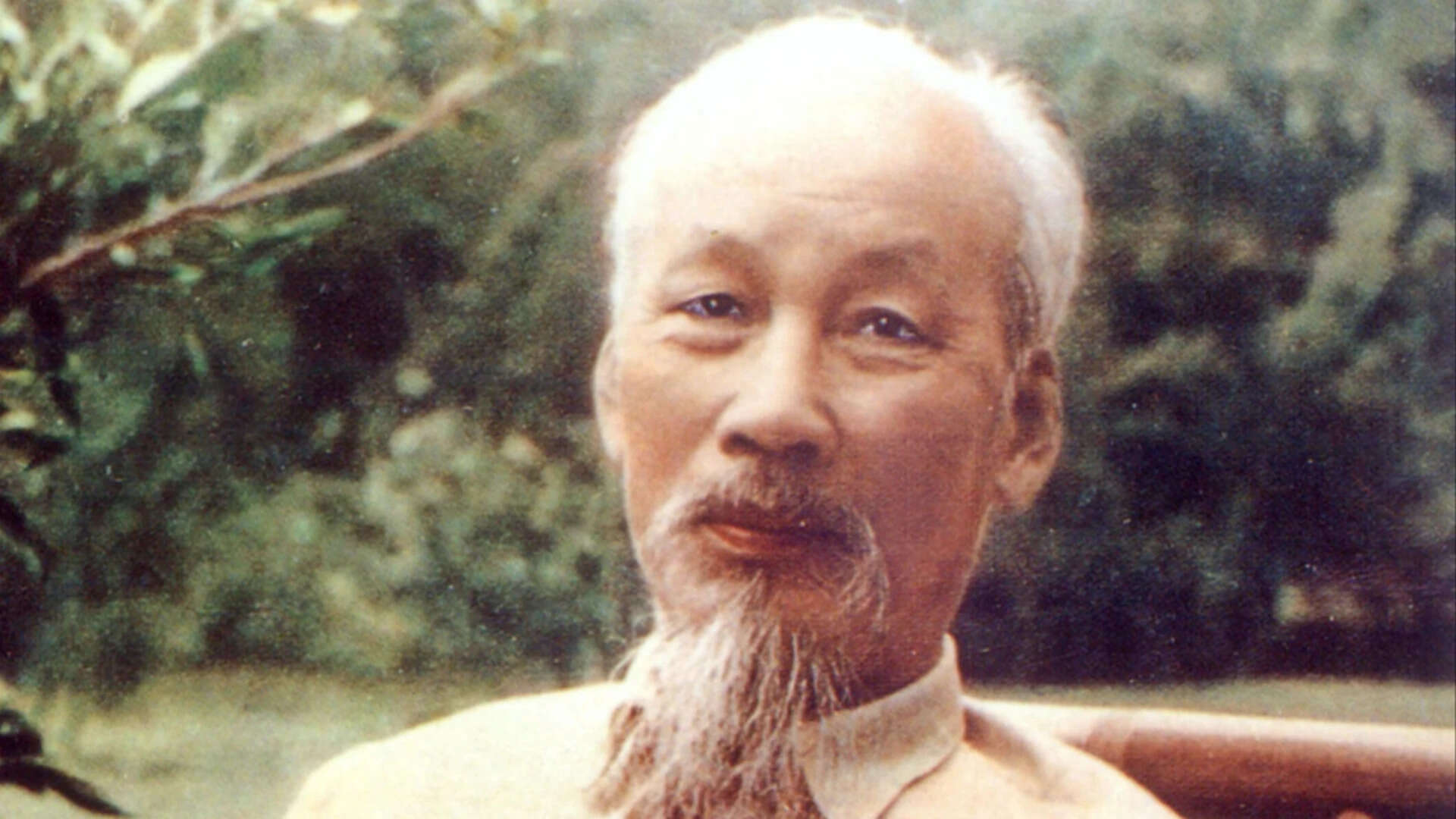
Quote of the day by Ho Chi Minh: 'Write in such a way that you can be readily understood...'
Summarized and contextualized by DistantNews.
At a glance
In-depth
Sources not specified
Context piece
- Ho Chi Minh, Vietnam's revolutionary leader, emphasized the importance of clear and understandable communication for public engagement.
- He advised journalists and officials to use simple language, avoiding complex jargon, to connect with a broad audience, including the young, old, and uneducated.
- This philosophy, rooted in making information accessible, was crucial for uniting Vietnam during its anti-colonial struggles and nation-building efforts.
Ho Chi Minh, the revolutionary leader who guided Vietnam through decades of anti-colonial struggle, championed a philosophy of clear and accessible communication. In 1962, he advised journalists and officials that effective public messaging requires writing in a way that is "readily understood by both the young and the old, by men as well as women, even by children."
This principle was particularly vital during the 1940s and 1950s when Ho Chi Minh led Vietnam's resistance against French rule and established the Democratic Republic of Vietnam. At that time, over 90 percent of the population was illiterate, making it challenging to disseminate information, education, and political slogans. Ho Chi Minh understood that using the complicated, classical Chinese-style writing favored by educated elites would alienate the majority of the population, including farmers, soldiers, and villagers.
To unite these diverse groups, he advocated for simple language in government publications, steering clear of complex political theories. Ho Chi Minh himself embodied this principle, writing numerous short articles under various pseudonyms for the newspaper 'Cuu Quoc' (National Salvation). He used everyday examples from farming and daily life to explain intricate topics such as economics and military strategy, making them accessible to the common person.
The core idea behind this approach is that when information is stripped of unnecessary complexity, it becomes universally available. This challenges the notion that intelligence is demonstrated through convoluted language, instead presenting clarity as both a practical responsibility and a moral duty. Simple and direct communication fosters connections across different generations and breaks down barriers created by varying education levels or social backgrounds, fulfilling a fundamental human need to understand the forces shaping one's life without requiring specialized knowledge.
Write in such a way that you can be readily understood by both the young and the old, by men as well as women, even by children.
DistantNews Editorial
Originally published by Times of India. Summarized and contextualized by our editorial team with added local perspective. Read our editorial standards.
More Stories


From Our Blog

What Press Freedom Means for the News You Read

What Gets Lost (and Found) When News Is Translated

The Critical Role of Diaspora Media in Global News

What Travellers Should Know About Countries with Restricted Press

A Digital Nomad's Guide to Following Local News
