


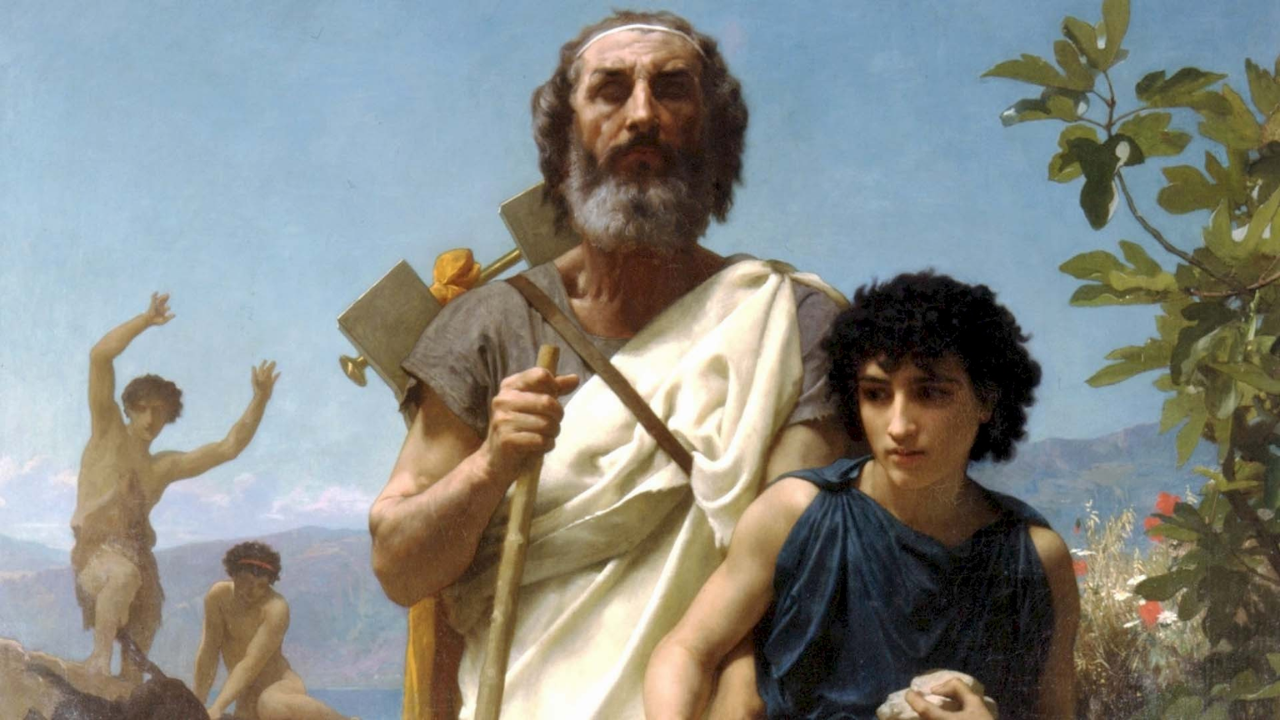
Quote of the day by Homer: 'Of all creatures that breathe and move upon the earth, nothing is...'
Summarized and contextualized by DistantNews.
At a glance
In-depth
Sources not specified
Context piece
- The Odyssey's line 'Of all creatures that breathe and move upon the earth, nothing is bred that is weaker than man' reflects the uncertainty of human life, not hopelessness.
- Homer argues that people often believe good fortune will last forever, but struggle when hardship comes, as human life is temporary and fragile without tools and systems.
- The quote appears when Odysseus, disguised as a beggar, warns a kind suitor, Amphinomus, about the unpredictable nature of fortune and the potential for sorrow.
Homer's ancient Greek epic, The Odyssey, offers a profound reflection on human fragility and the unpredictable nature of life. A line from Book 18, "Of all creatures that breathe and move upon the earth, nothing is bred that is weaker than man," is often misinterpreted as a statement of despair. However, the text clarifies that this sentiment is not about hopelessness but rather an acknowledgment of life's inherent uncertainty.
Homer, through the character of Odysseus, suggests that humans tend to believe their good fortune is permanent when times are good. This illusion shatters when adversity strikes, revealing a struggle to cope with rapidly changing circumstances. The line appears as Odysseus, having returned home after 20 years, disguises himself as a beggar to observe the suitors vying for his wife's hand and squandering his wealth.
Of all creatures that breathe and move upon the earth, nothing is bred that is weaker than man.
He delivers this warning to Amphinomus, a suitor who shows him kindness. Drawing from his own experiences of lost power and wealth due to shipwrecks and the will of the gods, Odysseus emphasizes that human fortune is transient. He states that while people believe they will never suffer evil during prosperous times, they must bear sorrow with a patient heart when the gods decree it. Amphinomus is unsettled but remains, his fate sealed by the goddess Athena.
The concept of "ephemeroi," or "creatures of a day," used in ancient Greek literature, further illustrates this perspective. It highlights the temporary and uncertain existence of mortals compared to the immortal gods. This view, later praised by philosopher Friedrich Nietzsche, suggests that true strength comes from honestly accepting human weakness and the impermanence of life, rather than ignoring it.
For he thinks that he will never suffer evil in time to come, so long as the gods grant him prosperity and his knees are quick; but when the blessed gods weave sorrow for him, this too he bears perforce with a patient heart.
DistantNews Editorial
Originally published by Times of India. Summarized and contextualized by our editorial team with added local perspective. Read our editorial standards.
More Stories

From Our Blog

What Press Freedom Means for the News You Read

What Gets Lost (and Found) When News Is Translated

The Critical Role of Diaspora Media in Global News

What Travellers Should Know About Countries with Restricted Press

A Digital Nomad's Guide to Following Local News
