


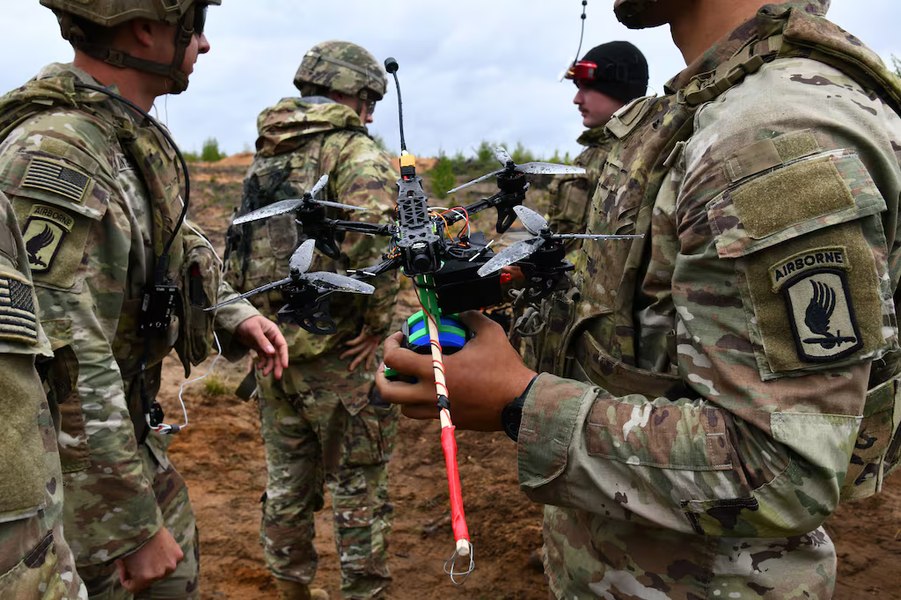
Rapid military tech evolution questions U.S. preparedness for future conflicts
Translated from Romanian, summarized and contextualized by DistantNews.
At a glance
Analysis
Sources not specified
Context piece
- Rapid technological advancements, particularly in drone warfare and artificial intelligence, are challenging the traditional military superiority of the United States.
- Recent conflicts in Ukraine and the Middle East highlight how modern warfare evolves faster than many armies can adapt.
- The high cost of intercepting cheap drones and the long production times for interceptor missiles raise questions about the sustainability of current defense strategies.
The accelerating pace of technological change is fundamentally reshaping armed conflicts, increasingly questioning the United States' traditional military dominance. Recent experiences in Ukraine and the Middle East demonstrate that modern warfare is evolving more rapidly than many armies can adapt, according to a Bloomberg analysis by Max Hastings.
The U.S. military is significantly expanding its drone procurement program, aiming to increase annual purchases from approximately 50,000 to 340,000 by 2027. However, Ukraine's production and deployment of millions of drones annually underscore the dramatic shifts occurring on the battlefield since the 2022 conflict began.
The war in Ukraine has particularly highlighted the cost-effectiveness of relatively inexpensive systems in inflicting significant damage on much costlier military equipment. Ukrainian naval drones have been used against Russia's Black Sea Fleet, contributing to the sinking or damage of several warships. Concurrently, the widespread use of attack and reconnaissance drones has altered ground operation tactics.
Despite these changes, conventional weapon systems remain relevant. U.S. and Israeli air campaigns against targets in Iran illustrate the continued essential role of modern aviation in high-intensity conflicts. However, the high cost of intercepting drones and missiles with advanced defense systems presents a challenge. Intercepting a low-cost drone with a Patriot missile can be tens or even hundreds of times more expensive than the target's value. Furthermore, replenishing interceptor missile stocks takes years, raising concerns about the sustainability of such operations in prolonged conflicts.
Artificial intelligence is emerging as a new arena for strategic competition. Hastings argues that the rapid development of AI technologies could diminish the technological advantage the U.S. has held for decades. Chinese AI companies are reportedly closing the gap with their American counterparts, intensifying competition between major powers in this sector.
DistantNews Editorial
Originally published by Adevărul in Romanian. Translated, summarized, and contextualized by our editorial team with added local perspective. Read our editorial standards.
More Stories

From Our Blog

What Gets Lost (and Found) When News Is Translated

The Critical Role of Diaspora Media in Global News

What Travellers Should Know About Countries with Restricted Press

A Digital Nomad's Guide to Following Local News

How the Same Story Looks Different in Different Countries
