

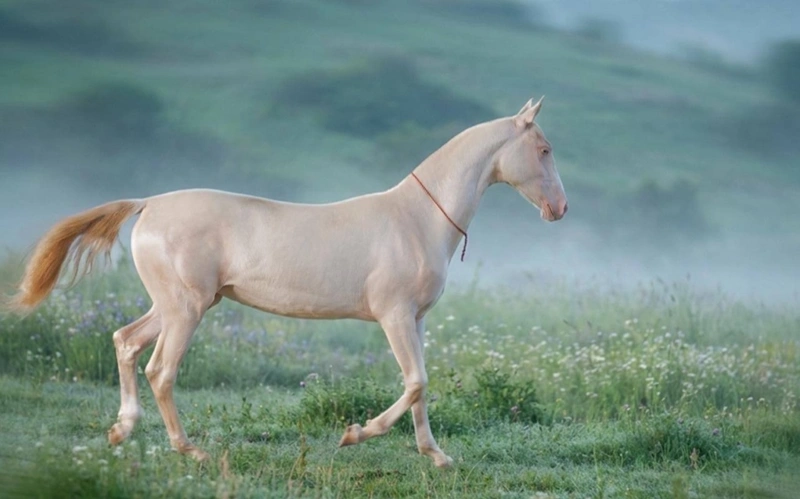
Rare Akhal-Teke Filly Becomes Living Symbol of Kazakhstan's Nomadic Heritage
Translated from English, summarized and contextualized by DistantNews.
At a glance
News
Sources not specified
Context piece
- A rare Akhal-Teke filly named Akzhan, with a distinctive isabelline coat, has become a cultural symbol in Kazakhstan.
- Akzhan's coloring is found in only about 3% of the Akhal-Teke breed and is traditionally associated with prosperity and nobility in Kazakh culture.
- The horse holds deep historical and cultural significance for the Kazakh people, representing their nomadic heritage and the foundation of their civilization.
ASTANA – A young Akhal-Teke filly named Akzhan has captured attention in Kazakhstan, emerging as a cultural symbol due to her rare isabelline coat. Born on March 30, 2025, Akzhan represents a color variety seen in only about 3% of the Akhal-Teke breed, known for its metallic sheen.
In Kazakh tradition, horses with this pale golden coloring are linked to prosperity, good fortune, and nobility. Akzhan is also a favorite of President Kassym-Jomart Tokayev. The Akhal-Teke breed is sometimes referred to as the "heavenly horse."
Horses have been central to Kazakh civilization for centuries, influencing transportation, trade, warfare, and daily life on the Great Steppe. Cultural expert Assel Nikambekova emphasized that for the Kazakh people, the horse is more than an animal; it is a foundation of their civilization and a source of strength and inspiration.
The horse has always been more than an animal for the Kazakh people. It formed the foundation of our civilization, accompanied nomads throughout their lives and became a source of strength and inspiration.
Archaeological evidence, such as discoveries at the Botai settlement dating to the fourth millennium B.C., suggests that the region's inhabitants were among the first to domesticate horses for riding. This domestication transformed human mobility and played a key role in the rise of Eurasian nomadic civilizations. Petroglyphs across Kazakhstan also depict horses as central figures in ancient steppe societies' hunting, rituals, and battles.
Akzhan's name, meaning "pure soul," further adds to her symbolic value, representing honesty and integrity. Urban planner Adiya Karsybek noted that cities gain stronger identities when residents connect emotionally with cultural symbols, suggesting Akzhan helps bridge Kazakhstan's nomadic heritage with its modern identity.
It is important for our capital’s identity to be built not only around iconic buildings but also around stories, traditions and symbols with which people can emotionally connect.
DistantNews Editorial
Originally published by The Astana Times in English. Translated, summarized, and contextualized by our editorial team with added local perspective. Read our editorial standards.
More Stories


From Our Blog

What Gets Lost (and Found) When News Is Translated

The Critical Role of Diaspora Media in Global News

What Travellers Should Know About Countries with Restricted Press

A Digital Nomad's Guide to Following Local News

How the Same Story Looks Different in Different Countries
