


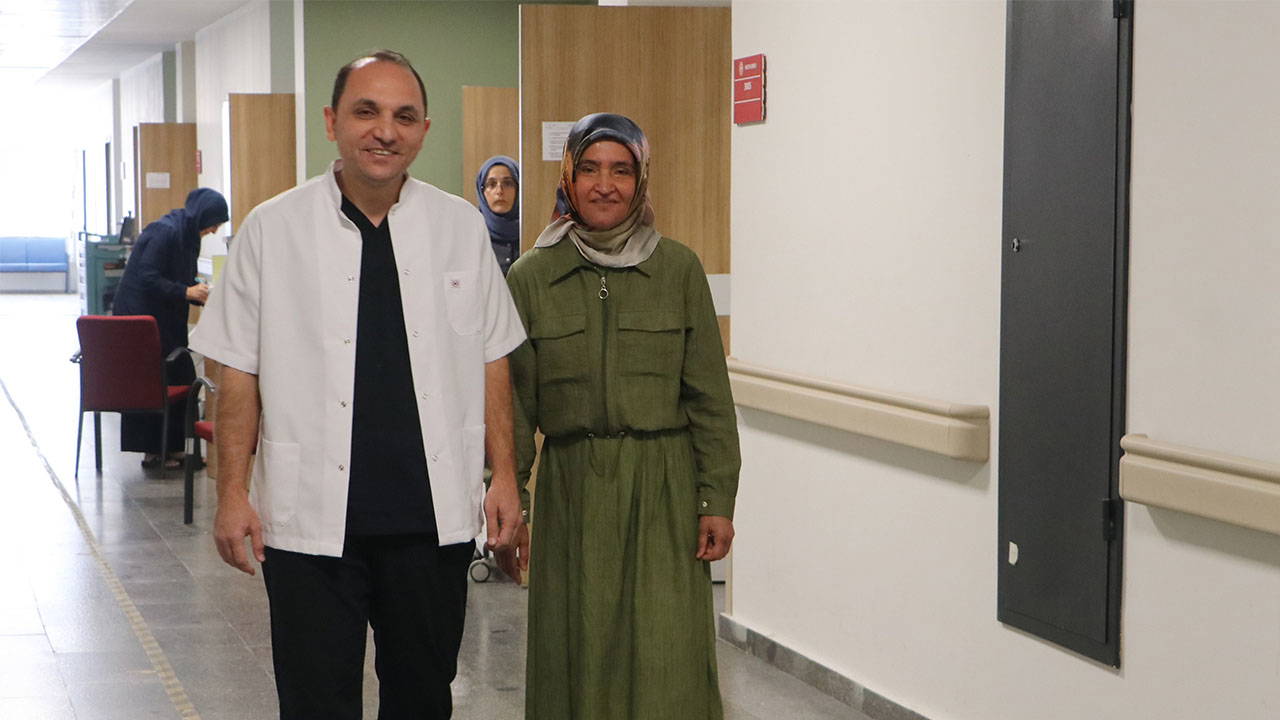
Rare disease patient's blocked arteries opened with closed procedure in Turkey
Translated from Turkish, summarized and contextualized by DistantNews.
At a glance
News
Sources not specified
Outcome reported
- A 3-child mother with a rare condition causing severe joint pain and mobility issues underwent a complex procedure to open blocked arteries.
- Doctors diagnosed her with LHH, a condition leading to abnormal immune cell proliferation that severely impacted her heart function and caused 98% blockages in leg arteries and 90% in the carotid artery.
- A minimally invasive procedure using balloons and stents, performed through the arm and groin, successfully treated the blockages, significantly improving her mobility and breathing.
A Turkish woman, Satı Koç, who suffered from a rare condition causing debilitating joint pain and an inability to walk, has regained her mobility after doctors successfully treated severe blockages in her arteries using a minimally invasive technique. Koç, a mother of three, was diagnosed with Lymphohistiocytosis (LHH), a condition characterized by the abnormal proliferation of immune system cells.
It was like a miracle; I am very good now. My whole main arteries were blocked. My doctors took great care of me during this process. Now, they have transferred me to rheumatology for the treatment of my primary illness, and my treatment is going well. Walking was very difficult for me before, but now it has become easier, and my breathing is also easier.
LHH severely affected Koç's heart, reducing its pumping power to 25%. She also presented with critical blockages: 98% in the main arteries of both legs and 90% in her carotid artery. Due to her critically low heart function, underlying rheumatic disease, and the high risks associated with open surgery or traditional endovascular procedures, doctors opted for a closed-method treatment.
The procedure, which lasted about 1.5 hours, involved using balloons and stents inserted through her arm and groin. This approach allowed doctors to navigate the complex vascular anatomy, including a rare "bovine arch" variation where the carotid artery originates from a different vessel than usual, making access extremely challenging.
Surgeons said open surgery could not be performed, so we planned a procedure to place stents by entering through the arm or groin. The carotid artery, which normally originates from the aorta in healthy individuals, originated from the right-sided vessel in this patient. This is called a 'bovine arch' in the literature, and reaching it was very difficult.
"It was like a miracle; I am very good now," Koç expressed, describing the immense difficulty she faced before the treatment. "My whole main arteries were blocked. My doctors took great care of me during this process. Now, they have transferred me to rheumatology for the treatment of my primary illness, and my treatment is going well. Walking was very difficult for me before, but now it has become easier, and my breathing is also easier."
The procedure lasted about one and a half hours. After stenting the patient's groin arteries, we found another way to reach the carotid artery and performed a balloon stent procedure there as well. The procedure was completed successfully. We transferred the patient to the ward, and after monitoring her there, we addressed her other rheumatological diseases. The patient's leg pain has gone.
Prof. Dr. Hüseyin Ayhan from Sincan Training and Research Hospital's Cardiology Clinic confirmed the procedure's success, noting that the patient's leg pain has subsided. He emphasized that vascular blockages can occur in various arteries, not just the heart, and highlighted the importance of considering less common conditions and tailored treatment approaches.
People should not just think that their heart arteries can get blocked; other arteries can also get blocked.
DistantNews Editorial
Originally published by Cumhuriyet in Turkish. Translated, summarized, and contextualized by our editorial team with added local perspective. Read our editorial standards.
More Stories



From Our Blog

What Gets Lost (and Found) When News Is Translated

The Critical Role of Diaspora Media in Global News

What Travellers Should Know About Countries with Restricted Press

A Digital Nomad's Guide to Following Local News

How the Same Story Looks Different in Different Countries
