


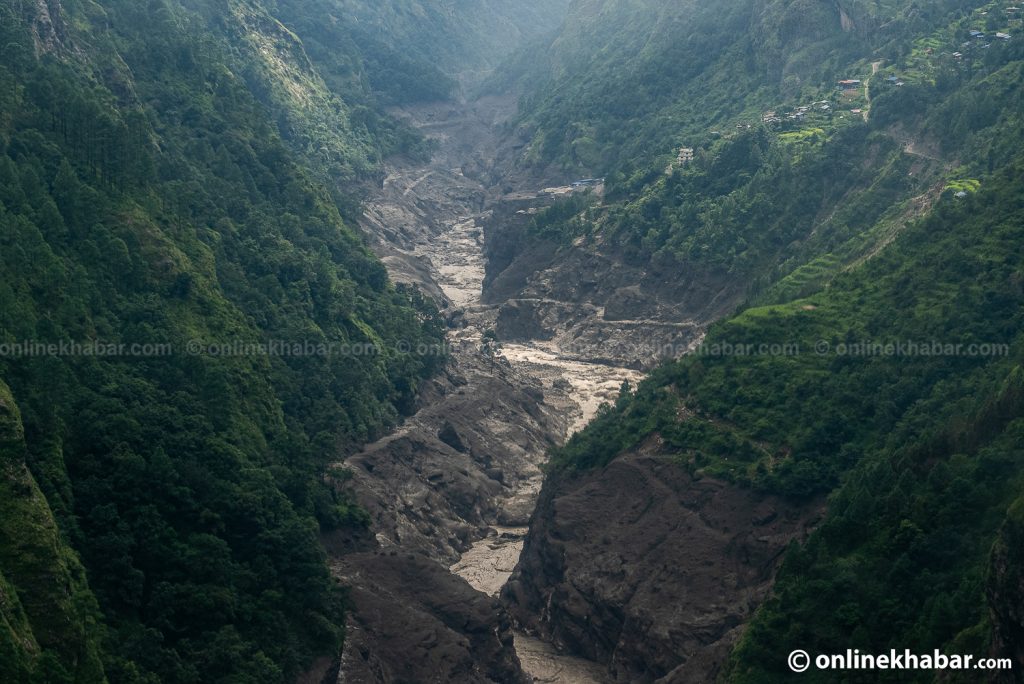
Rasuwa flood likely caused by ice-rock fall, not glacial lake outburst
Translated from English and summarized by DistantNews. Read the original for the full story.
At a glance
News
Named sources
Ongoing story
- A devastating flood in Nepal's Rasuwa region may have been caused by an ice-rock landslide, not a glacial lake outburst.
- Researcher Santosh Nepal suggests the event originated from Langtang Lirung.
- The flood impacted the Rasuwa district and flowed along the Trishuli River.
The catastrophic flood that recently inundated the Rasuwa district and surged along the Trishuli River in Nepal was likely triggered by a massive ice-rock landslide, according to water resources and climate change expert Santosh Nepal. This assessment challenges the initial assumption that the disaster stemmed from a glacial lake outburst.
Nepal, who holds a PhD in his field, pointed to the Langtang Lirung area as the probable source of the event. His analysis suggests that a significant collapse of ice and rock from the mountain face initiated the devastating flow of water and debris that swept through the region.
This distinction in cause is crucial for understanding flood dynamics in the Himalayas. While glacial lake outburst floods (GLOFs) are a known hazard, identifying landslides as the trigger offers different insights into the geological and climatic factors at play. Further investigation will be needed to confirm the exact sequence of events that led to the flood.
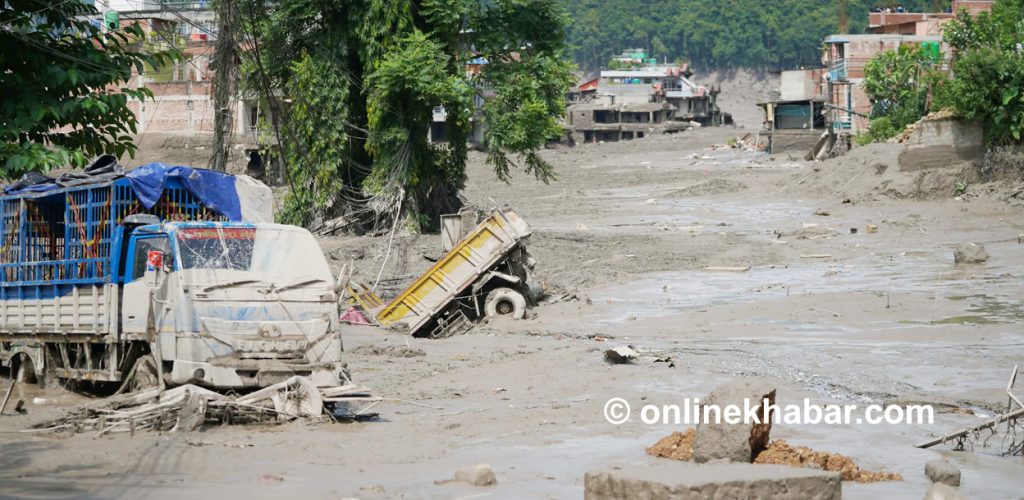
The flood caused significant devastation in Rasuwa and along the Trishuli River, impacting communities and infrastructure. Understanding the precise cause is vital for developing effective early warning systems and mitigation strategies for future events in this geologically active and climate-vulnerable region.
About this summary
Originally published by OnlineKhabar English in English. Translated, summarized, and contextualized automatically by DistantNews, with a note on how the source frames the story. Not individually reviewed before publishing. How this works.
More Stories

From Our Blog

What Gets Lost (and Found) When News Is Translated

The Critical Role of Diaspora Media in Global News

What Travellers Should Know About Countries with Restricted Press

A Digital Nomad's Guide to Following Local News

How the Same Story Looks Different in Different Countries
