

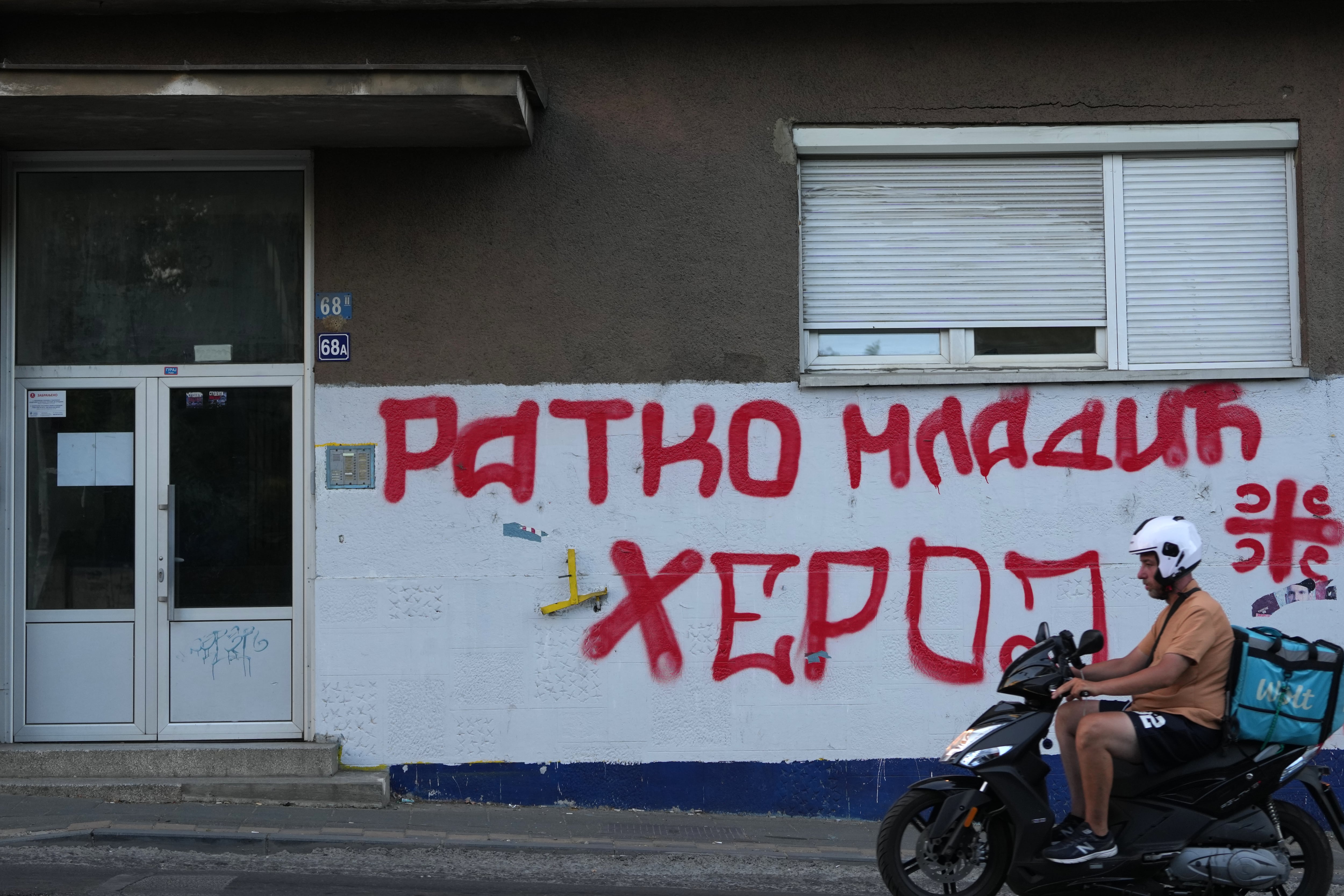
 Image: Darko Vojinovic (AP Photo/Darko Vojinovic)
Ratko Mladic's death divides Balkans: Serbian hero, Bosnian pain
Translated from Spanish and summarized by DistantNews. Read the original for the full story.
At a glance
News
Named sources
Outcome reported
- The death of Bosnian Serb war criminal Ratko Mladic has elicited sharply divided reactions across the Balkans.
- In Bosnia, survivors and officials recall his role in genocide, emphasizing that his death does not erase past atrocities.
- In Serbia, some express condolences and allege his death was hastened by inadequate medical treatment, while polls show a significant portion still view him as a hero.
The death of Ratko Mladic, the Bosnian Serb general convicted of war crimes, has been met with deeply divided sentiments across the Balkans, reflecting the region's enduring scars. In Bosnia, particularly among the Bosniak population, his passing is viewed with a sense of partial closure, having lived his final moments in prison. The focus remains on the victims and the atrocities committed under his command.
Emil Suljagic, director of the Srebrenica Memorial Center and a genocide survivor, stated, “He is dead and there is not much to say about it… It does not bring back the dead. It does not erase the mass graves. It does not change the sentences. It does not turn a criminal into a historical figure.” His words underscore the lasting pain and the belief that Mladic's death does not alter the historical record or offer true solace.
Conversely, in Serbia, official statements have focused on expressing condolences to Mladic's family. Nenad Stevandic, president of the National Assembly of Republika Srpska (Bosnia's Serb-majority entity), suggested that Mladic's death was accelerated by a violation of his right to adequate medical treatment. The regional political impact of how Serbian society processes the death of the former military leader remains a significant question.
Mladic, who evaded capture for years after the Bosnian War, was protected by Serbian military authorities until his arrest in 2011. Public opinion polls from that era indicated that a majority of Serbs would not have handed him over to justice, with around 40% considering him a hero. Despite the Hague Tribunal's convictions, these perceptions have proven difficult to shift.
Recent surveys reinforce this sentiment. A 2022 poll by House of Win found 76% of Serbs considered Mladic a hero. Furthermore, a 2023 investigation by the NGO Youth Initiative for Human Rights among Serbian citizens aged 18-30, who did not experience the war, revealed that one-third believed Mladic was not responsible for the crimes for which he was tried. This indicates that, three decades after the siege, Mladic's image as a national hero persists for a significant segment of the Serbian population, challenging the international community's efforts to establish a shared historical narrative.
He is dead and there is not much to say about it… It does not bring back the dead. It does not erase the mass graves. It does not change the sentences. It does not turn a criminal into a historical figure.
About this summary
Originally published by El País in Spanish. Translated, summarized, and contextualized automatically by DistantNews, with a note on how the source frames the story. Not individually reviewed before publishing. How this works.
More Stories
From Our Blog

What Gets Lost (and Found) When News Is Translated

The Critical Role of Diaspora Media in Global News

What Travellers Should Know About Countries with Restricted Press

A Digital Nomad's Guide to Following Local News

How the Same Story Looks Different in Different Countries
