


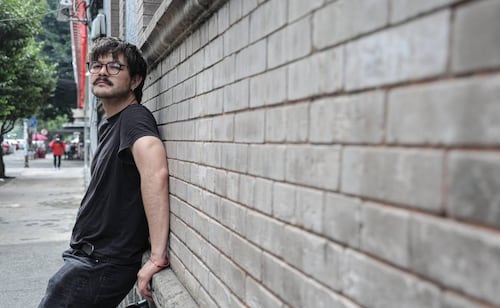
Reading López Velarde is a right to access beauty: Pedro Derrant; 'poetry has young blood,' he says in interview
Translated from Spanish, summarized and contextualized by DistantNews.
At a glance
Interview
Sources not specified
Context piece
- Poet Pedro Derrant views poetry as a revolutionary force that "dynamites language."
- He highlights the Casa del Poeta Ramón López Velarde as a vital space for historical memory and intergenerational exchange.
- Derrant expresses optimism about poetry's survival despite threats to cultural spaces, emphasizing its unpredictable nature.
Poetry acts as a radical laboratory for language, capable of explosive and unpredictable outcomes, according to poet and specialist Pedro Derrant. He describes the genre as a space where language is "dynamited," leading to both successful creations and potentially catastrophic results.
the laboratory where language is dynamited.
Derrant emphasizes the significance of the Casa del Poeta Ramón López Velarde in Mexico City, a place where the "national poet" lived and died. This historic house, restored in the 1990s, has become a crucial meeting point for poets from Mexico and beyond. It serves as a site for historical memory, preserving the legacy of López Velarde, while also fostering intergenerational connections between emerging and established writers.
poetry is not going to die
Speaking about the recent threat to convert the Casa del Poeta into a cabaret, Derrant remains optimistic about poetry's resilience. He argues that while the loss of such a space would be detrimental to the literary community, poetry itself would not cease to exist. However, he stresses the importance of defending these literary spaces against institutional neglect and attacks, noting that the Casa del Poeta offered free access to poetry for the community.
In case the plan had been carried out [to convert the Casa del Poeta into a cabaret], what they would have done is take away a space from the literary community, where one could approach poetry without paying money, with absolute freedom and almost no requirements.
Derrant also addresses the perceived distance between poetry and readers, attributing it to the genre's marginal status. He believes that few are willing to engage with poetry's destabilizing effect on language. Despite this, he sees technological advancements and digital media as offering new avenues for poetry to reach wider audiences. He contrasts poetry's unpredictability with the predictability of artificial intelligence, asserting that AI can never replicate the essence of a poem.
Poetry will always be marginal to the extent that not many people are willing to commit to this rocket of destabilizing language and opening holes in it, turning it over and twisting it.
DistantNews Editorial
Originally published by El Universal in Spanish. Translated, summarized, and contextualized by our editorial team with added local perspective. Read our editorial standards.
More Stories



From Our Blog

What Press Freedom Means for the News You Read

What Gets Lost (and Found) When News Is Translated

The Critical Role of Diaspora Media in Global News

What Travellers Should Know About Countries with Restricted Press

A Digital Nomad's Guide to Following Local News
