


Red Alert in Russia: War Becomes Threateningly Dangerous for Putin for the First Time in a Long Time
Translated from Croatian, summarized and contextualized by DistantNews.
At a glance
News
Named sources
Ongoing story
- Ukrainian long-range drone attacks on Russian territory, including St. Petersburg, have threatened supply lines and infrastructure.
- These strikes have damaged Russia's image of invincibility and Putin's control over the war, occurring during the St. Petersburg International Economic Forum.
- Analysts suggest Ukraine's expanded drone use, targeting logistics and energy, signals a potential shift in the war's dynamics, challenging Russian advances.
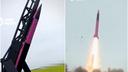
Ukraine's effective long-range drone attacks deep inside Russian territory have ignited a red alert, posing a significant threat to President Vladimir Putin's control over the war. Strikes targeting strategic objectives, including Putin's hometown of St. Petersburg, have jeopardized Russian supply lines and energy infrastructure, severely undermining the perception of Russian invincibility and the president's absolute command.
Ukraine has shown the world that Putin is losing control of the war.
The attacks coincided with the opening of the St. Petersburg International Economic Forum, often dubbed "Putin's Davos." Thick smoke billowed over Russia's second-largest city as Ukrainian drones struck multiple targets, including an oil terminal and a naval base, hundreds of kilometers from the front lines. This assault carried immense symbolic weight, occurring in the city where Putin grew up. Peter Dickinson of the Atlantic Council noted that the event represented a serious blow to Putin's image as a leader in complete control of the war, with the forum opening under the shadow of fires caused by the Ukrainian attack.
In recent months, Ukraine has significantly expanded its use of long-range drones. Targets are no longer confined to front-line positions but now include logistical, energy, and military infrastructure deep within Russia. Cathy Young, writing for The Bulwark, argues that this shift is a key reason for the changing dynamics of the war. While 2024 and early 2025 were marked by a belief that Ukraine was gradually losing, many analysts now speak of a turning point. Ukrainian attacks on the "land bridge" to Crimea, a vital route for supplying the occupied peninsula, have been particularly effective, with drones reportedly destroying dozens of trucks and seriously compromising Russian supply lines.
Almost everyone now acknowledges that the Russian ground offensive has stalled.
"Almost everyone now acknowledges that the Russian ground offensive has stalled," Young writes, citing military analysts and Russian military bloggers who increasingly question official Kremlin claims of battlefield successes. Ukrainian writer Igor Bondar, in a commentary for The Hill, observes a change even in Putin's public rhetoric. According to Bondar, the Russian president has toned down his harshest language towards Ukrainian leadership in recent months, referring to "Mr. Zelensky" and leaving open the possibility of direct talks. Bondar attributes this shift to the increasingly effective Ukrainian attacks on Russian infrastructure, suggesting the Russian leader "felt the real power of the Ukrainian army."
Russian dictator felt the real power of the Ukrainian army.
DistantNews Editorial
Originally published by Večernji List in Croatian. Translated, summarized, and contextualized by our editorial team with added local perspective. Read our editorial standards.
More Stories


From Our Blog

What Gets Lost (and Found) When News Is Translated

The Critical Role of Diaspora Media in Global News

What Travellers Should Know About Countries with Restricted Press

A Digital Nomad's Guide to Following Local News

How the Same Story Looks Different in Different Countries
