


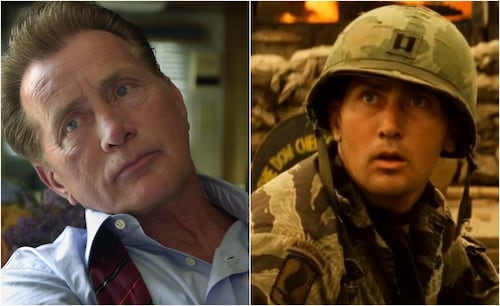
Remembering Martin Sheen and the 'Apocalypse Now' Scene Where He Was Genuinely Intoxicated
Translated from Spanish, summarized and contextualized by DistantNews.
At a glance
In-depth
Sources not specified
Context piece
- Martin Sheen, known for his role as Captain Benjamin Willard in "Apocalypse Now," struggled with alcohol dependency.
- He adopted the stage name Martin Sheen, a tribute to his casting director and Bishop Fulton J. Sheen, despite his father's disapproval.
- Sheen's performance in "Apocalypse Now" was impacted by his real-life intoxication during filming.
Martin Sheen, the iconic actor celebrated for his portrayal of Captain Benjamin Willard in Francis Ford Coppola's "Apocalypse Now," grappled with significant personal challenges, including a profound struggle with alcohol dependency. Born Ramón Gerard Antonio Estévez on August 3, 1940, Sheen chose a stage name, a decision that, while not stemming from dislike of his birth name, initially presented career obstacles due to its Spanish origin.
Throughout his entire career, he experienced regrets over adopting another name and that, in relation to his official documents and personal aspect, he never stopped signing and presenting himself with his real name.
His father, Francisco Estévez Martínez, reportedly disapproved of his son's adoption of an artistic name. However, Sheen adopted "Martin" in honor of Robert Dale Martin, a casting director who provided him with a crucial early television opportunity, and "Sheen" after Bishop Fulton J. Sheen. Despite his father's reservations, Sheen maintained his birth name for official documents and personal use throughout his career, telling "Inside the Actor's Studio" in 2003 that he experienced regrets over using a stage name.
Martin was taken from the casting director of CBS, Robert Dale Martin, who gave him his first important opportunity on television, while Sheen was adopted by Bishop Fulton J. Sheen.
Sheen's deep Catholic faith, particularly influenced by his mother's passing when he was 10, played a significant role in his life. The Church's support for him and his nine siblings, preventing their placement in an orphanage, led to Bishop Sheen providing financial assistance for Sheen's move to New York to pursue acting studies. His breakthrough role came in the 1973 film "Badlands," which led to Coppola casting him in "Apocalypse Now."
When they were about to be sent to an orphanage, he and his nine siblings, members of the Church supported them throughout the years, to such an extent that it was the bishop himself who gave him money for Sheen to move to New York to study acting.
During the filming of "Apocalypse Now," Sheen was experiencing an emotional crisis fueled by excessive alcohol consumption. This personal struggle directly influenced his performance, as he was genuinely intoxicated while filming the scene where Captain Willard is depicted in a drunken, hallucinating state in a hotel room, a moment that became indelibly captured on film.
Although his career was about to ascend, Sheen was going through an emotional crisis, driven by his excessive consumption of alcohol; in fact, when he recorded the scene where his character, Captain Benjamin Willard, was drunk and hallucinating in a hotel room, the actor was really under the influence of alcohol as it was perpetuated in the scene, because on the day of the filming he was celebrating.
DistantNews Editorial
Originally published by El Universal in Spanish. Translated, summarized, and contextualized by our editorial team with added local perspective. Read our editorial standards.
More Stories



From Our Blog

What Press Freedom Means for the News You Read

What Gets Lost (and Found) When News Is Translated

The Critical Role of Diaspora Media in Global News

What Travellers Should Know About Countries with Restricted Press

A Digital Nomad's Guide to Following Local News
