


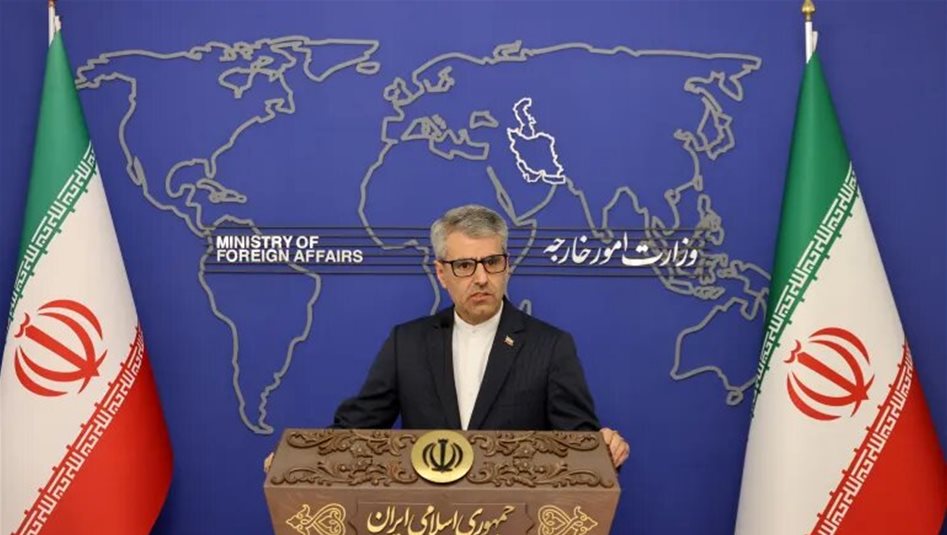

Report: Hezbollah Brigades and Nujaba reject government deadline on weapons
Translated from Arabic and summarized by DistantNews. Read the original for the full story.
At a glance
News
Named sources
Ongoing story
- Leaders of Harakat al-Nujaba and Kataib Hezbollah reportedly told an Iraqi committee they would not accept the September 30 deadline for resolving the status of their weapons.
- Talks led by Nouri al-Maliki, Mohammed Shia al-Sudani and Hadi al-Amiri have shifted from disarmament toward regulating or freezing weapons to avoid an internal confrontation.
- The government, security agencies, Coordination Framework, Popular Mobilization Forces and faction representatives are preparing to meet on the issue.
Efforts by Iraq’s Coordination Framework to find a negotiated solution for the weapons held by armed factions have run into a firm refusal to surrender them, according to a report cited by Alsumaria.
The sacredness of the resistance’s weapons.
After weeks of talks led by a three-member committee comprising Nouri al-Maliki, Mohammed Shia al-Sudani and Hadi al-Amiri, there has been no sign of agreement on the principle of handing over weapons. Political discussions are instead moving toward “regulating and containing” them, a formula presented as more realistic and less likely to push the country toward a confrontation threatening its political and security stability.
The political council head of Harakat al-Nujaba, Ali al-Asadi, reaffirmed the group’s commitment to what he called the “sacredness of the resistance’s weapons.” He also defended the Popular Mobilization Forces as a national body that cannot be touched. The report said Nujaba and Kataib Hezbollah leaders rejected the September 30 deadline set by the weapons committee, arguing that it could not determine the future of their military capabilities.
A national body that cannot be touched.
A meeting involving the government, security agencies, the Coordination Framework, the Popular Mobilization Forces and faction representatives is being prepared. Its stated aim is to ease tensions and find common ground before the deadline. Contacts have reportedly shifted toward options including regulation or a freeze, allowing the date to pass without an internal clash.
There is a political aspect, and they are right about it, and a jihadist aspect that the factions should continue until the remnants of the occupation are removed from the country.
A Nujaba leader said the committee had political weight but could not compel the resistance factions to surrender their weapons. Lawmaker Falih al-Khazali likewise rejected describing the factions’ arms as outside the state, calling them national weapons that defended Iraq. Security expert Basim Samir said an agreement by September 30 was increasingly uncertain and that political and security conditions could push the parties away from confrontation.
Resistance weapons are national weapons, and they defended Iraq in its darkest circumstances.
About this summary
Originally published by Alsumaria in Arabic. Translated, summarized, and contextualized automatically by DistantNews, with a note on how the source frames the story. Not individually reviewed before publishing. How this works.
More Stories
From Our Blog

News in Translation: What Gets Lost, and How We Keep the Framing

Diaspora Media: How Communities Follow News From Home

Traveling Where the Press Is Not Free: How to Read the News There

The Digital Nomad's Guide to Local News

The Same Story, Different Countries: How Coverage Changes at the Border
