


Rescue mission launches to save NASA telescope that's falling back to Earth thanks to solar storms
Summarized and contextualized by DistantNews.
At a glance
News
From a news agency
Ongoing story
- A spacecraft launched Friday to rescue NASA's Swift Observatory, which is at risk of crashing to Earth due to solar storms.
- The mission, costing $30 million, aims to capture the telescope and boost its orbit, potentially extending its operational life.
- If successful, the telescope could resume observations by September, with NASA's Hubble Telescope being a potential candidate for a similar future mission.
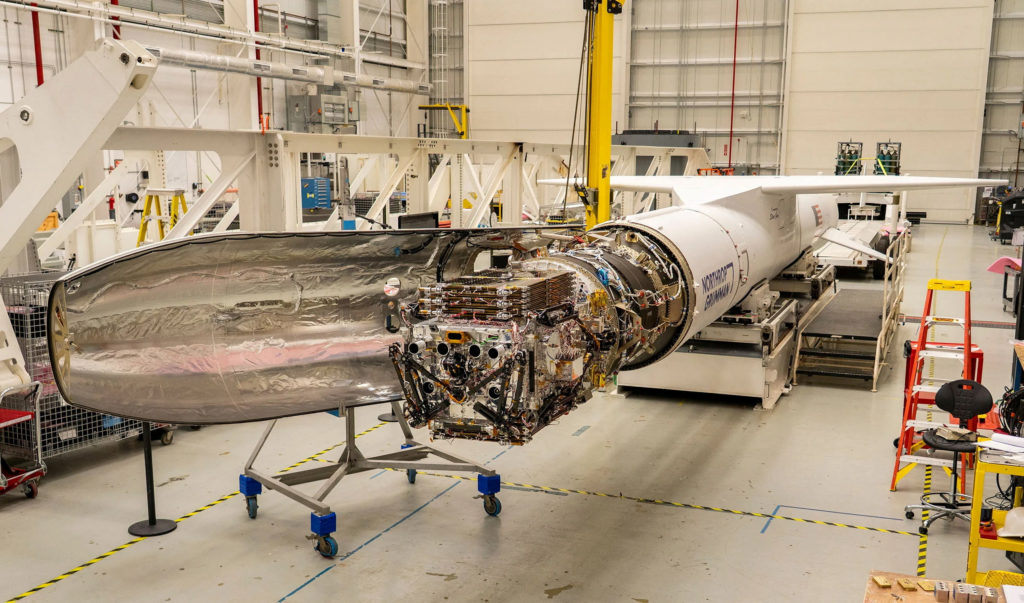
A critical rescue mission is underway to save NASA's Swift Observatory, a vital telescope launched in 2004, which is rapidly descending towards Earth. A specialized spacecraft, named Link and developed by Katalyst Space Technologies, successfully launched Friday from the Marshall Islands. This mission, costing NASA $30 million, is designed to intercept and capture the 1.6-ton observatory, which is sinking faster than anticipated due to recent solar storms increasing atmospheric drag.
The Link spacecraft, launched via a Pegasus rocket from a modified airplane, is expected to reach Swift in about a month. Its primary objective is to attach to the telescope and use its thrusters to gently boost Swift's orbit by approximately 150 miles (240 kilometers). This maneuver aims to raise the observatory from its current altitude of 224 miles (360 kilometers) back to a safe operational level, potentially allowing it to continue its work tracking cosmic events like gamma ray bursts and exploding stars.
NASA faces a tight deadline, as Swift is predicted to fall out of orbit and burn up in the atmosphere by October if the mission fails. The urgency of the situation led Katalyst to develop and prepare the mission in an accelerated timeframe of just nine months. The success of this operation could pave the way for similar salvage missions in the future, with NASA's Hubble Space Telescope also experiencing a decline in altitude due to solar activity.
Ghonhee Lee, CEO of Katalyst Space, described the mission as "high-risk, high-reward," emphasizing the primary goal of preventing Swift's destruction. "The biggest danger was always we don't launch anything and we let Swift burn up in the atmosphere," Lee stated before the launch. "So we were always trying to avoid that risk, and our team has done that." If all proceeds as planned, Swift could be back online scanning the cosmos by September, with its observations currently on hold to conserve its remaining orbit.
This is a high-risk, high-reward mission. The biggest danger was always we don't launch anything and we let Swift burn up in the atmosphere. So we were always trying to avoid that risk, and our team has done that.
DistantNews Editorial
Originally published by PBS NewsHour. Summarized and contextualized by our editorial team with added local perspective. Read our editorial standards.
More Stories



From Our Blog

How the Same Story Looks Different in Different Countries

What Gets Lost (and Found) When News Is Translated

The Critical Role of Diaspora Media in Global News

What Travellers Should Know About Countries with Restricted Press

A Digital Nomad's Guide to Following Local News
