

Rescue Teams Search Damaged Hydropower Tunnels for Those Missing in Nepal Flood
Translated from English and summarized by DistantNews. Read the original for the full story.
At a glance
News
Sources not specified
Ongoing story
- Rescue teams are searching damaged hydropower tunnels in Nepal for people missing after the Bhotekoshi flood on Aug. 26.
- Teams have advanced different distances at the Chilime, Langtang and Upper Trishuli-1 projects while clearing obstructions and creating alternative access routes.
- Rescuers have located tunnel entrances at the Trishuli-3A and Trishuli-3B projects and are using air pumps, drainage equipment and excavators.
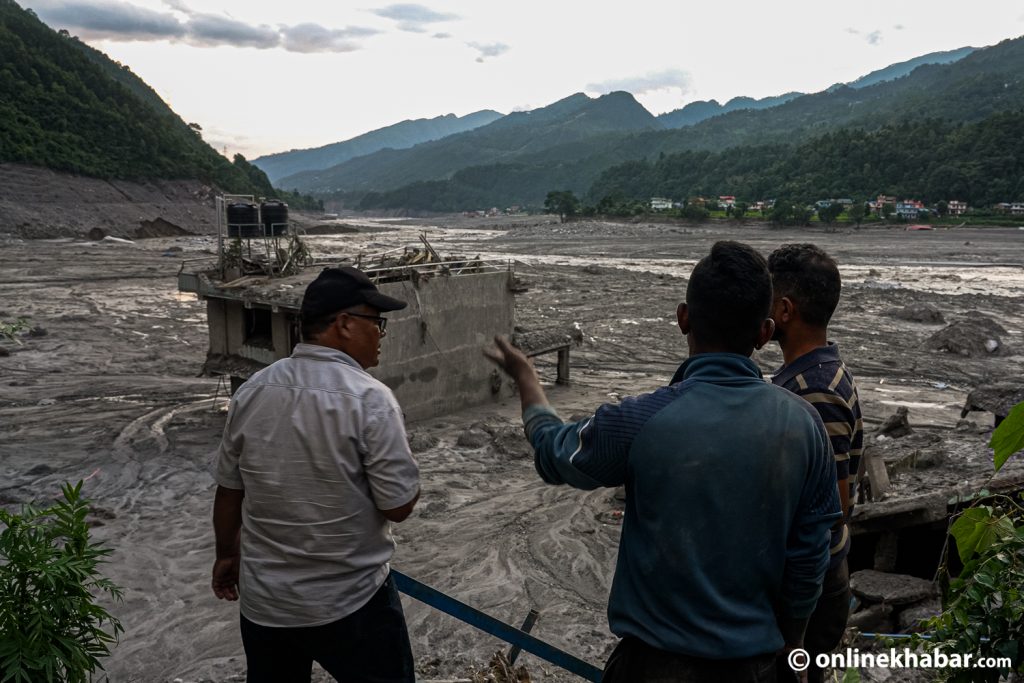
Rescuers are using tunnel operations, heavy machinery and specialist expertise to search for people still missing after Nepal’s devastating Bhotekoshi flood.
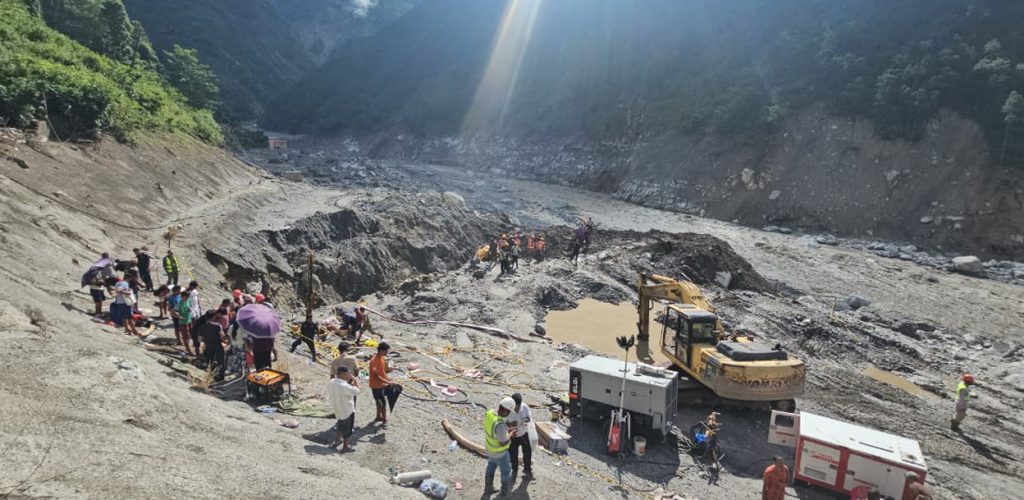
Nepali security personnel are working with Nepali and foreign tunnel experts at several hydropower projects where people may be trapped or remain unaccounted for. At the Chilime Hydropower Project, teams have entered about 50 metres into a tunnel. They have advanced about 150 metres at the Langtang Hydropower Project and about 200 metres at Upper Trishuli-1.
The work is taking place in difficult conditions as teams clear obstructions and try to reach deeper parts of the tunnels. At Trishuli-3A, rescuers have located the tunnel head. A compressor is pumping air inside, while other teams drain water from the tunnel. Three excavators are creating an alternative route so rescuers can approach the affected section from another direction.
At Trishuli-3B, specialists have located the tunnel entrance and are using an excavator to dig through the area and open access for the rescue operation. The search follows flooding across the Bhotekoshi and Trishuli river system in Rasuwa on Aug. 26, which caused extensive loss of life and infrastructure damage. With people still missing, teams continue trying different ways to reach inaccessible sections of the damaged tunnels.
About this summary
Originally published by OnlineKhabar English in English. Translated, summarized, and contextualized automatically by DistantNews, with a note on how the source frames the story. Not individually reviewed before publishing. How this works.
More Stories


From Our Blog

What Gets Lost (and Found) When News Is Translated

The Critical Role of Diaspora Media in Global News

What Travellers Should Know About Countries with Restricted Press

A Digital Nomad's Guide to Following Local News

How the Same Story Looks Different in Different Countries
