


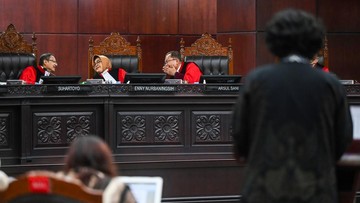
Researcher and student activists challenge new Police Law at Constitutional Court
Translated from Indonesian, summarized and contextualized by DistantNews.
At a glance
News
Official statement
In the courts
- A researcher and student activists have filed a formal challenge at Indonesia's Constitutional Court against the new Police Law.
- They argue the law, passed on June 9, was formed without adhering to proper legal procedures and public participation principles.
- The challenge specifically questions the formal process of the law's formation, citing alleged disregard for harmonization and public consultation stages.
A researcher and student activists have formally challenged Indonesia's recently passed Law on the National Police at the Constitutional Court. The legal action targets Law Number 5 of 2026, which amends the 2002 law governing the police force and was enacted on June 9.
The petitioners, identified as Zulfikar Putra Utama, a researcher at the Indonesian Parliamentary Center, and Muhammad Ezra Suhaeri, student senate chair at UIN Syarif Hidayatullah Jakarta, argue that the law's formation process violated constitutional requirements. Their petition, registered under case number 251/PUU-XXIV/2026, contends that the law was created without proper adherence to the principles of good lawmaking, including transparency, utility, effectiveness, and public participation.
According to the petitioners, the legislative process for the Police Law allegedly bypassed crucial stages, such as harmonization, consolidation, and finalization of concepts, which are mandated by the House of Representatives' standing orders. They assert that harmonization is a vital filtering mechanism to ensure consistency with the national legal system and that its omission in this case undermines the integrity of the lawmaking procedure. The challenge seeks to address these procedural deficiencies, arguing they compromise the law's legitimacy.
DistantNews Editorial
Originally published by CNN Indonesia in Indonesian. Translated, summarized, and contextualized by our editorial team with added local perspective. Read our editorial standards.
More Stories


From Our Blog

What Gets Lost (and Found) When News Is Translated

The Critical Role of Diaspora Media in Global News

What Travellers Should Know About Countries with Restricted Press

A Digital Nomad's Guide to Following Local News

How the Same Story Looks Different in Different Countries
