


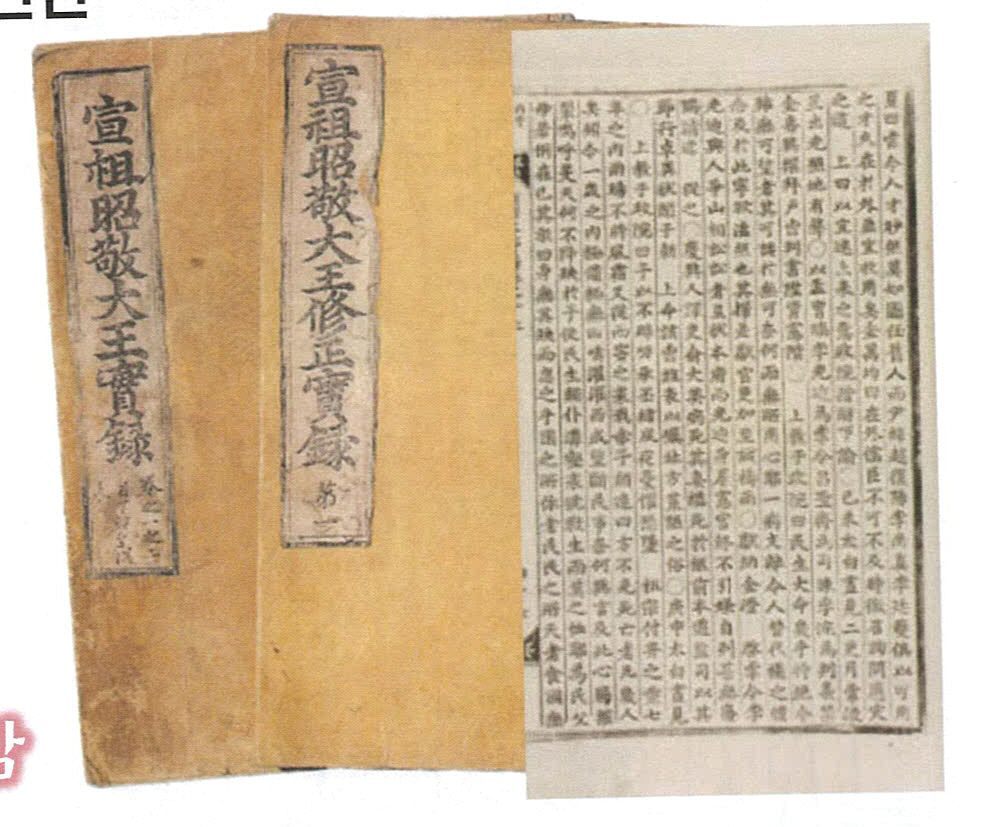
Researchers from Korea, China, Vietnam to Study East Asian Royal Records
Translated from Korean, summarized and contextualized by DistantNews.
At a glance
News
Named sources
New plan
- Researchers from South Korea, China, and Vietnam will study records of East Asian royal families at an international academic conference.
- The conference, held in Busan, commemorates the 48th World Heritage Committee session and focuses on the compilation and status of royal chronicles in East Asia.
- Presentations will cover the historical context of chronicle compilation, changes in compilation methods, and the characteristics of royal records from Korea, China, and Vietnam.
An international academic conference titled 'Compilation and Status of East Asian Royal Chronicles' will be held at the Busan Museum, organized by the National Museum of the Joseon Dynasty Annals. The event commemorates the 48th session of the World Heritage Committee and brings together researchers from South Korea, China, and Vietnam to study historical records of royal families across East Asia.
The enshrinement ceremony of the Joseon Dynasty Annals lacked the rituals dedicated to the king, unlike other national historical records such as 'Gukjo Boram.'
Oh Hang-nyung, an honorary professor at Jeonju University, will deliver the keynote address, titled 'The Historicity of East Asian Annals Compilation.' In his lecture, Oh will discuss the unique nature of the Joseon Dynasty Annals, noting that its enshrinement ceremony lacked the rituals dedicated to the king, distinguishing it from other national historical records like 'Gukjo Boram.' He will explain that while the strict management of annals, including the punishment for leaking historical drafts and the inaccessibility of records to the king himself, is well-known, the enshrinement process symbolized the smooth functioning of a bureaucratic system and the legitimization of a new monarch through adherence to established practices.
Oh also offers an interpretation of the practice of washing historical drafts after compilation, known as 'secho.' He suggests that beyond the practical reasons of preventing leaks and recycling paper, 'secho' could symbolize a transition, such as death, separation, or sublimation.
Those witnessing the enshrinement ceremony would have been relieved that a function surrounding the annals was operating without issue, seeing the new monarch uphold tradition and custom. The king and his officials secured legitimacy by adhering to the conventions of annals compilation.
The conference will feature several other presentations. Kang Moon-sik, a professor at Soongsil University, will discuss 'Changes in the Compilation Methods of the Joseon Dynasty Annals.' Choi Hyun-wook, a researcher at the National Archives of Korea, will examine 'Characteristics and Status of Royal Records Through the Form and Material of the Joseon Dynasty Annals.' Xiang Xuan, a professor from Renmin University of China, will present on 'The History of Qing Annals and Their Early Dissemination and Use in Japan.' Le Thuy Linh, a senior researcher from the Vietnam Academy of Social Sciences, will cover 'The Compilation of Vietnamese Royal Annals from the 13th to Mid-20th Century.'
Preventing the leakage of historical drafts and recycling the paper might be one reason, but it can also be interpreted as a symbolic act representing a stage of change, such as death, separation, or sublimation.
DistantNews Editorial
Originally published by Dong-A Ilbo in Korean. Translated, summarized, and contextualized by our editorial team with added local perspective. Read our editorial standards.
More Stories



From Our Blog

What Gets Lost (and Found) When News Is Translated

The Critical Role of Diaspora Media in Global News

What Travellers Should Know About Countries with Restricted Press

A Digital Nomad's Guide to Following Local News

How the Same Story Looks Different in Different Countries
