

Retezat's Zănoaga refuge, a historic mountain retreat, undergoes restoration
Translated from Romanian and summarized by DistantNews. Read the original for the full story.
At a glance
News
Sources not specified
Outcome reported
- The Zănoaga refuge in Romania's Retezat Mountains has been restored after extensive work, including helicopter transport of 16 tons of materials.
- The modernized shelter, situated at nearly 2,000 meters altitude, now features an insulated roof, expanded sleeping area, and renovated interior spaces.
- The project was a complex logistical effort involving the Mountain Volunteer Service, the National Park Administration, and aviation support.
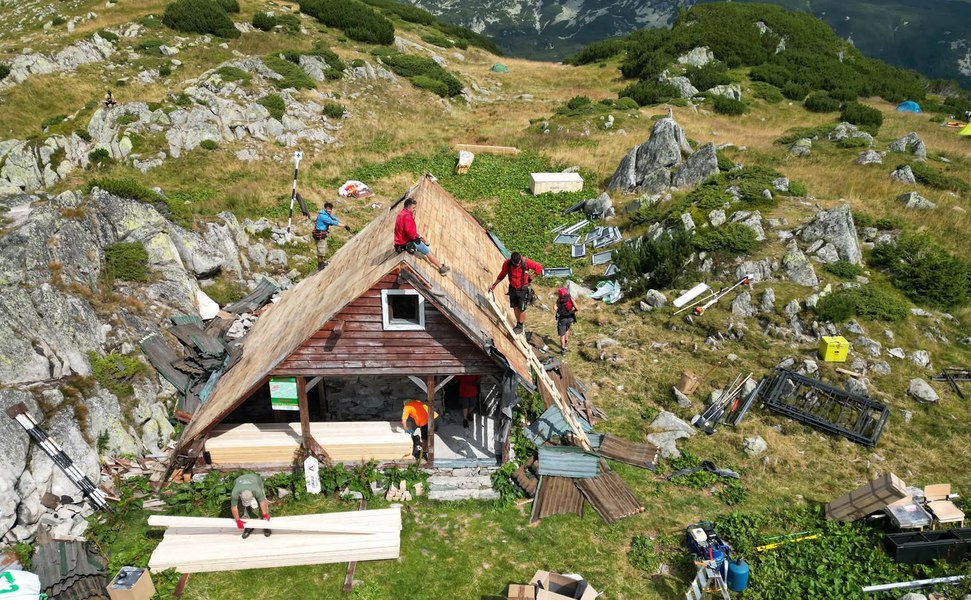
The Zănoaga refuge, a historic mountain shelter in Romania's Retezat Mountains, has been fully restored after a demanding two-week renovation project. Located at nearly 2,000 meters altitude on the shores of the glacial Zănoaga Lake, the site required significant logistical planning, including the helicopter transport of approximately 16 tons of materials to the remote area.
A such intervention begins long before the teams reach the mountain: design, preparation of materials and logistics that are not simple in a difficult-to-access area.
The restoration, coordinated by the Mountain Volunteer Service with support from the Retezat National Park Administration and other partners, modernized the refuge. Key improvements include an insulated and finished roof, an enlarged sleeping area, and renovated, insulated interior spaces. New furniture, including a fold-down bunk bed, has been installed, and the access area has been completely reorganized. A former storage space has been transformed into an area for activities and scientific research.
Volunteers described the work as "infernal and very difficult, physically, but also psychologically." The team worked 10-11 days, 12-14 hours a day, without rest. This was the longest and most complex uninterrupted operation for the Mountain Volunteer Service. Despite most team members working office jobs, their accumulated experience allowed them to overcome the challenges.
It was an infernally difficult job, physically, but also psychologically. We worked 10-11 days, 12-14 hours a day, without a day of rest. It was the longest and most complex continuous SVM action.
Adding to the amenities, a panoramic toilet has been constructed near the refuge to help maintain the cleanliness of the surrounding area. The construction involved significant effort, including digging down to bedrock and using tools like crowbars and jackhammers to create the foundation.
None of the SVM members work in construction, we are all 'office mice', but the experience gained over the years and at many refuges has brought us to a level where the impossible no longer exists.
The Zănoaga refuge also holds historical significance. In the summer of 1882, Archduke Rudolf, heir to the Austro-Hungarian Empire, camped by the glacial lake, adding a layer of historical resonance to the revitalized mountain retreat.
This 'edifice' and those who broke their backs placing it deserve a dedicated post.
About this summary
Originally published by Adevărul in Romanian. Translated, summarized, and contextualized automatically by DistantNews, with a note on how the source frames the story. Not individually reviewed before publishing. How this works.
More Stories


From Our Blog

What Gets Lost (and Found) When News Is Translated

The Critical Role of Diaspora Media in Global News

What Travellers Should Know About Countries with Restricted Press

A Digital Nomad's Guide to Following Local News

How the Same Story Looks Different in Different Countries
