


Reynosa school drops 'militarized' name after student's death
Translated from Spanish, summarized and contextualized by DistantNews.
At a glance
News
Sources not specified
Outcome reported
- A school in Reynosa, Tamaulipas, will drop the "militarized" designation from its name following a student's death.
- The student, Dafne, died during a camp at a militarized academy in Ciudad Madero.
- The educational authority has requested states not to permit such institutions.
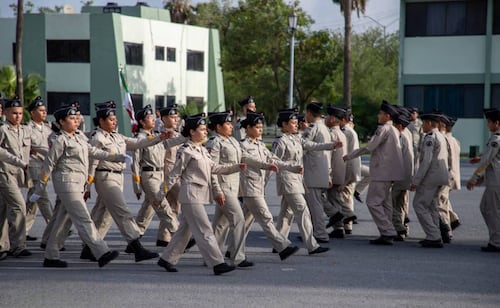
A school in Reynosa, Tamaulipas, will remove the term "militarized" from its name in compliance with a directive from the Secretariat of Education. This decision follows the death of a student, Dafne, who was attending a camp at the Doenitz Militarized Academy in Ciudad Madero.
The Colegio Calmecac in Reynosa announced it would continue serving its educational community but would cease operating as a militarized institution. Dafne, originally from El Mante, Tamaulipas, passed away on July 16, 2026, after entering the academy on July 13 for a camp. A necropsy indicated partial drowning as the cause of death.
Mario Delgado, the Secretary of Education, stated that militarized education is not authorized and urged states to disallow such schools. Reynosa has two schools operating under this model: Colegio Calmecac and the Militarized High School in the Obrera neighborhood.
It has been a space where thousands of girls, boys, and young people have learned, grown, built friendships, and formed the values that accompany them today in every stage of their lives.
In its statement, Colegio Calmecac emphasized that its name has historically represented more than just an educational institution, serving as a space for learning, growth, and value formation. However, in adherence to the directives from competent authorities and with a commitment to legal frameworks, the institution will now be known simply as Colegio Calmecac, discontinuing the use of "Colegio Militarizado Calmecac."
The school affirmed that its educational model remains strong, focusing on the "New Mexican School" curriculum, academic excellence through teacher training, inclusion, positive learning environments, and continuous improvement. They reiterated their commitment to human rights, the protection of children and adolescents, and a zero-tolerance policy.
This change represents a new stage, but our essence remains intact. We will continue to train students with academic excellence, values, discipline, and a profound human sense, guided by the principle that has distinguished us since our beginnings: 'Bien no es suficiente para Calmecac, se busca siempre la excelencia.'
DistantNews Editorial
Originally published by El Universal in Spanish. Translated, summarized, and contextualized by our editorial team with added local perspective. Read our editorial standards.
More Stories


From Our Blog

What Press Freedom Means for the News You Read

What Gets Lost (and Found) When News Is Translated

The Critical Role of Diaspora Media in Global News

What Travellers Should Know About Countries with Restricted Press

A Digital Nomad's Guide to Following Local News
