


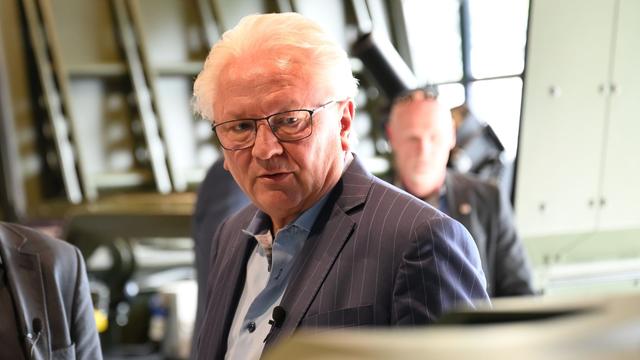
Rheinmetall CEO Calls for Ban on AI Weapons Use, Urges Global Rules
Translated from German, summarized and contextualized by DistantNews.
At a glance
News
From a news agency
Context piece
- Rheinmetall CEO Armin Papperger called for global regulations on autonomous weapons, emphasizing the need for human control over lethal force.
- Papperger stated that while technology is advancing rapidly, companies like Rheinmetall are committed to ensuring humans make the final decision in deploying weapons.
- He warned that differing approaches to AI in warfare could lead to conflict and stressed the importance of universally binding rules, similar to those for nuclear weapons.
Armin Papperger, CEO of German defense contractor Rheinmetall, has urged for international rules to govern the use of artificial intelligence in warfare, stressing that humans must retain ultimate control over lethal force.
Technologically, a lot will be possible in the next ten years – it's going up exponentially.
"Technologically, a lot will be possible in the next ten years – it's going up exponentially," Papperger told the German Press Agency at the Eurosatory defense trade show in Paris. He advocated for regulations akin to those for nuclear weapons, establishing clear boundaries for AI's role in conflict. "No company or individual can set this, but it must be done through an ethics council or a UN resolution," he stated.
No company or individual can set this, but it must be done through an ethics council or a UN resolution.
Rheinmetall produces drones, military vehicles, and ships that utilize AI for autonomous navigation. However, Papperger emphasized that human oversight remains paramount. "We do not produce a single system where the human does not make the final decision," he asserted. "This is Rheinmetall's ethical approach as a company: there is always a 'Human in the Loop,' the human makes the final decision."
We do not produce a single system where the human does not make the final decision.
While technologically feasible today, both Rheinmetall and its NATO clients refrain from granting AI final authority over the use of force. Papperger expressed concern that a divergence in international policy, where an adversary might allow AI full decision-making power in a conflict, could necessitate a global standard. "Worldwide valid rules are important to prevent this," he concluded.
This is Rheinmetall's ethical approach as a company: there is always a 'Human in the Loop,' the human makes the final decision.
DistantNews Editorial
Originally published by Die Zeit in German. Translated, summarized, and contextualized by our editorial team with added local perspective. Read our editorial standards.
More Stories


From Our Blog

What Gets Lost (and Found) When News Is Translated

How the Same Story Looks Different in Different Countries

The Critical Role of Diaspora Media in Global News

What Travellers Should Know About Countries with Restricted Press

A Digital Nomad's Guide to Following Local News
