


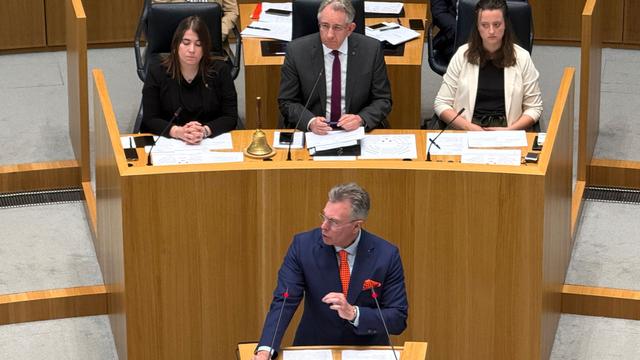
Rhineland-Palatinate parliament president defends increased vice president roles amid cost-saving measures
Translated from German, summarized and contextualized by DistantNews.
At a glance
News
Named sources
Context piece
- The increase in the number of vice presidents of the Rhineland-Palatinate state parliament is partially offset by cost-saving measures.
- Measures include eliminating the chauffeur service for vice presidents and reducing parliamentary committees.
- Parliament President Matthias Lammert defends the decision, citing increased workload and the need for broader citizen engagement.
Rhineland-Palatinate's state parliament president, Matthias Lammert, has outlined cost-saving measures intended to partially offset the financial implications of increasing the number of vice presidents. Lammert stated that the provision of a chauffeur service for vice presidents attending external engagements will be eliminated, with vice presidents now receiving a service car but without a dedicated driver. This change, along with the removal of a travel expense allowance, is expected to yield savings.
I could have lived with two deputies, but there are also good reasons for three.
Further cost reductions are planned through a streamlining of parliamentary committees. The number of committees will be reduced, and their membership will decrease from twelve to ten delegates per committee. Lammert acknowledged that he could have managed with two vice presidents but believes there are compelling reasons for having three, noting that the parliament previously had four vice presidents and, more recently, two.
Especially in times when democracy is under pressure and most states worldwide are led autocratically, it is important to go to the citizens with parliament.
Lammert emphasized the importance of the parliament actively engaging with citizens, especially during times when democracy faces pressure globally. He argued that having three vice presidents allows for greater capacity to attend the numerous daily appointment requests, which average five per day, thereby reducing the need for cancellations. Additionally, he highlighted the practical benefit of having more deputies available to cover for each other in case of illness, ensuring the smooth functioning of parliamentary sessions.
In case of illness, three deputies are also very helpful.
He also stressed the demanding nature of leading parliamentary sessions, which requires intense concentration. Lammert recounted his experience as a former deputy, explaining that presiding over sessions can involve long hours, sometimes ten to twelve hours without breaks. The constant need for alertness to address interjections that cross boundaries, and the rotation of leadership every 1.5 hours due to fatigue, underscore the necessity of adequate support personnel.
Leading a parliamentary session requires the highest concentration.
DistantNews Editorial
Originally published by Die Zeit in German. Translated, summarized, and contextualized by our editorial team with added local perspective. Read our editorial standards.
More Stories


From Our Blog

What Gets Lost (and Found) When News Is Translated

How the Same Story Looks Different in Different Countries

The Critical Role of Diaspora Media in Global News

What Travellers Should Know About Countries with Restricted Press

A Digital Nomad's Guide to Following Local News
