

/nginx/o/2026/07/02/17756320t1h07f5.jpg)
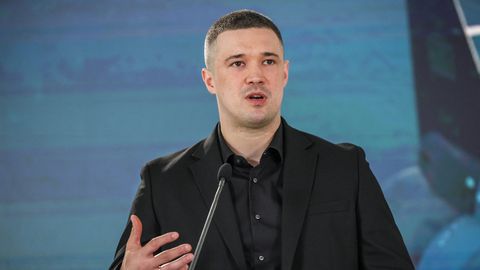
Rinkēvičs: Allies must recognize Russia's skill in finding provocations
Translated from Estonian, summarized and contextualized by DistantNews.
At a glance
News
Sources not specified
Context piece
- Latvian President Edgars Rinkēvičs believes NATO's Article 5 remains solid but acknowledges not all allies grasp Russia's subtle provocation tactics.
- Rinkēvičs stressed the need to convince allies of Russia's skill in finding ways to provoke without crossing NATO's threshold.
- He emphasized that the core of collective defense is unwavering.
Latvian President Edgars Rinkēvičs asserts that NATO's collective defense, anchored by Article 5, remains fundamentally unshakeable. However, he points out a critical gap in understanding among some allies regarding Russia's sophisticated methods for instigating conflict.
Rinkēvičs is convinced that the alliance's task is to educate its members about Russia's adeptness at finding ways to provoke without triggering a direct response under Article 5. He highlighted that while the core principle of mutual defense is robust, the nuances of Russian strategy require greater attention and consensus within NATO.
The president's remarks underscore a concern that a lack of full comprehension regarding these subtle provocations could potentially weaken the alliance's unified stance. He aims to foster a deeper, shared awareness of the challenges posed by Russia's actions, ensuring that all allies are equally vigilant and informed.
our task is to convince the allies of Russia's creativity in finding provocations.
DistantNews Editorial
Originally published by Postimees in Estonian. Translated, summarized, and contextualized by our editorial team with added local perspective. Read our editorial standards.
More Stories
/nginx/o/2026/06/30/17752125t1h5ad7.jpg)
/nginx/o/2026/06/29/17747535t1had33.jpg)
From Our Blog

What Gets Lost (and Found) When News Is Translated

The Critical Role of Diaspora Media in Global News

What Travellers Should Know About Countries with Restricted Press

A Digital Nomad's Guide to Following Local News

How the Same Story Looks Different in Different Countries
