


Rivers may swell again as fresh monsoon spell arrives
Summarized and contextualized by DistantNews.
At a glance
News
Sources not specified
Ongoing story
- Pakistan is bracing for another spell of heavy monsoon rains from July 29 to August 5, with the Met Office predicting widespread rainfall across the country.
- The Indus River is experiencing a medium flood at Guddu Barrage, and eastern rivers may see increased flow due to the new rainfall, raising concerns about flash floods and landslides.
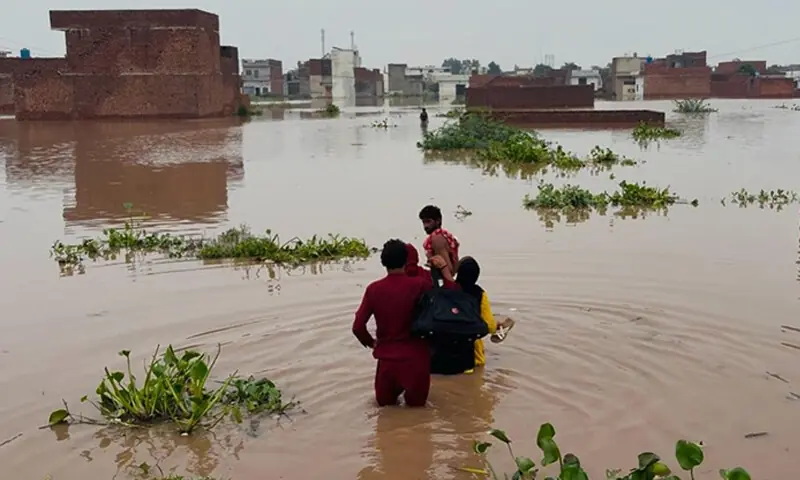
- Prime Minister Shehbaz Sharif has reviewed monsoon response preparations as several villages on Lahore's outskirts remain submerged.
Pakistan is preparing for a fresh onslaught of monsoon rains, with the Meteorological Department forecasting heavy downpours across the country from July 29 to August 5. This new spell is expected to bring significant rainfall to almost all parts of Pakistan, raising concerns about potential flash floods in hilly areas and inundation of urban centers.
The Indus River is currently at a medium flood level at Guddu Barrage, and an irrigation official in Punjab noted that while flooding in the Ravi and Chenab rivers has decreased, the upcoming rainfall in their catchment areas could increase their flow again. The Flood Forecasting Division has warned that rainfall from July 30 onwards in upper catchment areas could swell the eastern rivers and associated hill torrents. Tributaries of the Kabul River and hill torrents in Dera Ghazi Khan Division and northeastern Balochistan are also expected to see rising water levels.
Heavy rains are anticipated to cause urban flooding in low-lying areas of major cities including Islamabad, Rawalpindi, Peshawar, Lahore, and Faisalabad between July 30 and August 4. Sindh province is also at risk, with urban flooding expected in several districts from July 31 to August 2. Furthermore, the mountainous regions of Dir, Chitral, Swat, and parts of Gilgit-Baltistan, Murree, Galiyat, and Kashmir could experience landslides from July 30 to August 5.
In response to the looming threat, Prime Minister Shehbaz Sharif chaired a meeting to review the government's preparedness for the monsoon season. Rescue efforts are ongoing, with several villages on the outskirts of Lahore still submerged from previous rains. The Pakistan Meteorological Department is monitoring monsoon currents from the Arabian Sea and the Bay of Bengal, which are expected to penetrate the upper and central parts of the country.
DistantNews Editorial
Originally published by Dawn. Summarized and contextualized by our editorial team with added local perspective. Read our editorial standards.
More Stories
From Our Blog

What Gets Lost (and Found) When News Is Translated

The Critical Role of Diaspora Media in Global News

What Travellers Should Know About Countries with Restricted Press

A Digital Nomad's Guide to Following Local News

How the Same Story Looks Different in Different Countries
