


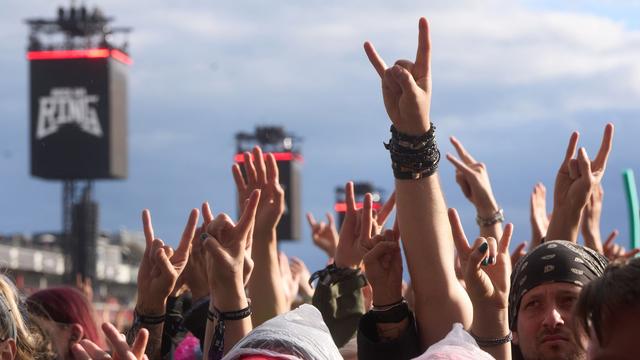
Rock am Ring: The metal salute and its many meanings
Translated from German, summarized and contextualized by DistantNews.
At a glance
In-depth
From a news agency
Context piece
- The "metal salute," a hand gesture with index and little fingers extended, is common at the Rock am Ring festival.
- While widely used in rock and metal scenes since the 1970s, the gesture has varied meanings across cultures.
- In Italy, the "mano cornuta" can be offensive, signifying infidelity, while it also represents the Texas Longhorns American football team.
At Germany's Rock am Ring festival, the ubiquitous "metal salute" is on full display, with attendees and bands alike raising their hands in the gesture. This iconic sign, characterized by extending the index and little fingers while keeping the others curled, has been a staple in the rock and metal community for decades, famously appearing on Kiss bassist Gene Simmons' album cover in 1977.
Known by various names such as the "devil's horns," "metal fork," or "pommesgabel" (French fries fork), the hand sign carries a surprising range of interpretations beyond its musical context. Its meaning can shift dramatically depending on the region, leading to potential misunderstandings.
In Italy, for instance, the "mano cornuta" (horned hand) is considered a vulgar gesture, often implying infidelity. What might be intended as a friendly rock-and-roll greeting could easily be misconstrued as an insult. Conversely, the gesture is also the distinct symbol of the "Texas Longhorns" American football team, where it represents the team's mascot, the Longhorn bull, and is used by fans to show their allegiance.
DistantNews Editorial
Originally published by Die Zeit in German. Translated, summarized, and contextualized by our editorial team with added local perspective. Read our editorial standards.
More Stories


From Our Blog

What Gets Lost (and Found) When News Is Translated

How the Same Story Looks Different in Different Countries

The Critical Role of Diaspora Media in Global News

What Travellers Should Know About Countries with Restricted Press

A Digital Nomad's Guide to Following Local News
