


Roman Bridge Emerges from Danube Due to Severe Drought
Translated from Romanian, summarized and contextualized by DistantNews.
At a glance
News
Named sources
Context piece
- Severe drought in the Danube River has revealed foundations of the ancient Roman Bridge of Constantine the Great.
- Archaeologists are documenting the nearly 1,700-year-old structure, which was once the longest Roman bridge over the river.
- The bridge, a strategic link for troop and trade movement, was likely used for only about 40 years.
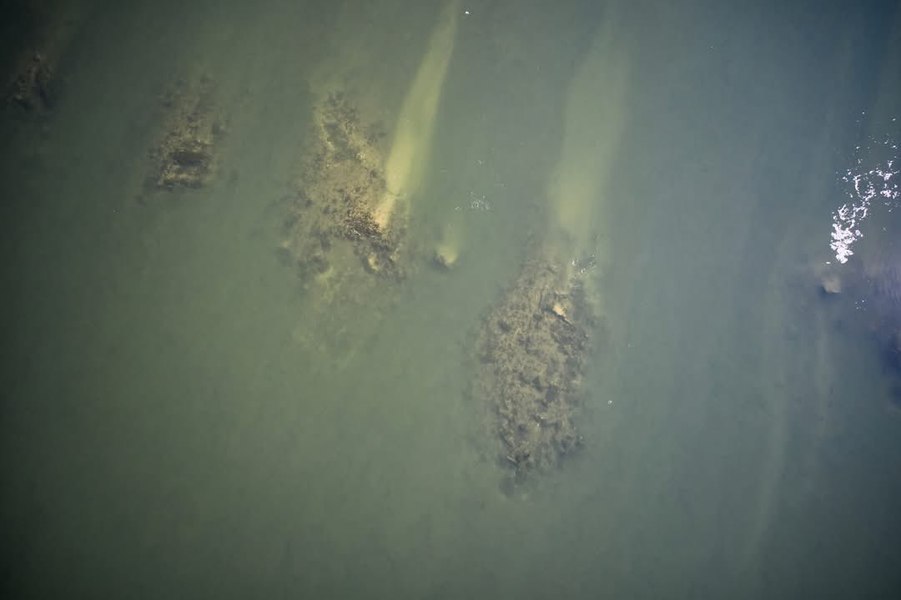
The Danube River's receding waters, caused by a severe summer drought, have exposed the foundations of the Bridge of Constantine the Great. This ancient Roman engineering marvel, built nearly 1,700 years ago, has reappeared, offering archaeologists a rare chance to study its remains.
A team from the Regional Historical Museum in Pleven, Bulgaria, documented the exposed sections near the village of Gigen on August 4. Using aerial photography and drones, specialists mapped the foundations and assessed their condition. "For archaeologists, these moments are extremely valuable, as nature briefly reveals an object that, for the most part, remains hidden under the Danube's waters," said Pavel Popov, a museum representative, as cited by Reuters.
Commissioned by Emperor Constantine the Great and inaugurated on July 5, 328 AD, the bridge connected the Roman city of Ulpia Oescus in present-day Bulgaria with Sucidava in Romania. It served as a vital strategic point for the Roman Empire, facilitating troop and trade movement along its northern frontier.
Historically, the bridge spanned 2,437 meters, with 1,137 meters crossing the Danube itself, making it the longest Roman bridge over the river and one of the longest in antiquity. Its construction featured stone and mortar pillars, a wooden deck about 5.7 meters wide, and abutments at each end. Despite its impressive engineering, the bridge had a short operational life, estimated at around 40 years, likely ceasing to be functional by 367 AD.
For archaeologists, these moments are extremely valuable, as nature briefly reveals an object that, for the most part, remains hidden under the Danube's waters. It offers us a rare opportunity to observe, document, and study it in its natural environment.
DistantNews Editorial
Originally published by Adevărul in Romanian. Translated, summarized, and contextualized by our editorial team with added local perspective. Read our editorial standards.
More Stories


From Our Blog

What Gets Lost (and Found) When News Is Translated

The Critical Role of Diaspora Media in Global News

What Travellers Should Know About Countries with Restricted Press

A Digital Nomad's Guide to Following Local News

How the Same Story Looks Different in Different Countries
