


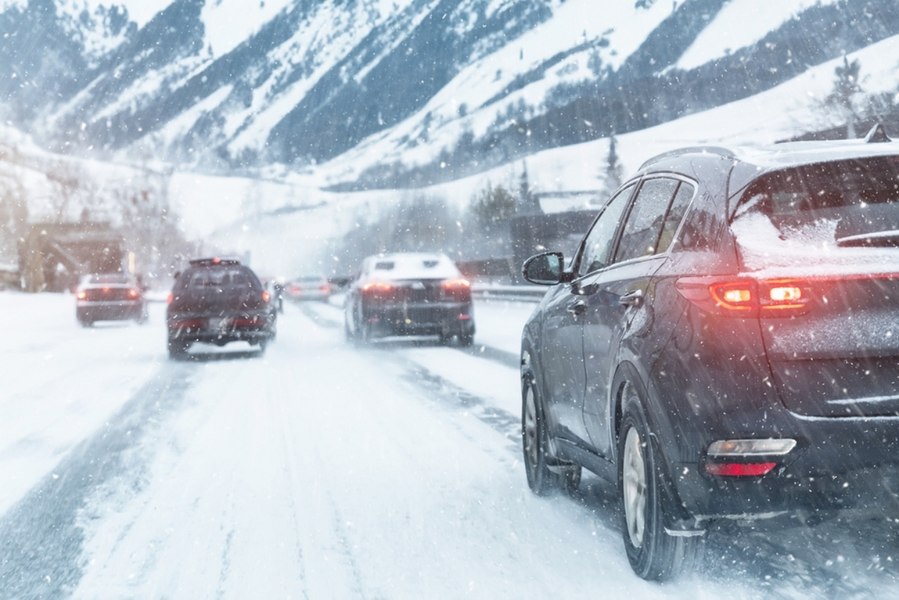
Romania Braces for Potentially Turbulent Winter 2026-2027 Amid Global Weather Shifts
Translated from Romanian, summarized and contextualized by DistantNews.
At a glance
News
Named sources
Context piece
- Early forecasts suggest the winter of 2026-2027 could bring more severe weather episodes to Europe and North America, including more frequent cold air intrusions from the Arctic.
- These predictions are linked to potential disruptions of the Polar Vortex, influenced by factors like a strong Super El Niño.
- While general trends indicate a potentially more turbulent winter, specific forecasts for Romania and precise temperature or snowfall predictions remain uncertain until autumn.
Initial estimates for the winter of 2026-2027 indicate a potentially more turbulent season with increased episodes of severe weather across Europe and North America. Analysis from Severe Weather Europe suggests that atmospheric and oceanic conditions could lead to more frequent cold air outbreaks from the Arctic.
These projections are partly based on the potential formation of a Super El Niño, a significant warming of waters in the equatorial Pacific Ocean. Meteorologists explain that such an event can alter atmospheric circulation patterns across the Northern Hemisphere, increasing the likelihood of disruptions to the Polar Vortex. The Polar Vortex is a system of strong winds surrounding the Earth's poles, which typically keeps frigid air contained in the Arctic region during winter.
The analysis from Severe Weather Europe suggests that atmospheric and oceanic conditions could lead to a winter with more episodes of bad weather, both in Europe and North America, with more frequent cold air waves from the Arctic.
When the Polar Vortex weakens or fragments, Arctic air masses can descend towards Europe, Asia, or North America, bringing periods of intense cold and heavy snowfall. However, experts caution that a disrupted Polar Vortex does not automatically guarantee a severe winter for all of Europe. The specific impact varies by region, depending on the positioning of pressure systems and atmospheric currents throughout the winter months.
Meteorologists warn, however, that it is premature to talk about what the weather will be like specifically in Romania, because such forecasts only show general trends, not what is happening exactly in a particular country.
For Romania, the current analysis does not allow for precise weather predictions. Specialists note that while Europe might experience more cold air episodes than in recent years, it is too early to determine where the lowest temperatures or heaviest snowfalls will occur. More accurate seasonal forecasts are expected in the autumn, when meteorological models can better estimate atmospheric circulation for December, January, and February.
Until then, the meteorological conclusion remains cautious: the winter of 2026–2027 could be more active than recent seasons, but Romania's specific weather conditions will depend on how these global phenomena influence regional atmospheric circulation.
When this system weakens or fragments, arctic air masses can descend towards Europe, Asia or North America, favoring episodes of accentuated cold and snowfall.
DistantNews Editorial
Originally published by Adevărul in Romanian. Translated, summarized, and contextualized by our editorial team with added local perspective. Read our editorial standards.
More Stories
From Our Blog

What Gets Lost (and Found) When News Is Translated

The Critical Role of Diaspora Media in Global News

What Travellers Should Know About Countries with Restricted Press

A Digital Nomad's Guide to Following Local News

How the Same Story Looks Different in Different Countries
