


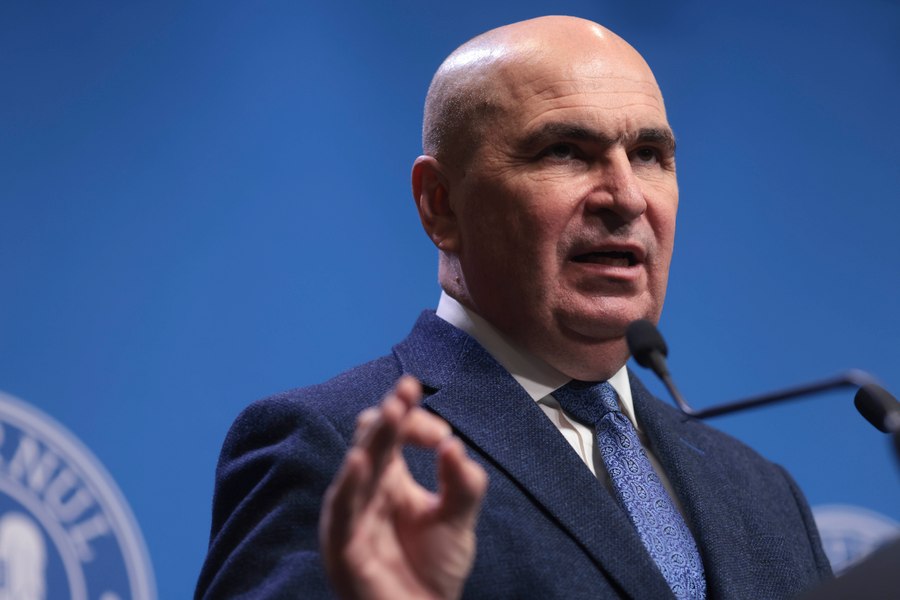
Romania remains in political limbo, interim PM Bolojan says
Translated from Romanian, summarized and contextualized by DistantNews.
At a glance
News
Sources not specified
Context piece
- Interim Prime Minister Ilie Bolojan stated Romania faces prolonged political limbo following a no-confidence vote two months ago.
- Bolojan highlighted that personnel costs are at 8.1% of GDP, a threshold that cannot be exceeded, and stressed the need for performance-based reforms in state institutions.
- He compared budget adjustments to necessary but initially painful medical treatment and noted that Romania did not need this political uncertainty amidst multiple crises.
Romania is mired in a prolonged period of political uncertainty, according to interim Prime Minister Ilie Bolojan. The situation stems from a no-confidence motion initiated two months ago by the Social Democratic Party (PSD) and the Alliance for the Union of Romanians (AUR). "If you tear down without putting something in place, you haven't thought through the next steps," Bolojan stated, emphasizing that Romania did not require this political interregnum, especially given the multiple crises it faces, including energy prices, sustainability issues, external conflicts like the war in the Gulf, and the general situation in Europe. Bolojan pointed out that personnel expenses currently stand at 8.1% of Romania's GDP, a ceiling that cannot be surpassed. He also differentiated between public sector employees, noting significant variations in work ethic. "There are always people who work less and people who work more," he remarked. The interim prime minister advocated for reforms in state companies and institutions based on performance, suggesting that such adjustments should lead to the departure of less essential staff while retaining dedicated employees. He likened budget adjustments to necessary medical treatment for economic imbalances. "A correction comes with costs, and you can't avoid it. It's like going through an illness; deficits are a sickness. The treatment initially makes you feel worse, before you get better," Bolojan explained. He also mentioned that political cost-cutting measures, such as a 10% reduction in parliamentary allowances and a 20% cut in party financing, have already been implemented. Bolojan noted that various political solutions had been discussed in recent months but failed to materialize due to a lack of support and misjudged chances of adoption. He described governing in an interim capacity as challenging, particularly with obligations related to European funds and reform implementation.
If you tear down without putting something in place, you haven't thought through the next steps.
DistantNews Editorial
Originally published by Adevărul in Romanian. Translated, summarized, and contextualized by our editorial team with added local perspective. Read our editorial standards.
More Stories


From Our Blog

What Gets Lost (and Found) When News Is Translated

The Critical Role of Diaspora Media in Global News

What Travellers Should Know About Countries with Restricted Press

A Digital Nomad's Guide to Following Local News

How the Same Story Looks Different in Different Countries
