


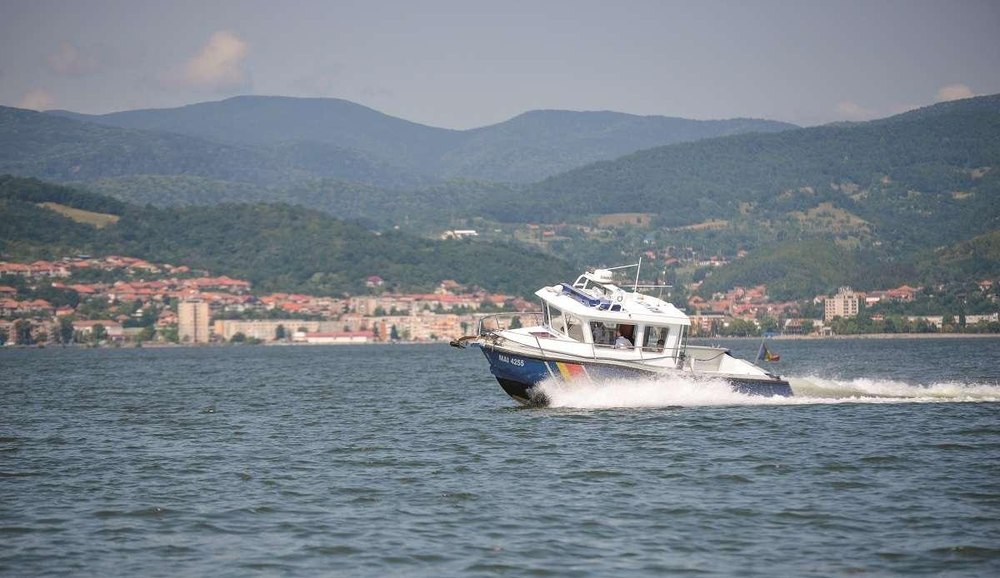
Romania's 'Rooster Sings in Three Languages' Border Points
Translated from Romanian and summarized by DistantNews. Read the original for the full story.
At a glance
In-depth
Sources not specified
Context piece
- Romania features five unique border locations, known as tripuncts, where the boundaries of three countries converge.
- These points, situated on rivers like the Prut, Danube, and Tur, include areas bordering Ukraine, Moldova, Hungary, Serbia, and Bulgaria.
- One notable tripunct is Beba Veche, a village at the intersection of Romania, Hungary, and Serbia, historically significant due to border adjustments after World War I.
Romania is marked by five unique geographical points where its borders meet those of two neighboring countries simultaneously. These "tripuncts" are locally known as "places where the rooster crows in three languages," a testament to their unique position.
These convergence zones are found along rivers such as the Prut and the Danube, bordering Ukraine and Moldova. Another lies on the Tur River, where Romania, Hungary, and Ukraine meet. Further south, Beba Veche in Timiș County sits at the tripoint of Romania, Hungary, and Serbia. A fifth point is located where the Timok River flows into the Danube, marking the border between Romania, Serbia, and Bulgaria.
The fork suggests the meeting place of the borders of the three countries – Romania, Serbia, and Hungary – while the rooster refers to the saying that its song can be heard in all three countries.
Beba Veche, one of the most isolated communes in Romania, is home to fewer than 1,500 residents. Documented as early as 1247, it officially became part of Romania in 1924 following a border exchange with Serbia. This exchange, prompted by the Treaty of Sèvres in 1920, aimed to resolve ethnic and economic issues arising from the initial border demarcation.
The commune's westernmost point is marked by the Triplex Confinium obelisk, symbolizing the meeting of the three borders. The obelisk's design, featuring a "fork" representing the convergence and a rooster alluding to the local saying, is even incorporated into the commune's coat of arms. The area's history is also tied to the "Rabbi's Bridge" or "Wheat Bridge," built in the early 18th century over a now-dry tributary.
That treaty, however, presenting certain shortcomings, it was sought, through mutual understanding, to remove some of them and thus an exchange of communes was reached on ethnic and economic considerations.
About this summary
Originally published by Adevărul in Romanian. Translated, summarized, and contextualized automatically by DistantNews, with a note on how the source frames the story. Not individually reviewed before publishing. How this works.
More Stories


From Our Blog

What Gets Lost (and Found) When News Is Translated

The Critical Role of Diaspora Media in Global News

What Travellers Should Know About Countries with Restricted Press

A Digital Nomad's Guide to Following Local News

How the Same Story Looks Different in Different Countries
