

Romanian flight attendant recalls communist-era travel, Securitate surveillance
Translated from Romanian, summarized and contextualized by DistantNews.
At a glance
In-depth
Named sources
Context piece
- Geta Popescu, a former flight attendant for TAROM in the 1970s and 80s, shares her experiences flying during Romania's communist era.
- She describes the privileges of the job, including international travel and bringing back goods, contrasting it with the limited opportunities for ordinary Romanians.
- Popescu recounts details of early flights on Soviet-made aircraft and the exclusive passenger list, which primarily consisted of party officials.
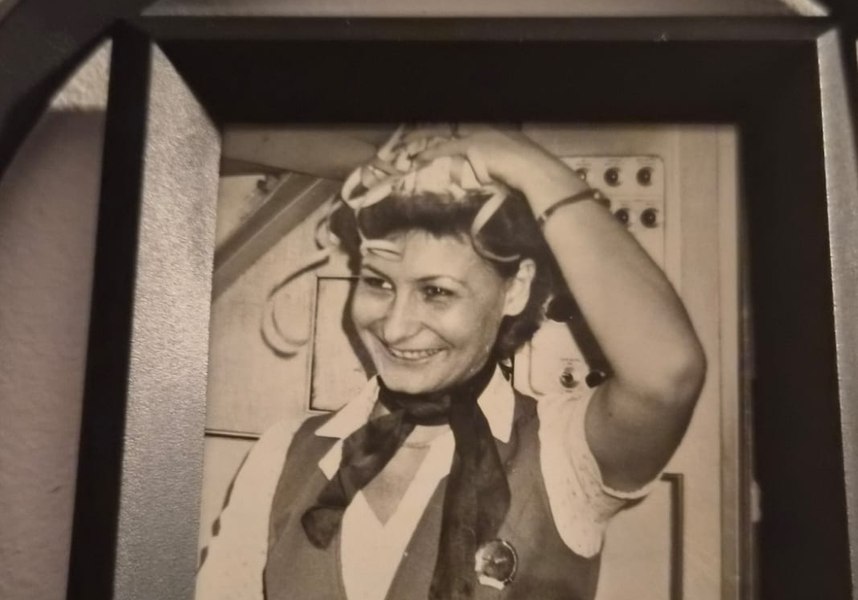
For Geta Popescu, being a flight attendant for Romania's national airline, TAROM, in the 1970s and 80s offered a glimpse into a world beyond the reach of most citizens during the communist era. The role provided not only status but also the rare opportunity to travel internationally, bringing back coveted items like sweets and clothing, dreams made tangible for a select few.
It was a plane with 25 passengers and a single flight attendant. In front was the pilots' cabin and immediately behind the cabin was a fold-down seat where the flight attendant sat, and on the other side were containers with coffee and bottled soft drinks. I remember that under the flight attendant's seat was a flap that, during flight – as the plane was not pressurized and flew at low altitude – moved from the air pushing it. At first, I was scared, but over time I got used to it.
Popescu began her aviation career as a secretary at the Băneasa Aviation School in 1975. She transitioned to a flight attendant role after passing an exam in foreign languages, geography, and history, joining TAROM in 1973. Her initial training was on the IL-14, a Soviet-era aircraft with a capacity of 25 passengers. She recalls the single jump seat for the attendant, positioned behind the cockpit, and the early days of flight where the plane was not pressurized, leading to unsettling movements.
Flights on domestic routes like Iași, Cluj, and Constanța were initially her domain. Later, she moved to larger aircraft such as the IL-18, BAC, and Airbus. The passengers on these internal flights were almost exclusively party officials and state employees, as ordinary citizens lacked the financial means for such travel. Occasionally, sports teams on official assignments would also charter flights. Onboard, passengers typically read or purchased refreshments like Cico soda or wafers, as pre-paid catering services were non-existent. The airline's "catering" involved flight attendants procuring items like coffee, soda, and sugar from a "warehouse" based on order slips.
Party nomenclature officials, the only passengers. The passengers of those times on domestic routes were only Romanians, especially state institution officials. They worked in the party apparatus and traveled from one part of the country to another, as ordinary people did not have money. Generally, they were from the party branch. There were also specialists from certain fields, but they were also party members. They were not the working people.
Popescu's experiences highlight the stark social and economic divides of the time. While she and her colleagues traversed continents, bringing back goods that were scarce domestically, the average Romanian's world remained confined. The exclusivity of air travel, reserved for the party elite and select specialists, underscored the privileges afforded to those within the regime's inner circle. Her stories offer a personal window into the realities of life and work in communist Romania, where even seemingly glamorous jobs were intertwined with the era's political and economic constraints.
Back then, the catering service did not exist or, more accurately, it was called 'down in the warehouse.' There, from the warehouse, the flight attendant would sign an order form and receive water, Cico, Nescafé from a can, sachets of sugar corresponding to the number of Nescafé portions from cans. The warehouse was below the level of the airport terminal.
DistantNews Editorial
Originally published by Adevărul in Romanian. Translated, summarized, and contextualized by our editorial team with added local perspective. Read our editorial standards.
More Stories



From Our Blog

What Gets Lost (and Found) When News Is Translated

The Critical Role of Diaspora Media in Global News

What Travellers Should Know About Countries with Restricted Press

A Digital Nomad's Guide to Following Local News

How the Same Story Looks Different in Different Countries
