

Romanian Official Criticizes Putin's 'Serpentine Greetings' via MEP, Slams Church Silence
Translated from Romanian, summarized and contextualized by DistantNews.
At a glance
News
Named sources
Context piece
- Vasile Bănescu, a member of Romania's National Audiovisual Council, criticized Russian President Vladimir Putin's "serpentine greetings" to Orthodox Romanians, conveyed via MEP Diana Șoșoacă.
- Bănescu sarcastically referred to Putin as a "great benefactor of Mount Athos," suggesting the Russian leader uses Orthodox spirituality for anti-European and pro-Russian political agendas.
- He also criticized the Romanian Orthodox Church's silence on such political uses of religion, implying tacit acceptance.
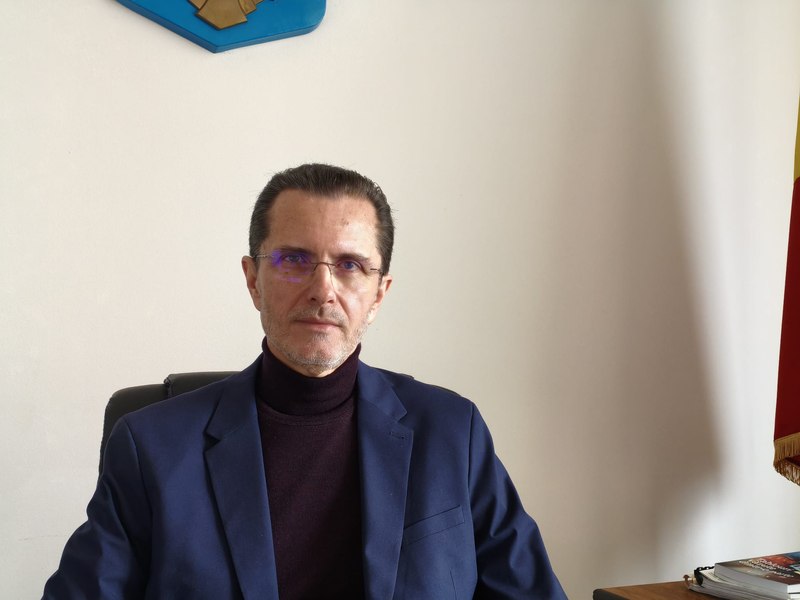
Vasile Bănescu, a prominent Romanian theologian and member of the National Audiovisual Council, has sharply criticized Russian President Vladimir Putin's recent "serpentine greetings" to Orthodox Romanians, which were delivered through Member of the European Parliament Diana Șoșoacă. Bănescu, a former spokesperson for the Romanian Patriarchate, expressed his disapproval via a Facebook post, highlighting his concerns about the politicization of religious discourse.
Bănescu employed sarcasm to describe Putin as a "great benefactor of Mount Athos," a significant spiritual center for Orthodox Christianity. He implied that Putin's image is being artificially elevated within religious circles to promote "anti-European, Orthodox-sovereignist" political viewpoints. Bănescu suggested that Putin's greetings were not innocent but rather a calculated political maneuver using Orthodoxy as a tool for ideological influence and moral legitimacy.
Putin, 'great benefactor of Mount Athos,' from where not only spiritual waters but also (e)ffluvia of anti-European Orthodox-sovereignist-Romanian ramblings flow, serpentinely sends warm greetings to the Orthodox Romanian people.
The Romanian MEP, Diana Șoșoacă, was also a target of Bănescu's critique. He ironically portrayed her as the "most brilliant representative" of this type of discourse, suggesting she embodies a mystical state in the face of Putin, whom certain public figures present as a defender of peace and traditional values. Bănescu seemed to mock the idea of Putin as a "man of peace" in the context of his political actions.
Furthermore, Bănescu voiced disappointment with the perceived silence from communicators within the Romanian Orthodox Church regarding the association of Orthodoxy with pro-Russian and anti-European political messages. He suggested that this lack of a firm reaction amounts to tacit acceptance, allowing such narratives to permeate the Romanian Orthodox sphere. He concluded with an ironic interpretation of a quote related to mystical, anti-rational discourse, labeling it "pure apophaticism."
The time has come to address these concerns and build an environment of mutual trust.
DistantNews Editorial
Originally published by Adevărul in Romanian. Translated, summarized, and contextualized by our editorial team with added local perspective. Read our editorial standards.
More Stories



From Our Blog

What Gets Lost (and Found) When News Is Translated

The Critical Role of Diaspora Media in Global News

What Travellers Should Know About Countries with Restricted Press

A Digital Nomad's Guide to Following Local News

How the Same Story Looks Different in Different Countries
