


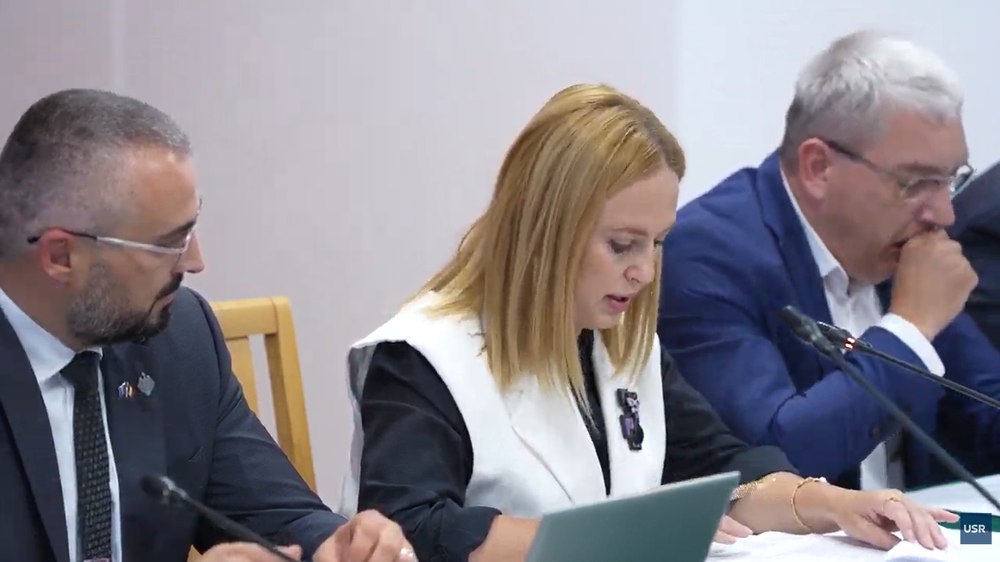
Romanian Senate advances controversial bill allowing dual roles for officials
Translated from Romanian, summarized and contextualized by DistantNews.
At a glance
News
Sources not specified
Approved/passed
- Romania's Senate committees have advanced a controversial bill allowing local elected officials to hold state positions.
- The bill, previously returned by the Constitutional Court, passed with a majority vote and now heads to a final vote in the Senate.
- Opposition parties, including AUR and USR, have voiced strong objections, citing concerns over transparency and potential misuse of funds.
Romanian senators have moved a contentious bill forward, potentially allowing local elected officials to simultaneously hold positions within the state administration. The Legal and Constitutionality committees in the Senate adopted a joint report on the ANI Law, which had been previously sent back to Parliament by the Constitutional Court of Romania due to unconstitutional provisions.
The report of admission was adopted by a majority of votes, and the bill goes to the final vote in the plenary session of the Senate, in the form adopted by the Chamber of Deputies.
The bill, supported by the Social Democratic Party (PSD), the Democratic Alliance of Hungarians in Romania (UDMR), and some National Liberal Party (PNL) parliamentarians, passed with 187 votes in favor, 36 against, and 59 abstentions. It now requires final approval from the Senate, which acts as the decision-making chamber, to become law. This legislative push follows the adoption of Law 165/2026, which introduced new provisions to the Administrative Code, stipulating that public sector employees could not concurrently serve as local or county councilors. This had raised fears among local administrations that many elected officials might have to resign from one of their posts.
The proposal to amend the law was submitted at an accelerated pace by PSD and UDMR, after the issue of incompatibilities became a subject of dispute in public administration.
The amendment process saw heated debates, particularly between senators from the Alliance for the Union of Romanians (AUR) and the Save Romania Union (USR) and the president of the Constitutionality Committee, Cosmina Cerva. Disputes arose over the transmission of necessary documents for the committee meeting. USR Senator Claudiu Păun was sanctioned by Cerva with the suspension of his right to speak.
The USR announced that it will submit a new bill, which no longer contains the contested amendment, and asks senators to reject the form currently in parliamentary procedure.
Further controversy surrounds the "Fritz amendment," which was adopted by the Chamber of Deputies after intense debate. This provision reportedly introduces limited transparency regarding the assets of dignitaries. The USR has announced its intention to introduce a new bill that omits this contested amendment, urging senators to reject the current version. The party cites a letter from European Parliament group leaders (EPP and Renew Europe) to the European Commission, requesting the blockage of €770 million in PNRR funds until the "Fritz amendment" is removed. AUR has also declared its opposition to the current form of the law, with Senate group leader Petrișor Peiu advising colleagues not to get involved in what he termed a "PSD-PNL conflict" and to vote against the bill as it stands.
Do not get involved in what he called the 'PSD-PNL conflict' and do not vote for the ANI Law in the form that contains the amendment.
DistantNews Editorial
Originally published by Adevărul in Romanian. Translated, summarized, and contextualized by our editorial team with added local perspective. Read our editorial standards.
More Stories



From Our Blog

What Gets Lost (and Found) When News Is Translated

The Critical Role of Diaspora Media in Global News

What Travellers Should Know About Countries with Restricted Press

A Digital Nomad's Guide to Following Local News

How the Same Story Looks Different in Different Countries
