


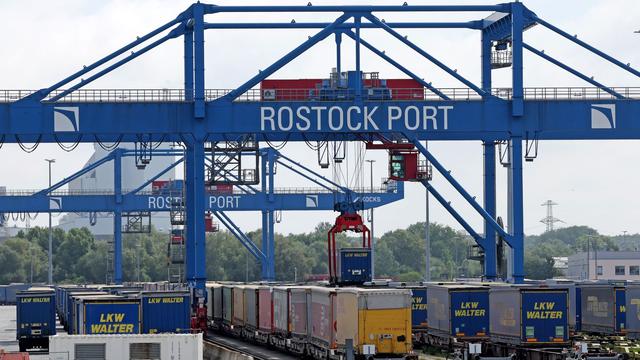
Rostock Port's cargo throughput hits new record in first half of 2026
Translated from German, summarized and contextualized by DistantNews.
At a glance
News
From a news agency
Context piece
- Rostock's overseas port reported a record cargo throughput of 15.9 million tons in the first half of 2026, a 1.2% increase year-on-year.
- Roll-on/roll-off (RoRo) cargo, primarily via ferries and RoRo ships, accounted for over half the throughput with 8.8 million tons, showing significant growth.
- Declines were noted in crude oil and grain handling, while increased prices for marine diesel and European emissions trading impacted ferry operators.
Rostock, Germany – The overseas port of Rostock has once again achieved record cargo handling figures, reporting 15.9 million tons of freight in the first half of 2026. This represents a 1.2% increase compared to the same period last year and marks the highest throughput for the first six months of any year in the port's history. "The throughput results of the overseas port of Rostock have been at a record level for four years now," stated Managing Director Gernot Tesch.
The dominant cargo segment was roll-on/roll-off (RoRo) freight, which includes cargo transported by ferry or RoRo ships. This category handled 8.8 million tons, an increase of 400,000 tons from the previous year, underscoring the growing importance of this transport method. Over half of the total throughput was attributed to RoRo cargo.
Despite the overall record, the port saw a slight decrease in the handling of liquid goods, with 3.8 million tons pumped over the quayside, 180,000 tons less than in the first half of 2025. Crude oil imports for the PCK Schwedt refinery, at nearly three million tons, constituted the largest portion of liquid cargo. Grain remained the largest component of bulk cargo, with 1.2 million tons handled, though this was about 200,000 tons below the previous year's level, attributed to favorable harvests in the prior year and currently lower global market prices.
Ferry operators based in Rostock are facing challenges due to significantly increased prices for marine diesel, which more than doubled in the second quarter, reaching peaks of 1,200 euros per ton. Additionally, the introduction of European emissions trading costs since January 1 has added to operational expenses. These rising fuel costs are affecting the entire transport chain, including truck deliveries to handling sites. In response to market demands, TT-Line has ordered a second new ferry of the same series as its first LNG hybrid vessel, with each new ship designed to accommodate up to 1,000 passengers and increase freight capacity.
The throughput results of the overseas port of Rostock have been at a record level for four years now.
DistantNews Editorial
Originally published by Die Zeit in German. Translated, summarized, and contextualized by our editorial team with added local perspective. Read our editorial standards.
More Stories


From Our Blog

What Gets Lost (and Found) When News Is Translated

How the Same Story Looks Different in Different Countries

The Critical Role of Diaspora Media in Global News

What Travellers Should Know About Countries with Restricted Press

A Digital Nomad's Guide to Following Local News
