

Rubio rejects Iran tolls on Hormuz as deal strains multiply
Summarized and contextualized by DistantNews.
At a glance
News
Named sources
Ongoing story
- U.S. Secretary of State Marco Rubio stated Iran cannot charge tolls on the Strait of Hormuz, calling it an international waterway.
- The statement comes amid negotiations to end the Middle East war, with early strains appearing over the waterway, nuclear inspections, and missiles.
- Iran and Oman announced they would study administration and costs for the trade route, asserting their sovereignty, while the UN plans to evacuate stranded sailors.
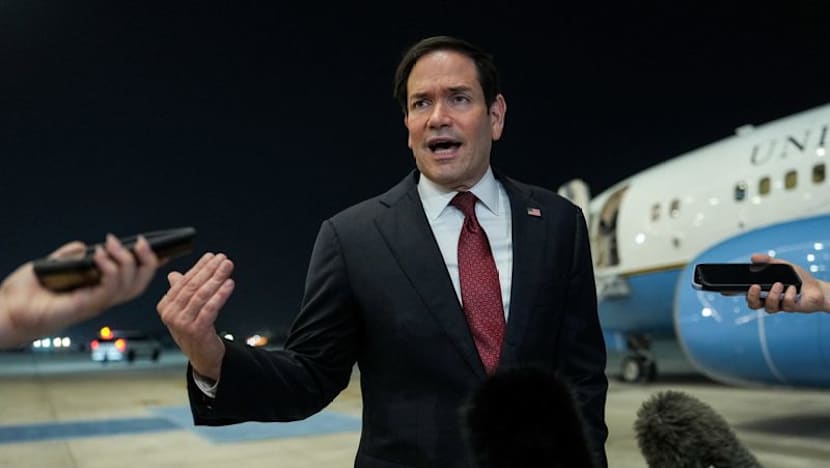
U.S. Secretary of State Marco Rubio asserted on Tuesday that Iran cannot impose tolls or fees on the Strait of Hormuz, emphasizing its status as an international waterway. "No country is allowed to charge tolls or fees on an international waterway," Rubio stated during a regional tour in the United Arab Emirates. He expressed confidence that "all the countries in this region would agree" with the U.S. position.
It's an international waterway. No country is allowed to charge tolls or fees on an international waterway.
Rubio's remarks highlight early tensions in the ongoing negotiations aimed at ending the Middle East war. While Washington and Tehran have signed a preliminary agreement to halt the conflict and begun talks on sanctions relief, Iran's nuclear program, and the future of Hormuz, disputes over the vital waterway persist. An earlier Iranian blockade of the strait had significantly impacted global oil prices.
all the countries in this region would agree
Despite the U.S. stance, Iran and Oman issued a joint statement indicating they would examine the administration and associated costs for the trade route, while reaffirming their sovereignty over the strait. Meanwhile, Tehran's top negotiator, Mohammad Bagher Ghalibaf, suggested Hormuz "will never return" to its pre-war status, even as communication lines are being established to keep it open. The UN's maritime agency is preparing to evacuate over 11,000 sailors stranded by the conflict, coordinating with Iran, Oman, and the U.S.
hormuz "will never return" to the pre-war status quo
Further complicating the diplomatic landscape, Iran's president, Masoud Pezeshkian, visiting Pakistan, signaled that the country's ballistic missile program would remain off the negotiating table. He stated that these missiles are crucial for defense, particularly in light of past threats from Israel and the United States, and that Iran would "never negotiate with anyone, under any circumstances, ever, about our defensive capabilities."
If the missiles we have for our defence did not exist, Israel and the United States would have ploughed Iran just like Gaza
DistantNews Editorial
Originally published by CNA. Summarized and contextualized by our editorial team with added local perspective. Read our editorial standards.
More Stories


From Our Blog

What Gets Lost (and Found) When News Is Translated

The Critical Role of Diaspora Media in Global News

What Travellers Should Know About Countries with Restricted Press

A Digital Nomad's Guide to Following Local News

How the Same Story Looks Different in Different Countries
