


Ruling, opposition parties clash over National Assembly committee chairmanship
Translated from Korean, summarized and contextualized by DistantNews.
At a glance
News
Named sources
Ongoing story
- The ruling and opposition parties are locked in a fierce battle over the chairmanship of the National Assembly's Legislation and Judiciary Committee for the latter half of the 22nd session.
- The Democratic Party insists the ruling party must hold the chairmanship to swiftly pass government-backed legislation, while the People Power Party argues it's essential for the opposition to check the government's power.
- Both parties have accused each other of attempting legislative dictatorship and obstructing parliamentary proceedings.
The ruling and opposition parties in South Korea are engaged in a heated dispute over the chairmanship of the powerful Legislation and Judiciary Committee for the latter half of the 22nd National Assembly session. The committee holds significant influence as it reviews all bills before they reach the floor for a vote.
The ruling party must hold the chairmanship to swiftly pass government-backed legislation.
The Democratic Party, which holds a majority in the Assembly, asserts that the ruling party must retain the chairmanship to effectively support the government's legislative agenda and expedite key policy initiatives. They argue that this is crucial for ensuring the government's "state affairs tasks" can be swiftly translated into law.
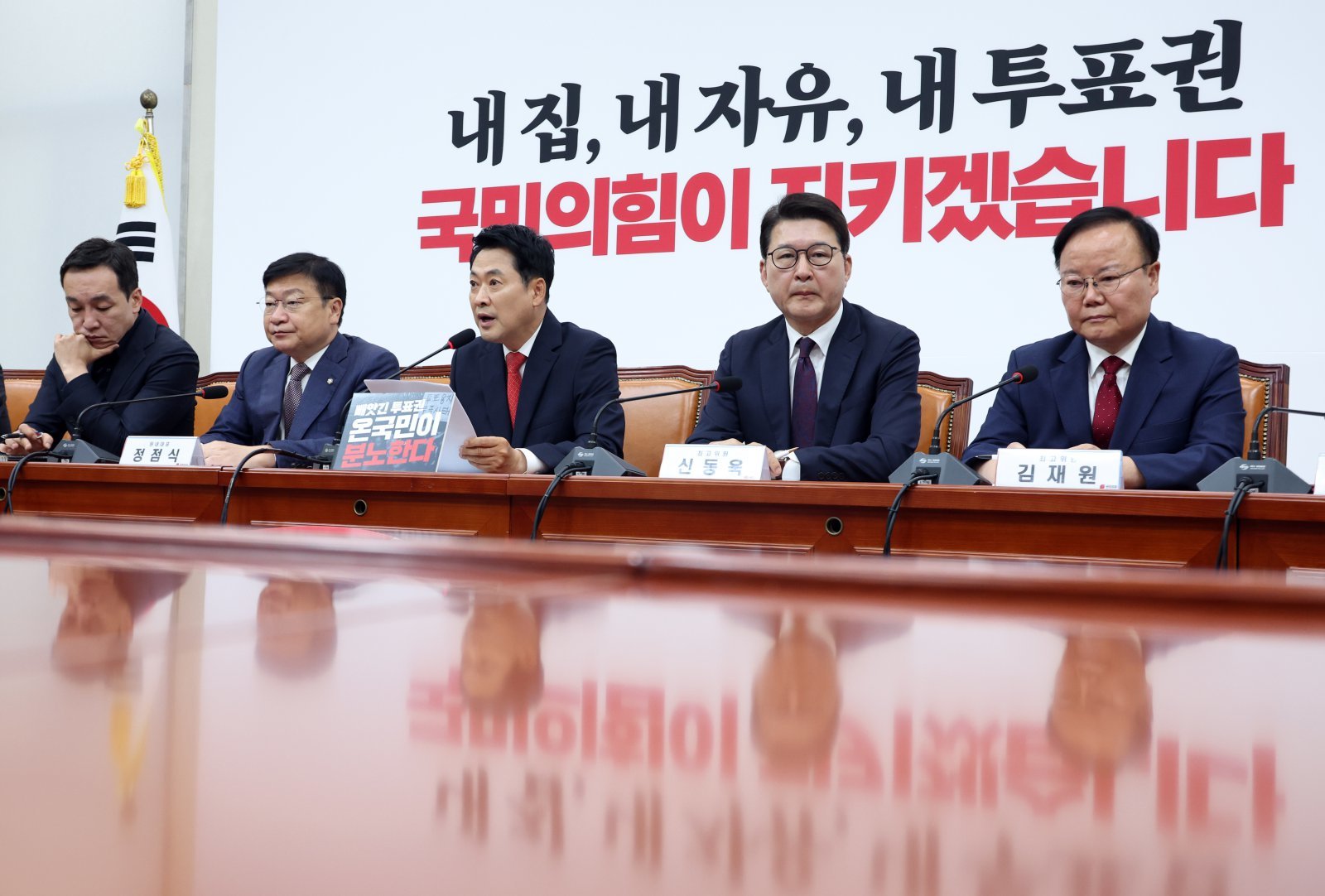
Conversely, the People Power Party (PPP) contends that it is essential for the opposition to control the committee's gavel. They claim this is necessary to act as a check on the ruling party's power, prevent what they describe as "legislative dictatorship," and ensure a balance of power within the Assembly. The PPP views holding the chairmanship as a mandate from the recent local elections, reflecting public sentiment against unchecked power.
The opposition must hold the chairmanship to check the government's power.
Both sides have exchanged sharp criticisms. The PPP's spokesperson, Choi Bo-yoon, stated that the committee is the "last bastion" to "check and neutralize" the Democratic Party's "unilateral rush" on special prosecutor bills and the Ministry of Justice's "tricky abuse of power." Another PPP spokesperson, Choi Soo-jin, called the Democratic Party's claim to the chairmanship a "declaration of war to continue parliamentary dictatorship."
The Legislation and Judiciary Committee is not a subject for negotiation.
In response, the Democratic Party's floor leader, Han Byung-do, declared that the Legislation and Judiciary Committee "is not a subject for negotiation" and must be concluded by June 18. He pointed to the previous session where, he argued, the PPP's control of key committees led to delays in passing important bills, including those agreed upon by both parties, through filibusters. The PPP's floor leader, Chung Jin-seok, countered that an opposition-held chairmanship is a "necessary element to end legislative dictatorship and revive a parliament of checks and balances."
An opposition-held chairmanship is a necessary element to end legislative dictatorship and revive a parliament of checks and balances.
DistantNews Editorial
Originally published by Hankyoreh in Korean. Translated, summarized, and contextualized by our editorial team with added local perspective. Read our editorial standards.
More Stories


From Our Blog

What Gets Lost (and Found) When News Is Translated

The Critical Role of Diaspora Media in Global News

What Travellers Should Know About Countries with Restricted Press

A Digital Nomad's Guide to Following Local News

How the Same Story Looks Different in Different Countries
