


Ruling Party Claims Identical Vote Counts in Local Elections, Cites Fraud Fears
Translated from Korean, summarized and contextualized by DistantNews.
At a glance
News
Sources not specified
Context piece
- A ruling party leader claims identical vote counts for two candidates in specific districts of the Incheon mayoral election.
- He alleges similar vote count ties in 10 areas in Gwangju and South Jeolla, raising suspicions of election fraud.
- The party calls for a special investigation and a nationwide re-election, also advocating for the abolition of early voting.
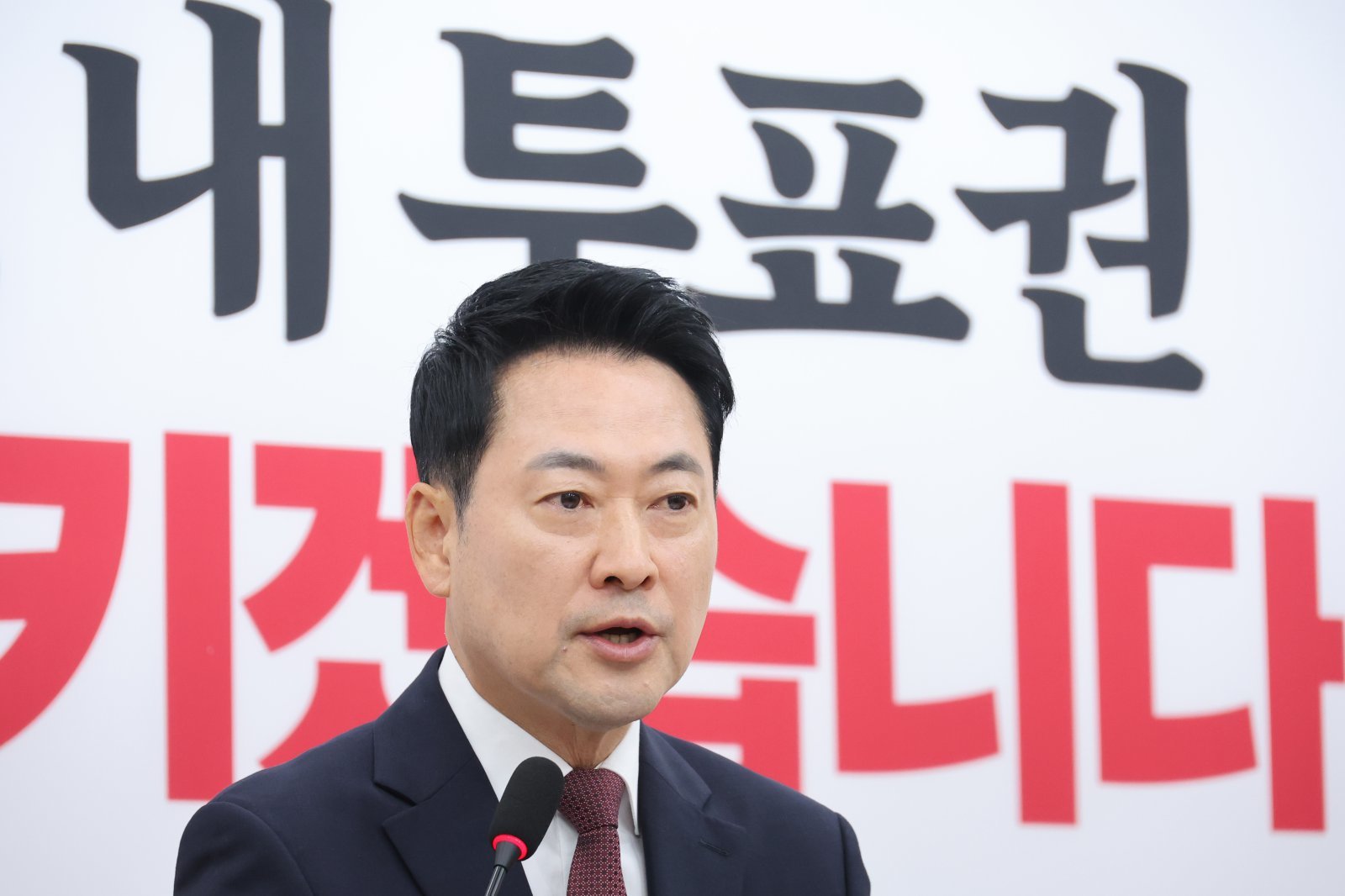
Jang Dong-hyuk, leader of the People Power Party, has raised suspicions of election fraud, claiming that the vote counts for ruling party candidate Yoo Jeong-bok and Democratic Party candidate Park Chan-dae were identical in two specific early voting districts within Songdo 1-dong and 2-dong in the Incheon mayoral election. He further alleged that vote counts were identical in 10 areas across Gwangju and South Jeolla.
The probability of Yoo Jeong-bok and Park Chan-dae's vote counts being completely identical is one in 590 million.
Speaking at a press conference at the National Assembly on June 9th, Jang stated that the probability of such an exact tie in the Incheon mayoral race is one in 590 million. He questioned the likelihood of such statistically improbable events occurring, urging for a thorough investigation to resolve public doubts.
If statistically impossible coincidences occur, we must investigate the facts to resolve public doubts, rather than blindly believing the election commission.
Jang's party is demanding a special prosecutor investigation and a nationwide re-election to address what they term a "disenfranchisement crisis." He pointed to the election commission's changing figures regarding ballot shortages, which initially reported 14 affected polling stations in Seoul but later expanded to 140 nationwide. The number of polling stations experiencing actual ballot shortages also increased significantly.
The fundamental solution to this disenfranchisement crisis is a nationwide re-election.
Furthermore, Jang advocated for the abolition of early voting, suggesting it is a primary cause of the alleged irregularities and ballot shortages. He argued that differing early voting rates and the need to account for them contributed to the problems, and that suspicions surrounding early voting are intrinsically linked to the current allegations.
Many citizens harbor doubts about early voting, and the disenfranchisement incident is partly due to early voting.
DistantNews Editorial
Originally published by Dong-A Ilbo in Korean. Translated, summarized, and contextualized by our editorial team with added local perspective. Read our editorial standards.
More Stories


From Our Blog

What Gets Lost (and Found) When News Is Translated

The Critical Role of Diaspora Media in Global News

What Travellers Should Know About Countries with Restricted Press

A Digital Nomad's Guide to Following Local News

How the Same Story Looks Different in Different Countries
