


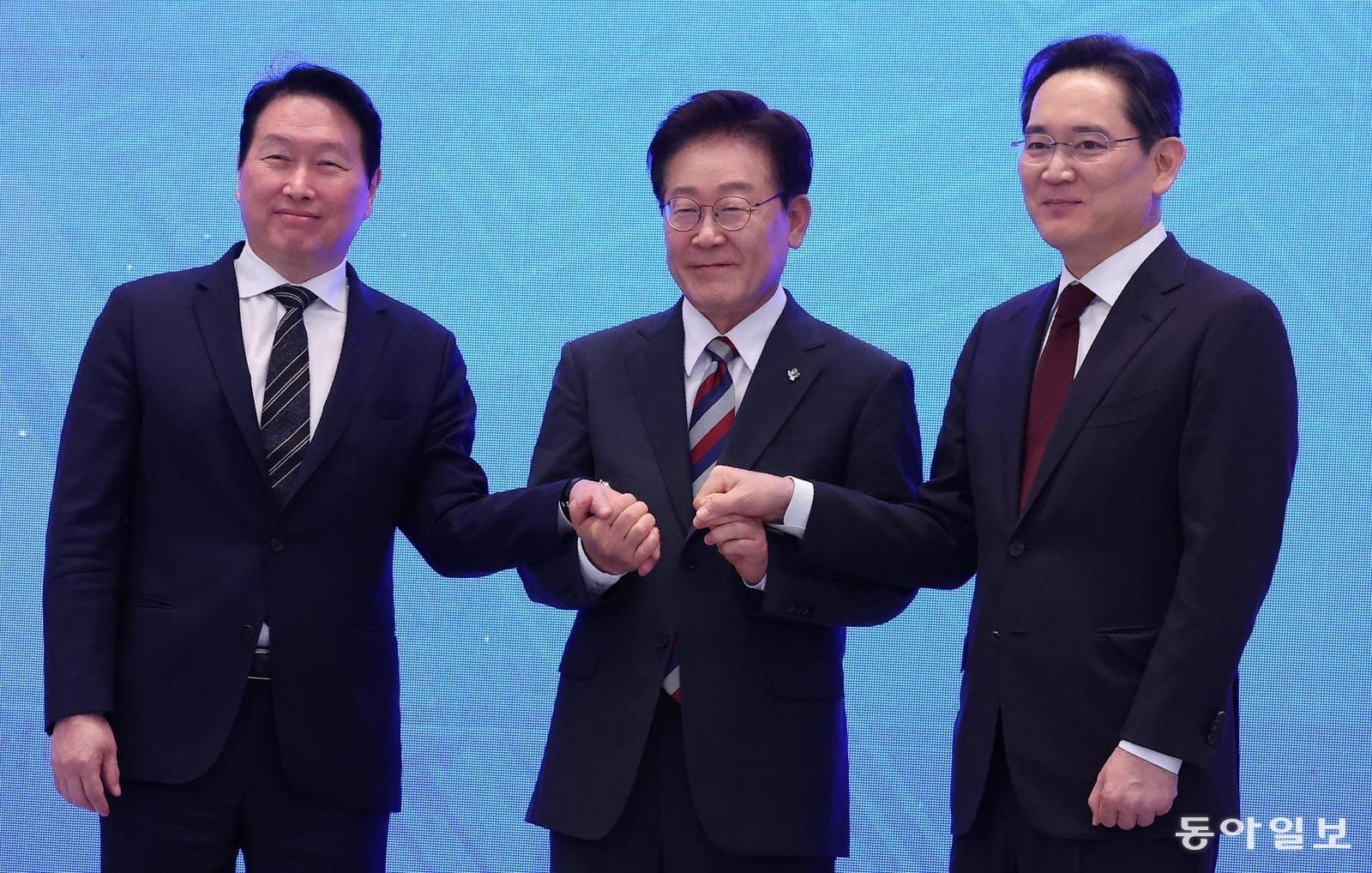
Ruling party criticizes president's meetings with business leaders as 'summons politics'
Translated from Korean and summarized by DistantNews. Read the original for the full story.
At a glance
News
Sources not specified
Context piece
- The People Power Party criticized President Lee Jae-myung's frequent meetings with top business executives, calling it 'summons politics.'
- The party highlighted that executives like Samsung's Lee Yong-yong have met the president multiple times this year, suggesting excessive pressure.
- Critics argue that while the president urges investment in projects like the Honam Semiconductor Cluster, domestic regulatory reforms remain slow, creating a dual burden for businesses.
South Korea's ruling People Power Party has sharply criticized President Lee Jae-myung's repeated meetings with the heads of major conglomerates, characterizing the interactions as "summons politics." The party contends that these meetings, ostensibly for reviewing government projects like the Honam Semiconductor Cluster and Saemangeum, have devolved into pressuring business leaders to accelerate progress.
The president's summons is unavoidable for business leaders. There is no refusal when the president calls.
Choi Bo-yoon, the senior spokesperson for the People Power Party, stated that business leaders cannot refuse a presidential summons. She pointed to the frequency of meetings, noting that Samsung Electronics Chairman Lee Yong-yong has met the president 13 times this year, SK Group Chairman Choi Tae-won eight times, and Hyundai Motor Group Chairman Chung Eui-sun seven times. Choi emphasized that this pace, averaging twice a month for Lee Yong-yong, is unprecedented and unlike interactions seen with Silicon Valley leaders in the United States.
The party further argued that these meetings have moved beyond simple communication or accompanying the president on overseas trips. Instead, they are now focused on pushing government-led projects, placing businesses in a difficult position with pressure from both domestic and international fronts. Specifically, the party cited U.S. demands for increased investment in memory chip production facilities from Samsung Electronics and SK Hynix, despite significant existing investments in the U.S.
This has shifted from reviewing the progress of government-led projects like the Honam Semiconductor and Saemangeum to urging speed. It has reached a point where it can be seen as 'summons politics.'
Adding to the criticism, the People Power Party highlighted the perceived lack of progress on domestic regulatory reforms that businesses have long requested, such as easing the 52-hour workweek and improving regulations on breach of trust charges. The party accused the government of being slow to address these issues while demanding rapid investment, creating a "dual burden" for companies.
The pace is about twice a month for Chairman Lee Yong-yong. There is no U.S. president who calls Silicon Valley CEOs every month to check on their business status.
Ultimately, the People Power Party urged the president to listen to the voices of mid-sized and venture businesses, not just major conglomerates. They asserted that South Korea's future economic drive requires a president who facilitates global competitiveness for businesses, rather than one who frequently summons their leaders.
While the government is accelerating large-scale projects, the easing of the 52-hour workweek and the improvement of breach of trust regulations, which the business community has consistently called for, are stagnant. They are slow to implement regulatory reforms that businesses want but demand 'blitzkriegs' for investments the government desires.
About this summary
Originally published by Dong-A Ilbo in Korean. Translated, summarized, and contextualized automatically by DistantNews, with a note on how the source frames the story. Not individually reviewed before publishing. How this works.
More Stories


From Our Blog

What Gets Lost (and Found) When News Is Translated

The Critical Role of Diaspora Media in Global News

What Travellers Should Know About Countries with Restricted Press

A Digital Nomad's Guide to Following Local News

How the Same Story Looks Different in Different Countries
