

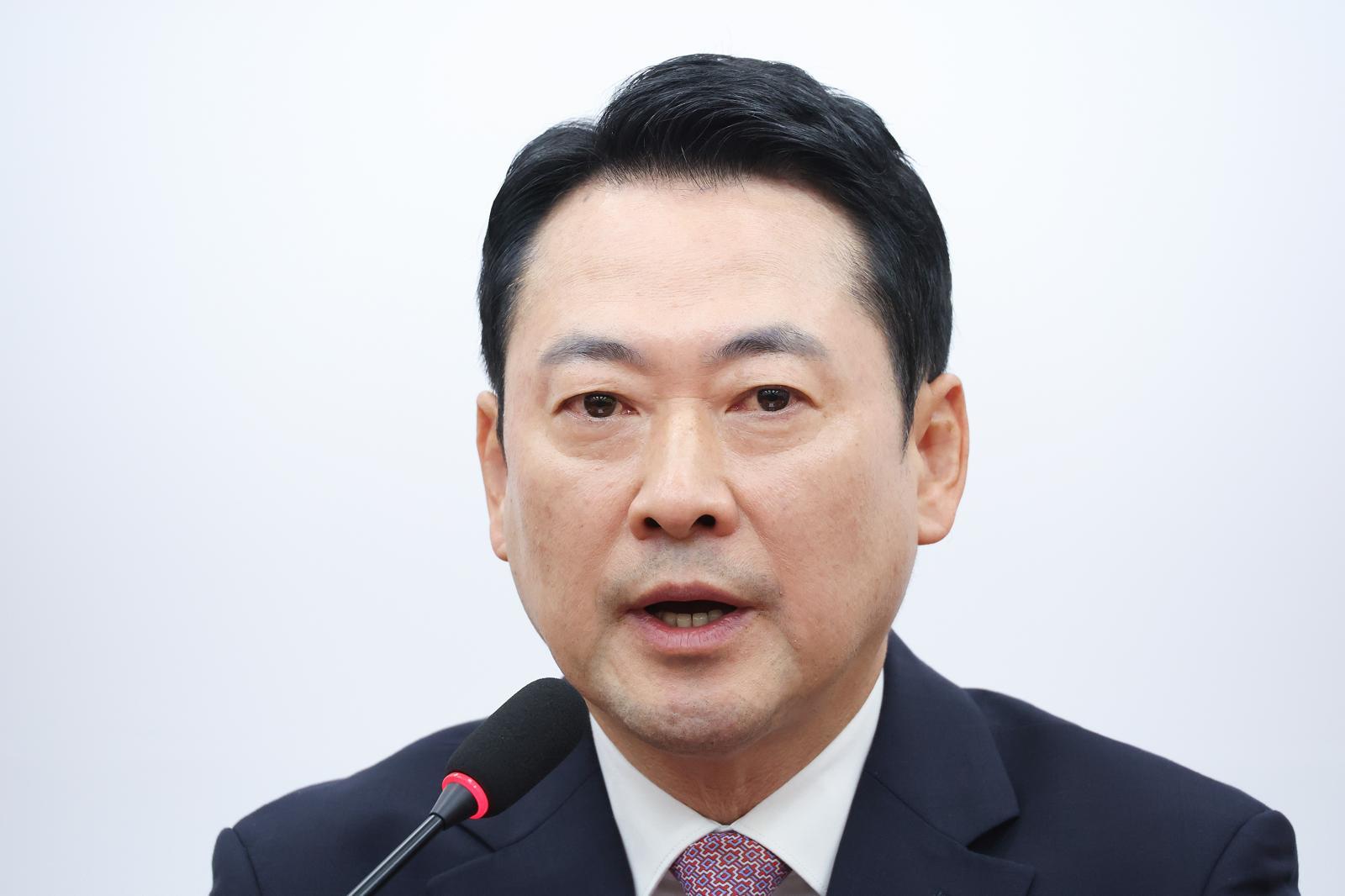

Ruling Party Interim Leader Rejects Resignation Calls, Cites 'Responsible Politics'
Translated from Korean, summarized and contextualized by DistantNews.
TLDR
- Jang Dong-hyuk, interim leader of South Korea's ruling People Power Party, rejected calls for his resignation, stating that stepping down in difficult times is not responsible leadership.
- Jang asserted his commitment to leading the party through the upcoming local elections and facing evaluation based on performance.
- He faces pressure to resign due to internal party conflicts, including a rift with former President Yoon Suk-yeol and controversies surrounding election nominations and a recent trip to the US.
Interim leader Jang Dong-hyuk has firmly pushed back against mounting calls for his resignation, framing his refusal to step down as a matter of political responsibility. In a statement on Facebook and subsequent remarks, Jang argued that abandoning the party leadership amidst challenges would betray his principles and the trust placed in him. He emphasized his dedication to navigating the party through the upcoming local elections, vowing to accept the judgment of the party and the public based on the election outcomes.
Jang's stance comes amid significant internal turmoil within the People Power Party. He is reportedly facing pressure stemming from a strategic divergence regarding former President Yoon Suk-yeol, a contentious nomination process for the local elections, and criticism over the perceived lack of tangible achievements during his recent visit to the United States. The party's internal dynamics appear to be a significant factor in the calls for his departure, highlighting a struggle for direction and leadership within the conservative camp.
From the perspective of The Hankyoreh, which has reported extensively on these internal party struggles, Jang's defiant stance underscores a broader narrative of political resilience, or perhaps stubbornness, in the face of adversity. While Jang positions his refusal to resign as a commitment to responsible politics, critics within and outside the party view it as an evasion of accountability for the party's recent difficulties. The upcoming local elections will undoubtedly serve as a critical referendum on his leadership and the party's current trajectory, with his performance in these elections being the ultimate measure of his stated commitment to 'responsible politics.'
DistantNews Editorial
Originally published by Hankyoreh in Korean. Translated, summarized, and contextualized by our editorial team with added local perspective. Read our editorial standards.
More Stories


From Our Blog

What Gets Lost (and Found) When News Is Translated

The Critical Role of Diaspora Media in Global News

What Travellers Should Know About Countries with Restricted Press

A Digital Nomad's Guide to Following Local News

How the Same Story Looks Different in Different Countries
