


Saharan Dust Plumes Enter Panama, Vigilance Alert Issued
Translated from Spanish, summarized and contextualized by DistantNews.
At a glance
News
Sources not specified
New plan
- Panama has issued a vigilance alert due to the incursion of Saharan dust particles, expected to last three days.
- The dust is primarily affecting the Caribbean coast and maritime zones, with lower concentrations elsewhere in the country.
- The phenomenon occurs annually as winds carry dust from the Sahara Desert across the Atlantic via the Saharan Air Layer.
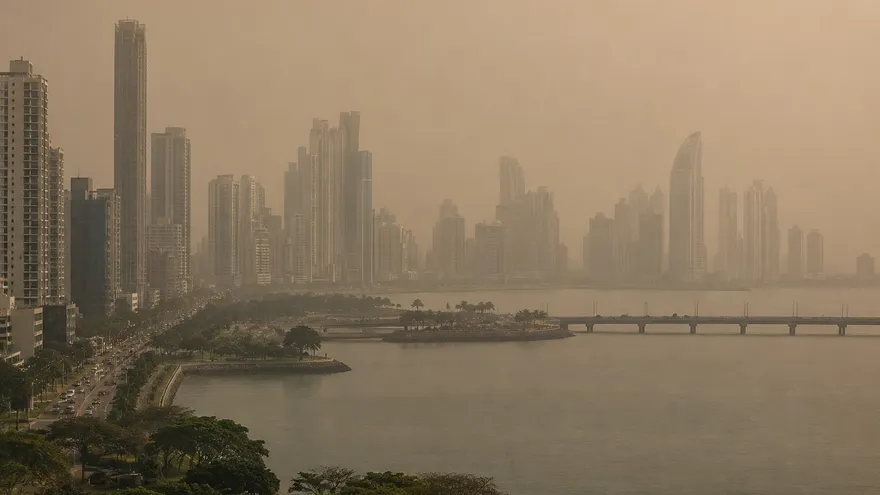
Panama's Institute of Meteorology and Hydrology (Imhpa) has issued a vigilance notice following the arrival of Saharan dust particles over the national territory. The alert began Friday, July 17, at 5:00 a.m. and is expected to remain in effect until Monday, July 20, at 11:59 p.m. The Imhpa reported the entry of an air mass carrying moderate concentrations of Saharan dust, primarily impacting the Caribbean coast, Panama, Panama Oeste, the Gulf of Panama, and the Eastern region, where the highest concentrations are anticipated.
The surveillance began at 5:00 a.m. this Friday, July 17, and will be maintained until 11:59 p.m. on Monday, July 20.
Lower concentrations of this atmospheric phenomenon are forecast for the rest of the country. The Imhpa specified that the dust will particularly affect the Caribbean slope, the Metropolitan region, and the Eastern region, with conditions expected to persist through Monday. This event can lead to a decrease in air quality and reduced visibility, especially in areas with higher particle concentrations. Individuals with respiratory illnesses, the elderly, children, and other sensitive groups are advised to monitor recommendations from health and meteorological authorities.
The reason why Saharan dust can travel thousands of kilometers and reach the Caribbean, Central America, South America, and even Europe is not accidental.
The phenomenon of Saharan dust traveling thousands of kilometers to reach regions like the Caribbean, Central America, South America, and even Europe is a well-documented atmospheric process. The Sahara Desert, the world's largest source of mineral dust, releases approximately 800 million tons of particles annually. Intense daytime heating in the desert creates strong updrafts that lift millions of particles several kilometers high.
The Sahara Desert, located in North Africa, is the largest source of mineral dust on the planet.
Once airborne, the dust enters the Saharan Air Layer. This layer, situated above cooler, more humid Atlantic air, creates a temperature inversion. The warm air trapped above the cool air limits vertical mixing, allowing the dust to remain suspended for days. Driven by trade winds, which blow from east to west in tropical regions, the Saharan Air Layer acts as a vast atmospheric conveyor belt. During the Northern Hemisphere's summer months (June to August), these currents transport the Saharan Air Layer from West Africa across the Atlantic Ocean to the Caribbean and Central America.
During the boreal summer season (between June and August), these currents displace the Saharan Air Layer from West Africa across the Atlantic Ocean to the Caribbean and Central America.
DistantNews Editorial
Originally published by TVN Panamá in Spanish. Translated, summarized, and contextualized by our editorial team with added local perspective. Read our editorial standards.
More Stories

From Our Blog

What Gets Lost (and Found) When News Is Translated

The Critical Role of Diaspora Media in Global News

What Travellers Should Know About Countries with Restricted Press

A Digital Nomad's Guide to Following Local News

How the Same Story Looks Different in Different Countries
