



Sahra Wagenknecht Condemns Russia Sanctions at Saxony-Anhalt Campaign Finale
Translated from German and summarized by DistantNews. Read the original for the full story.
At a glance
Newswire
From a news agency
Ongoing story
- Sahra Wagenknecht criticized the German government’s decision to close Russian institutions and end some channels of cultural and diplomatic contact.
- At the BSW’s final campaign event in Halle, she warned that the risk of war was also increasing for Germany.
- The BSW placed peace at the center of its campaign as polls showed the party below the 5% threshold before Sunday’s state election.
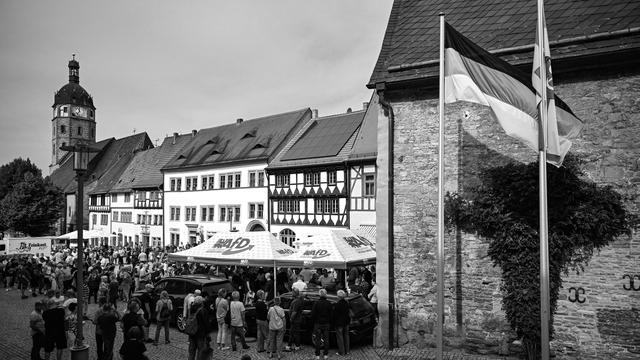
Sahra Wagenknecht used the BSW’s final campaign event in Saxony-Anhalt to sharply attack Germany’s response to Russia.
"We are breaking all bridges for cultural exchange. We are breaking all bridges for dialogue," Wagenknecht said at the campaign closing event in Halle. She called the federal government’s policy wrong and crazy.
The government imposed a package of diplomatic measures against Moscow after an attempted drone bomb attack at Leipzig/Halle Airport in early August, which it attributes to Russia. The measures include plans to close Russia’s consulate general in Bonn in mid-September and terminate the agreement for the Russian House in Berlin.
We are breaking all bridges for cultural exchange. We are breaking all bridges for dialogue.
Wagenknecht also warned that the danger of war was growing for Germany. She said Russia was being attacked with German technology, German money and, in some cases, German weapons. In Russia, she said, increasingly loud voices were calling for attacks on sites where those weapons are produced.
Peace was also the central theme for the BSW’s leading candidates. Claudia Wittig said, "Peace is a state issue," adding that it was also an economic and education issue. The BSW was polling below the 5% threshold ahead of Sunday’s election for a new state parliament.
Peace is a state issue.
About this summary
Originally published by Die Zeit in German. Translated, summarized, and contextualized automatically by DistantNews, with a note on how the source frames the story. Not individually reviewed before publishing. How this works.
More Stories

From Our Blog

News in Translation: What Gets Lost, and How We Keep the Framing

The Same Story, Different Countries: How Coverage Changes at the Border

Diaspora Media: How Communities Abroad Follow Home

Traveling Where the Press Is Not Free: How to Read the News There

The Digital Nomad's Guide to Local News
