


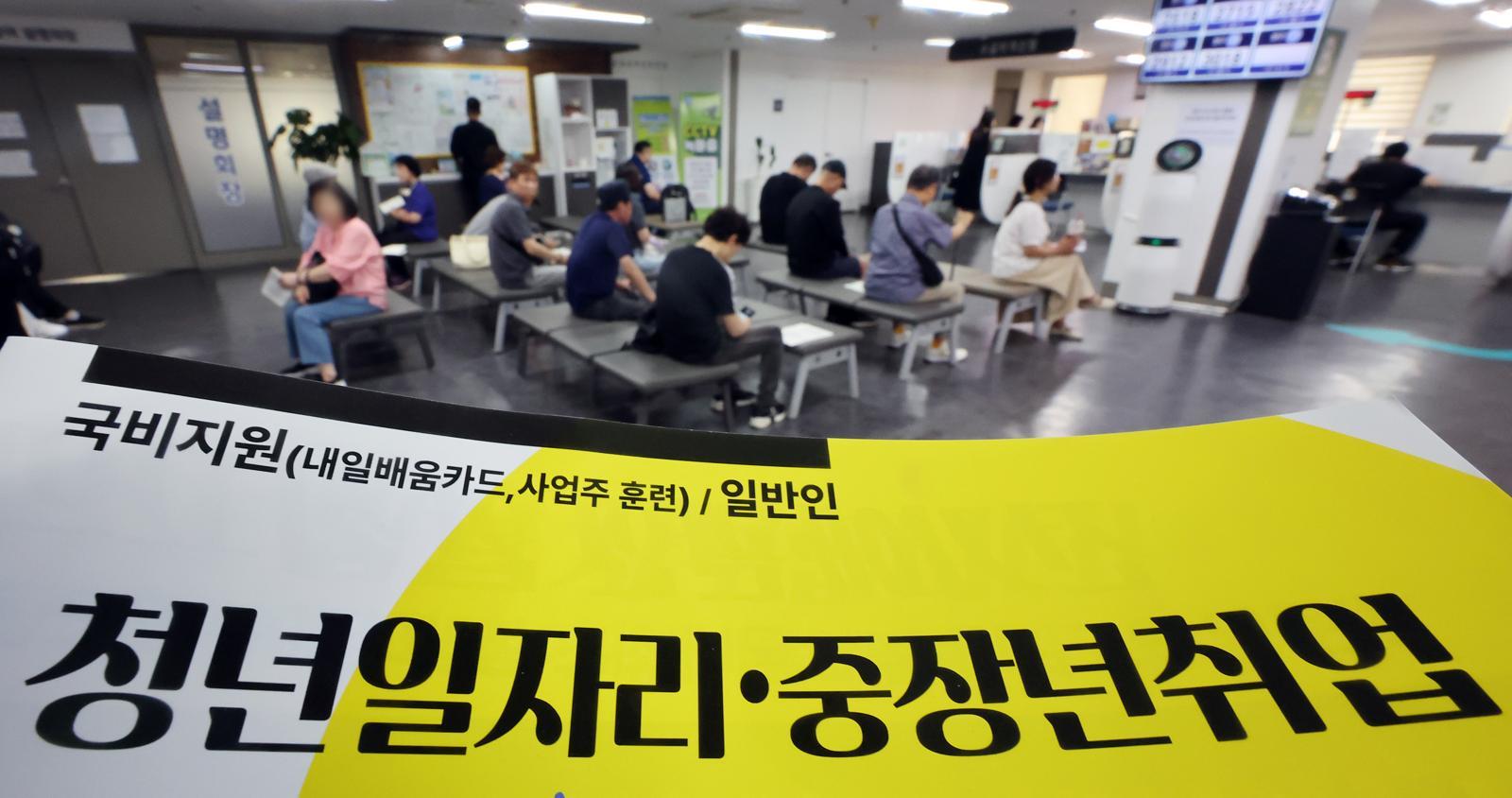
Salaried Jobs Decline for Fourth Month in South Korea, Youth Face Hiring Freeze Amid AI Impact
Translated from Korean, summarized and contextualized by DistantNews.
At a glance
News
Documents & data
Context piece
- South Korea saw its first four-month consecutive decline in salaried workers since the COVID-19 pandemic, while self-employed individuals increased.
- The decrease in salaried positions is particularly affecting young people aged 20-29, with significant job losses in sectors influenced by AI, such as IT and professional/scientific services.
- Despite a boom in the semiconductor industry, the overall job market, especially for new graduates, remains challenging due to companies scaling back recruitment.
South Korea is experiencing a concerning trend of declining salaried employment, with the number of wage earners falling for four consecutive months since the COVID-19 pandemic began. This marks the first such sustained decrease in three decades, occurring even as the overall number of employed individuals has slightly increased due to a rise in self-employment.
The data, released by Statistics Korea, shows that in July, the number of salaried workers stood at 22.487 million, an 11,000 decrease from the previous year. This decline is concentrated in sectors heavily impacted by artificial intelligence, including research and development, legal, and accounting services, which saw a reduction of 86,000 jobs. Retail, construction, and manufacturing also contributed to the decrease.
Macroeconomic indicators are not bad, but the instability in the job market continues to be a mixed situation. The government must approach the creation of healthy and sustainable youth employment as a national task.
Young people, particularly those in their 20s, are bearing the brunt of this employment downturn. The number of employed individuals aged 20-29 dropped by 226,000 year-on-year. This contrasts sharply with an increase of 87,000 jobs for those aged 60 and over, driven by demand for elder care and related services.
Experts point to the growing influence of AI as a major factor. Job losses among the youth are increasingly shifting from traditional sectors like manufacturing and hospitality to AI-sensitive fields such as information technology and professional/scientific services. While the semiconductor industry is experiencing a boom, its capital-intensive nature means it generates fewer jobs, failing to significantly boost youth employment. This situation has led to a prolonged "employment cold wave" for young job seekers, with companies reducing new graduate hiring.
Large-scale facility investments, especially in the semiconductor industry, have a low employment inducement coefficient, so they do not lead to youth employment.
DistantNews Editorial
Originally published by Dong-A Ilbo in Korean. Translated, summarized, and contextualized by our editorial team with added local perspective. Read our editorial standards.
More Stories


From Our Blog

What Gets Lost (and Found) When News Is Translated

The Critical Role of Diaspora Media in Global News

What Travellers Should Know About Countries with Restricted Press

A Digital Nomad's Guide to Following Local News

How the Same Story Looks Different in Different Countries
