


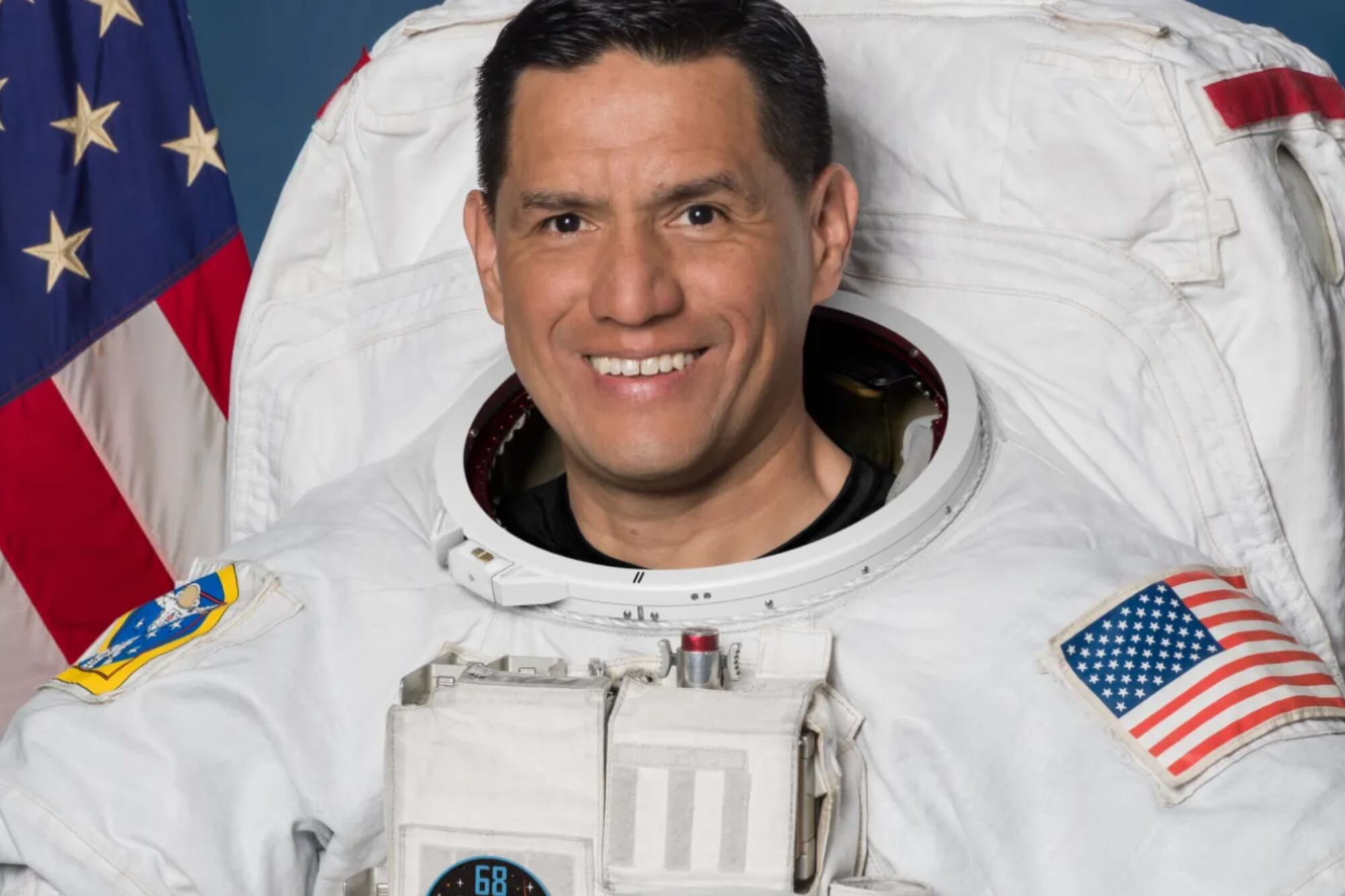
Salvadoran-Origin Astronaut Frank Rubio Joins Artemis III Moon Mission Crew
Translated from Spanish, summarized and contextualized by DistantNews.
At a glance
News
Official statement
New plan
- NASA announced the Artemis III crew, including Salvadoran-origin astronaut Frank Rubio.
- Rubio, who holds the record for the longest single spaceflight by a U.S. astronaut (371 days), will serve as a mission specialist.
- The Artemis III mission, slated for 2027, aims to return humans to the Moon using technology tested in orbital phases.
NASA has revealed the crew for the upcoming Artemis III mission, set to return humans to the Moon. Among the four-person team is Frank Rubio, a mission specialist with Salvadoran heritage. Rubio recently set a new record for the longest single spaceflight by a U.S. astronaut, spending 371 days aboard the International Space Station.
Rubio, born in Los Angeles and considering Miami his home, maintains a strong connection to El Salvador through his mother, Myrna Argueta, who is from the Central American nation. His background includes a distinguished military and medical career, graduating from West Point and earning a doctorate in medicine. He also served as a helicopter pilot, accumulating over 1,000 flight hours, including approximately 600 in combat zones during deployments in Bosnia, Afghanistan, and Iraq.
The Artemis III mission, scheduled for launch in 2027 from the Kennedy Space Center in Florida, is designed to test technologies for lunar exploration. The crew will travel aboard the Orion spacecraft, which will then dock with a lunar lander developed by Blue Origin for a two-day surface mission. The mission's objective is to achieve the first crewed lunar landing since the Apollo program.
Rubio was selected as an astronaut by NASA in 2017. His record-breaking spaceflight highlights his dedication and endurance. The Artemis III crew also includes Andre Douglas, Randy Bresnik, and European Space Agency astronaut Luca Parmitano. The mission represents a significant step in NASA's broader lunar exploration objectives.
DistantNews Editorial
Originally published by La Nación in Spanish. Translated, summarized, and contextualized by our editorial team with added local perspective. Read our editorial standards.
More Stories


From Our Blog

What Gets Lost (and Found) When News Is Translated

The Critical Role of Diaspora Media in Global News

What Travellers Should Know About Countries with Restricted Press

A Digital Nomad's Guide to Following Local News

How the Same Story Looks Different in Different Countries
