


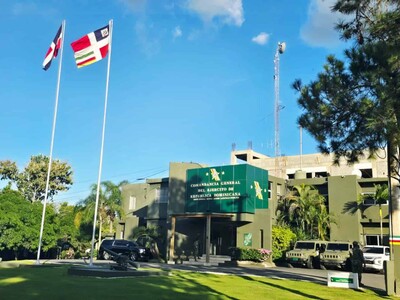

San Zenón and the afternoon that split Santo Domingo’s history in two
Translated from Spanish and summarized by DistantNews. Read the original for the full story.
At a glance
In-depth
Named sources
Outcome reported
- Cyclone San Zenón struck Santo Domingo on Sept. 3, 1930, with winds estimated at 290 kilometers per hour, equivalent to a Category 5 hurricane.
- The disaster killed thousands, transformed the capital’s architecture and allowed Rafael Trujillo to use reconstruction for political purposes.
- Residents initially gathered to watch waves along the coast before the storm turned the afternoon into a struggle for survival.
The morning of Sept. 3, 1930, gave Santo Domingo little warning of the destruction ahead. As weather reports announced a hurricane moving toward the island, residents gathered along Paseo Presidente Billini to watch the waves striking the capital’s coast. Curiosity prevailed, and daily life continued.
That changed within hours. José Enrique Delmonte Soñé places the beginning of the transformation at about 1:30 p.m. By around 2 p.m., San Zenón was crossing the capital with winds estimated at 290 kilometers per hour, a force equivalent to a Category 5 hurricane on the Saffir-Simpson scale.
The cyclone left thousands dead and reshaped Santo Domingo’s architecture. What had begun as an afternoon of spectators watching the sea became a fight for survival, leaving the capital with little room for anything else.
The disaster also altered the country’s political history. Reconstruction gave Rafael Trujillo an opportunity to turn the rebuilding of Santo Domingo into a political instrument, tying the physical remaking of the capital to the exercise of power.
About this summary
Originally published by Diario Libre in Spanish. Translated, summarized, and contextualized automatically by DistantNews, with a note on how the source frames the story. Not individually reviewed before publishing. How this works.
More Stories
From Our Blog

News in Translation: What Gets Lost, and How We Keep the Framing

Diaspora Media: How Communities Follow News From Home

Traveling Where the Press Is Not Free: How to Read the News There

The Digital Nomad's Guide to Local News

The Same Story, Different Countries: How Coverage Changes at the Border
